
Space trader looking for smooth gameplay
Your choice starts with the game’s requirements and the settings you want to use. The published system requirements for Elite Dangerous: Odyssey and Star Citizen are different.


Start by checking the system requirements of the space game you actually play, then measure the space available for the PC, cables and controls. A compact desktop can save desk space; a larger tower is worth considering if you have room elsewhere and easier access for upgrades matters more. A small case alone says nothing about gaming performance or noise levels.
Your choice starts with the game’s requirements and the settings you want to use. The published system requirements for Elite Dangerous: Odyssey and Star Citizen are different.
You want to leave room for your monitor, mouse and perhaps a flight stick. So compare the external dimensions of complete systems rather than relying on the word ‘compact’.
You can place a larger tower beside or under your desk, and easy access to components is important to you. Check the configuration of the exact model you’re considering, too.
Choose this option: if the PC needs to sit on your small desk and the exact configuration meets your game’s requirements.
Bear in mind: components can vary between compact models and configurations; size doesn’t predict frame rate or noise levels.
Choose this option: if the PC can sit beside or under your desk, and access to components matters more than keeping its footprint small.
Bear in mind: measure the available space; a tower takes up more room than a compact case.
Choose this option: if you want to select the components and available internal space individually.
Bear in mind: check that the components are compatible and that there’s enough clearance for the graphics card, cooler and power supply; a case isn’t a complete gaming PC.
System requirements vary by game: Frontier Support recommends 12 GB RAM for Elite Dangerous: Odyssey, while Roberts Space Industries recommends 32 GB for Star Citizen. So compare the complete configuration with your chosen game’s requirements, not just the case size.
| What to consider | What to look for when buying | Who is this important for? |
|---|---|---|
| Suitability for your game | Compare the CPU, GPU, RAM and storage in the exact configuration with your game’s requirements and any plans to upgrade. | If I mainly want to make sure my chosen space game’s requirements are met, I compare the full configuration with the published requirements. Around 36% of consumers put game requirements first. |
| Space on and around your desk | Measure the available width, depth and height, and allow for cables, connections and controls. | If I have limited desk space, I want to know whether the PC will fit without getting in the way of my monitor, mouse or flight stick. Around 29% of consumers give desk space top priority. |
| Cooling and noise | Check the ventilation openings and placement instructions; keep vents clear and look for any noise measurements for the exact configuration. | For long gaming sessions, I want to allow room for airflow and find out what’s known about the noise levels of the configuration I’ve chosen. Around 21% of consumers focus mainly on cooling and noise. |
| Connections for your monitor and controls | Count the USB ports you need and check the graphics card’s display outputs and your controller’s requirements. | If I want to connect a monitor and flight controls, I check that the ports on the exact PC are suitable. Around 14% of consumers prioritise connections. |
Size doesn’t replace your game’s requirements for a GPU, memory and storage.
First compare the complete configuration with your game’s requirements, then check the external dimensions.
The MSI MPG Trident AS 14th range has different CPU and GPU options; the HP OMEN 16L models reviewed also vary.
Make a note of the full model number and check the CPU, GPU, RAM, SSD and ports on the exact PC being offered.
External dimensions alone don’t show how a PC will fit in your setup with cables connected and enough ventilation.
Measure the space, including room for connections, and follow the placement instructions for the PC you choose.
The OMEN 16L is a range of compact gaming desktops; compare the full model numbers to tell the configurations apart.
The MPG Trident AS 14th range is worth comparing if you’re looking for a slim gaming desktop.
The Legion Tower 5 Gen 10 is worth considering if you have room for a larger tower and easy access to components matters to you.
The MasterBox NR200 is a compact case for anyone building their own PC, not a ready-made gaming PC.
These gaming desktops have different configurations and graphics cards. Check each model against your game’s system requirements, and measure to make sure the PC will fit in your chosen spot with its cables and enough space for ventilation.
 No image available
The listed 32 GB RAM matches the recommended amount for Star Citizen; compare the rest of the game’s requirements with this configuration, too.
Processor: Ryzen 7 7800X3D. Graphics card: GeForce RTX 5080 with 16 GB. Memory: 32 GB DDR5. Storage: 1 TB NVMe SSD. Operating system: Windows 11 Trial.
 No image available
With 32 GB RAM listed, this configuration matches the memory recommendation for Star Citizen; also check the requirements for the rest of your game.
Processor: Intel Core Ultra 7 265F. Graphics card: NVIDIA GeForce RTX 5070 with 12 GB. Memory: 32 GB DDR5. Storage: 1 TB SSD. Operating system: Windows 11 Home.
No image available
This configuration lists 32 GB RAM, the recommended amount for Star Citizen; check the other components against your game’s requirements, too.
Processor: Intel Core Ultra 5 225F. Graphics card: NVIDIA GeForce RTX 5070 with 12 GB. Memory: 32 GB DDR5. Storage: 1 TB PCIe 4.0 SSD. Operating system: Windows 11 Home.
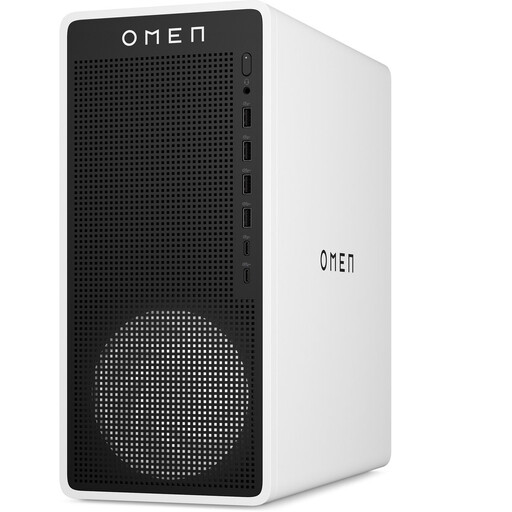 No image available
The listed 16 GB RAM is above the recommended 12 GB for Elite Dangerous: Odyssey, but below the recommended 32 GB for Star Citizen. Check the requirements for your game.
Case: 16L, with stated dimensions of 15.50 × 33.70 × 15.50 cm. Graphics card: RTX 5050 with 8 GB. Memory: 16 GB DDR5. Storage: 1 TB SSD.
 No image available
The listed 16 GB RAM is above the recommended 12 GB for Elite Dangerous: Odyssey, but below the recommended 32 GB for Star Citizen. Compare the rest of your game’s requirements, too.
Processor: Ryzen 5 5500. Graphics card: RTX 5060 with 8 GB. Memory: 16 GB DDR4. Storage: 500 GB NVMe SSD. Case: MSI MAG FORGE M100R.
Check the requirements for the specific version of the game. Frontier Support lists 75 GB of storage and 12 GB RAM as the recommended amount for Elite Dangerous: Odyssey; Roberts Space Industries lists an SSD with more than 150 GB of space for Star Citizen and recommends 32 GB RAM. These are published game requirements, not measured performance on a specific desktop.
Elite Dangerous states that it supports a joystick or flight stick. Also check your controller’s requirements and whether the ports on the exact PC are suitable.
Compare its external dimensions with the space available, and don’t block the ventilation openings. The Joybuy product description for the OMEN 16L TG03-0057nd recommends placing it on a hard, flat surface with good ventilation; remember to allow room for the cables, too.
No. According to ACM ConsuWijzer, statutory consumer rights in the Netherlands apply alongside any manufacturer’s or seller’s warranty; the product’s expected lifespan also depends on what you could reasonably expect from it. If there’s a fault covered by the statutory guarantee, contact the seller.
For online consumer purchases, ACM ConsuWijzer says there is generally a statutory cooling-off period that ends 14 days after delivery. Check the applicable exceptions and returns policy before you order.