
Cook with limited kitchen space
Wants to know in advance whether the fridge will fit, allowing room for ventilation and for the door to open. The Consumers' Association recommends allowing extra space for ventilation.


Choose a compact fridge that fits with the necessary ventilation clearance and lets you check the temperature is 4 °C. Only choose a model with a freezer compartment if you genuinely need one. The Netherlands Nutrition Centre recommends keeping opened pre-cut vegetables in the fridge for 2 days. Follow this advice for carrot sticks, rather than the storage guidance for whole carrots.
Wants to know in advance whether the fridge will fit, allowing room for ventilation and for the door to open. The Consumers' Association recommends allowing extra space for ventilation.
Wants to store chopped carrots in sealed containers and keep them at a controlled fridge temperature. The Netherlands Nutrition Centre recommends setting your fridge to 4 °C.
Wants to weigh up fridge capacity against annual energy use, so the layout they choose suits what they actually use.
| What to consider | What should you check? | Who is this important for? |
|---|---|---|
| Getting the right size | Measure the height, width and depth of the space, as well as the route to it. Check the model's instructions for ventilation clearance and door-opening space too. | If my kitchen has little spare space, I want to be sure the fridge will fit where I plan to put it. Around 36% of consumers prioritise a suitable size. |
| Temperature and storage | Check whether you can set and measure the temperature at around 4 °C, and whether sealed containers will fit. | I want to keep carrot sticks chilled in a sealed container, without relying on the storage time for whole carrots. Around 29% of consumers prioritise storage conditions. |
| Interior layout | Compare the space available for your own containers and vegetables; check the fridge capacity separately from any freezer capacity. | If I store other vegetables as well as carrot sticks, it’s important that the layout suits my containers. Around 21% of consumers mainly choose based on practical storage space inside. |
| Energy use | Compare the annual consumption in kWh on the energy label of models with a suitable fridge capacity. | I don’t want to choose fridge or freezer space that I won’t use, so I pay attention to annual energy use. Around 14% of consumers mainly consider energy consumption. |
The Netherlands Nutrition Centre gives different storage advice for raw, whole carrots and opened pre-cut vegetables.
Keep carrot sticks in a sealed container and follow the advice for pre-cut vegetables: 2 days in the fridge.
A fridge may need extra ventilation clearance, so the space available may be more limited than the appliance’s width alone suggests.
Before choosing, check the installation instructions for the exact model, the available depth and the space needed to open the door.
A model with a freezer compartment divides the available space differently. Milieu Centraal also points out that two refrigeration appliances use more energy than one large appliance.
Compare the fridge capacity and annual energy use of models that fit your space, and only choose extra features if you’ll use them.
According to Beko, the Beko LS9052WN is 48 cm wide and has a fridge capacity of 88 litres. Its stated width is worth considering if you have a narrow space.
Inventum lists the KK550 as having a capacity of 131 litres and a salad drawer. It’s worth considering if you have a space around 55 cm wide.
According to the manufacturer, the Liebherr Rci 1620 is 60 cm wide, has a capacity of 141 litres and produces 34 dB of noise. The manufacturer also describes an EasyFresh compartment.
Bosch Netherlands lists the KTL15NWEB as having a fridge capacity of 106 litres and external dimensions of 850 × 560 × 580 mm. This table-top model also has a freezer compartment.
These models are selected for compact refrigeration in small kitchens. The range includes fridges without a freezer compartment, as well as models with a salad drawer or extra chilled compartment.
 No image available
Suited to anyone looking for a compact fridge without a freezer compartment and wanting to use a salad drawer.
The stated external dimensions are 48 × 45 cm. The description lists a capacity of 88 litres, an E energy rating and stated energy consumption of 90 kWh per year. It also mentions three adjustable shelves and a salad drawer.
 No image available
A compact fridge without a freezer compartment for anyone who wants to store vegetables separately.
The stated usable capacity is 82 litres and annual energy consumption is 84 kWh. The description mentions a salad drawer and adjustable glass shelves.
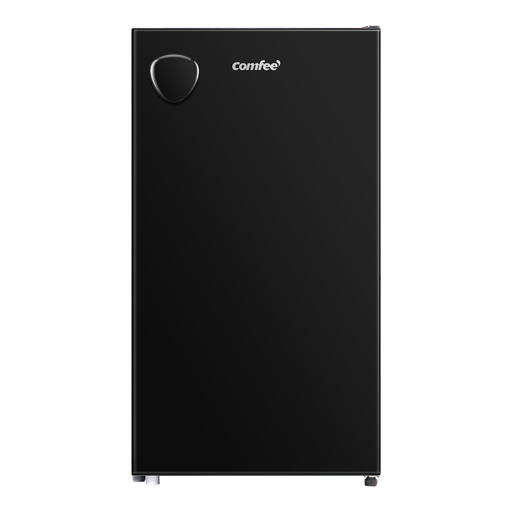 No image available
Suited to anyone looking for a compact under-counter fridge with a salad drawer and adjustable shelves.
The title lists a capacity of 88 litres and an E energy rating. The description mentions an adjustable thermostat, removable glass shelves and a reversible door.
 No image available
A compact model to consider if you’d like an extra chilled compartment and adjustable shelves.
The title and description list a capacity of 90 litres. The stated external dimensions are 449 × 485 × 842 mm. The description mentions a chiller box, three shelves and mechanical temperature control.
 No image available
A compact fridge to compare if you’re looking for a salad drawer and adjustable glass shelves.
The description lists a capacity of 92 litres, an E energy rating and seven temperature settings. The title specifies a width of 47 cm and a reversible door.
The Netherlands Nutrition Centre recommends keeping opened pre-cut vegetables in the fridge for 2 days and storing them in a sealed container. The storage time for raw, whole carrots doesn’t apply to chopped sticks.
The Netherlands Nutrition Centre recommends 4 °C. Check the actual temperature; the thermostat setting alone isn’t a measurement.
Don’t assume you can without checking first. The Consumers' Association recommends allowing extra space for ventilation; follow the installation instructions for the exact model.
According to the European Commission, the EU energy label shows information including the energy efficiency class on a scale from A–G, annual consumption in kWh, capacity and noise level. Compare these details for models with a layout that suits your needs.