
Pie baker with limited cupboard space
Usually makes one pie at a time and wants to store the appliance and its accessories together.


If you’re making one pie at a time and have limited cupboard space, a compact food processor with a chopping blade and pulse control is a sensible choice, provided its external dimensions and usable fill level suit your cupboard and recipe. Process shortcrust pastry briefly. If you make larger batches, compare the maximum dough capacity of the exact model with the storage space it needs.
Usually makes one pie at a time and wants to store the appliance and its accessories together.
Wants to briefly process butter, flour and liquid, without kneading the dough for too long.
Wants to prepare larger recipes too, and weighs the maximum dough capacity against the space available in the cupboard.
| What to consider | What should you check? | Who is this important for? |
|---|---|---|
| Storage space | Measure the available shelf or drawer space and compare it with the appliance’s external dimensions, allowing room for separate accessories. | If you want to put the appliance away in a small cupboard after use, its dimensions matter. Around 36% of consumers prioritise storage space when making this choice. |
| Brief mixing | Check for a pulse setting and follow the instructions for the quantity and running time for the exact model. | If you want to briefly process shortcrust pastry, having control over the settings matters more than prolonged kneading. Around 29% of consumers prioritise brief mixing for pastry dough. |
| Batch size | Compare the amount of dough in your recipe with the model’s maximum dough capacity. Litres and kilograms measure different things. | If you often make larger batches, you’ll want to know whether they fit in one go, even if the appliance needs more cupboard space. Around 21% of consumers prioritise larger batches of dough. |
| Extra features and care | Check which accessories are included, where they can be stored and what cleaning instructions apply to each part. | If you want to use the processor for other kitchen tasks too, weigh up those features against the cleaning and storage involved. Around 14% of consumers give versatility and maintenance the most consideration. |
The bowl’s capacity up to the rim isn’t always the same as the amount you can process in practice. For example, the Consumentenbond lists the Kenwood MultiPro Go FDP22.130GY as having a brimful capacity of 1.3 litres, but a maximum fill mark of 0.8 litres.
Compare your recipe with the manual for the exact model, and remember that litres and kilograms measure different things.
With a small bowl, you may need to process the dough in several batches.
Shortcrust pastry recipes call for brief processing and warn against overworking the dough. Having a dough blade isn’t, by itself, a reason to run the processor for longer.
Use short pulses and stop as soon as the dough comes together, following the manufacturer’s instructions for quantity and running time.
Separate accessories may need their own storage space. Think about cleaning the parts too, not just where you’ll keep the appliance.
Check which accessories come with the model, where they can be stored and what cleaning instructions apply. The Consumentenbond notes that cleaning up after small tasks can take longer than doing the job by hand.
Separate parts take up extra space, and cleaning can add time to a small dough-making job.
The MultiPro Go FDP22.130GY is a compact option to compare for making one pie’s worth of dough when storage space is limited.
The MultiTalent 3 MCM3501M is worth comparing if you’re looking for a larger bowl and a stated maximum dough capacity.
The 5KFP0719EBM is worth comparing if an included dough blade and storage for accessories inside the bowl are important to you.
The CS 3200 XL is an alternative if multiple bowls and accessories matter more to you than keeping storage requirements to a minimum.
These food processors are suited to brief mixing or dough preparation. Bowl capacity, controls and external dimensions vary by model, so choose one that suits your recipe and available storage space.
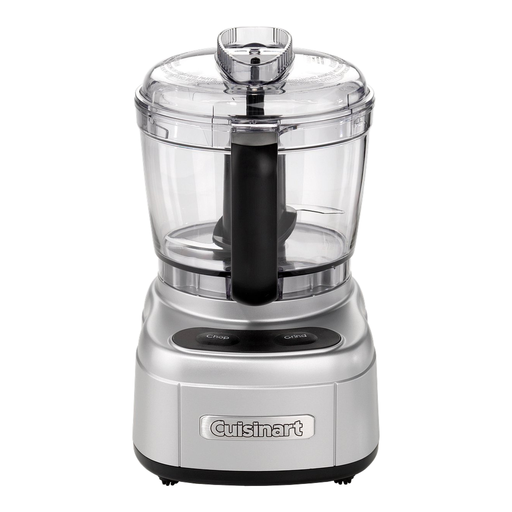 No image available
Worth considering if you’re looking for a compact chopping and grinding processor with pulse control for brief mixing.
 No image available
An option to compare if you’re looking for a larger bowl and short pulses for preparing dough.
The product title lists 750 W and a capacity of 1.8 litres. The product information warns against processing boiling liquids.
 No image available
Worth comparing if you’re looking for more bowl capacity and a pulse function for brief mixing.
The product title lists a capacity of 2.3 litres. Compare the exact model’s external dimensions with the space available in your cupboard.
 No image available
Worth considering if you want to mix briefly and with control, and are looking for a compact design; the product information mentions pulse control and a chopping blade.
Compare this version’s capacity and external dimensions with your recipe and the space where you plan to store the appliance.
 No image available
An option to compare if you want to prepare dough as well as use food processor functions; check that the controls are suitable for brief mixing.
The stated dimensions of 37,9 × 33,8 × 23,4 cm need careful consideration if cupboard space is limited.
Briefly process cold butter and flour until crumbly, then add liquid as directed in your recipe and use short pulses until the dough comes together. Leave it to rest as instructed in the recipe, and follow the quantity and running-time guidance for your exact appliance.
Unplug the appliance before removing blades or discs. Check the manual for each part to see whether it is dishwasher-safe, as plastic can warp at excessively high washing temperatures. Also measure the space you have for any parts that don’t fit inside the bowl.
In the Netherlands, online purchases generally come with a statutory 14-day cooling-off period after delivery, subject to legal exceptions. The product must also meet what you could reasonably expect when used normally. ACM ConsuWijzer explains that the statutory guarantee isn’t simply limited to two years in every case.
The Netherlands Food and Consumer Product Safety Authority states that CE marking is mandatory for electrical products. Parts intended to come into contact with food must also comply with the relevant food contact regulations. A CE mark on its own is not an independent test report, nor does it by itself confirm that a specific model meets all applicable requirements.