
Mixer using lots of effects
You work with multiple tracks and plug-ins and want to minimise interruptions while mixing. Ableton notes that the computing power you need depends on your workflow, the number of tracks and the plug-ins you use.


First, choose a desktop that works with your existing DAW, plug-ins and audio interface. Then work out how much memory and storage your most demanding mix sessions and project versions will need. A Mac mini could suit a compatible macOS workflow, while a Windows mini PC or mini PC kit offers different configurations and things to consider. There’s no proven one-size-fits-all winner for this mixing workflow.
You work with multiple tracks and plug-ins and want to minimise interruptions while mixing. Ableton notes that the computing power you need depends on your workflow, the number of tracks and the plug-ins you use.
You save alternative mixes or arrangements and want to keep projects, samples and backups organised. Ableton explains how to save variations of a track in a single project.
You want to keep using your DAW, plug-ins and audio interface. Before switching platforms, check that your software and equipment work with the desktop you’re considering. Ableton also points out that plug-ins aren’t automatically included with a project folder.
| What to consider | What should you check? | Who should pay particular attention? |
|---|---|---|
| Capacity for tracks and effects | Look at your most demanding project, the plug-ins you use and the memory configuration of the exact model. Compare these with your DAW’s requirements. | If I use lots of tracks and effects at once, I want to know whether my configuration can handle those sessions. Around 33% of consumers say mixing capacity is their top priority. |
| Project versions and storage | Compare the SSD capacity with the space your projects and samples need, and decide how you’ll keep separate backups. When transferring projects, check which media and plug-ins will still be available. | If I want to find and keep multiple mixes and samples, I pay particular attention to local storage and backups. Around 27% of consumers put version management and storage first. |
| DAW and plug-in compatibility | Make a note of your DAW version, operating system, plug-in formats and licences before switching platforms. | If I want to keep opening existing projects and using my plug-ins, I first check that they’ll work on the platform I choose. For around 20% of consumers, software compatibility comes first. |
| Connections and complete configuration | Compare the port and driver requirements of your audio interface with the full model number. If you’re buying a kit, check which components are included and consult the documentation for the exact version. | If you want to connect existing audio equipment or complete a kit, it’s helpful to know which ports and components are included. Around 20% of consumers say connections and a complete workstation are their top priority. |
Don’t base your choice on the minimum requirements alone. Ableton distinguishes between the minimum requirements for Live and its higher recommendations for larger projects. Test your choice with your own most demanding session and check the specifications for the exact version.
The resources you need depend on your session, the number of tracks and the plug-ins you use. A computer that meets the installation requirements isn’t automatically suitable for every demanding project.
Compare the configuration with your most demanding existing project and the requirements of the DAW and plug-ins you use.
A demanding session may still call for more memory or a different computer.
Ableton’s Collect All and Save feature gathers the media you’ve used, but doesn’t copy plug-ins. Plug-in formats can also differ when you switch platforms.
Check your plug-ins and licences before switching, and make a separate backup of your projects and samples.
Reinstalling or converting plug-ins may take extra time.
Complete versions and kits of the ASUS NUC 14 Pro differ; some kits are supplied without an operating system or memory.
Compare the full model number and check which components are included with the version you choose.
A kit may require separate installation and components such as memory, storage or an operating system.
The Mac mini is a compact macOS option for anyone who checks their DAW, plug-ins and audio interface for compatibility first.
The ThinkCentre M75q Gen 5 is a range of compact Windows desktops available in different configurations.
The NUC 14 Pro is available as a complete mini PC or as a kit for those who want to choose their own components.
The Pro Mini 400 G9 is a range of compact desktops available in different configurations.
Below are compact desktops and mini PCs for a workflow involving multiple mix projects. For each model, check that your DAW, plug-ins and audio interface will work with it.
 No image available
Could suit a macOS workflow if your DAW, plug-ins and audio interface are compatible with the version you choose.
The product name lists a 12-core CPU, 12-core GPU, 16 GB of memory and a 512 GB SSD. The product description mentions Thunderbolt 4, USB-C, HDMI and headphone connections.
No image available
Could suit a macOS workflow if your DAW, plug-ins and audio interface are compatible with the version you choose.
The product name lists a 12-core CPU, 12-core GPU, 24 GB of memory and a 512 GB SSD. The product description mentions Thunderbolt 4, USB-C and HDMI connections.
 No image available
Consider this mini PC only after checking that its operating system works with your DAW, plug-ins and audio interface.
The product description lists an NVIDIA GB10 processor with 20 cores, 128 GB of memory, a 4 TB SSD and NVIDIA DGX OS.
 No image available
Could suit a compact desktop setup if your DAW, plug-ins and audio interface are compatible with the configuration.
The product name lists an AMD Ryzen 7 7735HS, Radeon 680M, 16 GB RAM, a 512 GB SSD and two M.2 slots.
 No image available
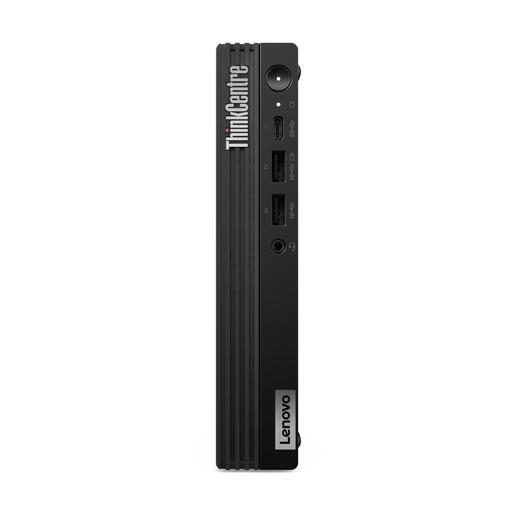
Could suit a Windows workflow if your DAW, plug-ins and audio interface are compatible with this version.
The product description lists an Intel Core i7-14700T, 16 GB of memory, a 512 GB SSD and Windows 11 Pro. It also states that the power adapter isn’t supplied as standard and must be purchased separately.
For Ableton Live 12, Ableton lists 8 GB as the minimum and 16 GB or more as the recommended amount. Whether a particular session runs smoothly depends on factors including the number of tracks and plug-ins. Check the requirements for your own DAW and project too.
In Ableton Live, you can save variations of the same track in one project. Collect All and Save copies the media you’ve used into the project folder, but not plug-ins. Keep a separate backup too, and check that the plug-ins you need are available on the other computer.
It depends on the full model number. ASUS states that certain NUC 14 Pro kits don’t include an operating system or memory. Also check what storage comes with the version you choose.
Electrical and electronic equipment placed on the Dutch and European markets must meet the applicable European product requirements. The Dutch government’s Ondernemersplein explains that, following a conformity assessment, the manufacturer affixes the required CE marking and draws up an EU Declaration of Conformity. Check the documentation for the exact version.