
Vandaag of morgen in huis

Kwaliteit gegarandeerd

Welkomstaanbiedingen ontgrendelen: GRATIS bezorging | Tot 80% korting | Gratis 30 dagen JoyPlus-proefperiode
Download de app
A compact fridge, mini freezer or portable fridge may seem easy to choose. However, many purchases disappoint because capacity, power supply or noise levels have been misjudged. An appliance described as “portable” in an advert is not automatically suitable for use in a car. And a small fridge with a freezer compartment does not always offer the same performance as a genuine compact freezer.
As a Joybuy Product Recommendation Officer, I filter the key product specifications from the marketing claims. This helps you see which features really matter in practice and which type of cooling appliance is right for your home, student room, office, caravan or camping kit.
A mini fridge uses less electricity per hour than a larger model, but annual consumption depends on insulation, temperature, usage and energy rating. So look at the stated annual energy consumption in kWh, rather than relying solely on phrases such as “energy efficient”.
For example, according to its product specifications, the CHiQ JR92DSE has an energy rating of E and a stated annual consumption of 85 kWh. This is more useful for comparison than a general claim about saving energy.
A table-top fridge may have a small freezer compartment, but that does not automatically mean you can store frozen food in it for extended periods. Check the star rating, temperature and freezing capacity. For regular storage, a mini freezer or compact freezer is usually the more sensible choice.
Also look out for conflicting information. According to the product description, the small compartment in the Salora CFB4300WH is not intended for freezing products for extended periods. So do not use it as a replacement for a proper freezer.
Many portable fridges have a handle, but only work via mains electricity or a 12V connection. Always check whether the appliance is suitable for 220–240V, 12V or both. An insulated cool box can also work without electricity, but it does not actively cool its contents. The temperature depends on ice, cool packs and the ambient temperature.
Do not just measure the space where the appliance will stand. Leave room around the ventilation openings and check which way the door opens. A reversible door is useful in a small kitchen or student room.
Use the capacity as a guide:
A larger appliance is not automatically more convenient. A chest freezer often offers plenty of capacity, but requires more room to open the lid. An upright freezer makes more efficient use of floor space and provides easier access to different compartments.
A thermoelectric mini fridge, such as the Cecotec Bolero MiniCooling 6L, is compact and can cool and heat according to its product specifications. This type is mainly intended for drinks, snacks and temporary use. It is not the same as a compressor fridge for long-term food storage.
A compressor generally performs better when stable temperatures and deep freezing are required, but it may be heavier and more noticeable when running. When choosing a freezer, look at:
Noise levels are important for a bedroom, studio flat or office. Products in this selection list levels of 39, 40, 41 or 42 dB, depending on the model. Only compare measurements when they have been provided using the same testing method. A compressor may also switch on and off intermittently, meaning the perceived noise can vary in everyday use.
Also consider features such as adjustable feet, a reversible door, temperature control, removable shelves and a freezer basket. These details often have a greater impact on everyday convenience than an eye-catching design.
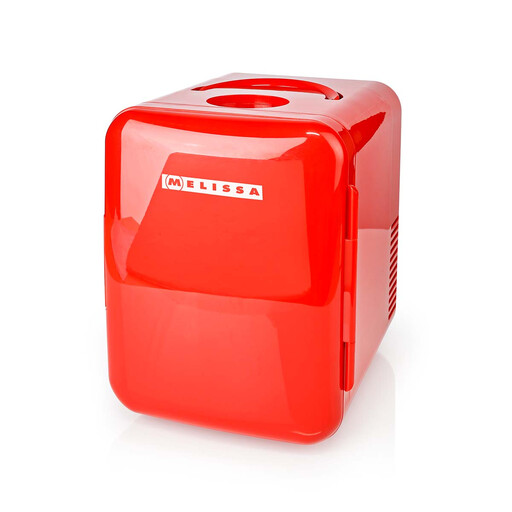
Why it suits this profile: This model is designed for small quantities and use on the go. Its 4-litre capacity holds up to six 33cl cans, and it can be powered via 100–240V or 12V.
The specifications make it clear that this is a compact cooling and heating box, not a full-size fridge or freezer.
4-litre capacity, carrying handle, 48W power and a cooling range of 8–18°C according to the product information.

Why it suits this profile: The 92-litre capacity and 47.4cm width make it suitable for everyday use in a small kitchen, office or holiday property.
The product information explicitly states that there is no freezer capacity. This means you will not accidentally buy this model as a fridge-freezer combination.
Energy rating E, stated annual consumption of 85 kWh, 39 dB, adjustable glass shelves and a reversible door.

Why it suits this profile: This model is designed for anyone who needs more freezer space in a garage, office, student room or storage area.
The stated four-star rating and freezing capacity of 4.5kg per 24 hours distinguish this appliance from a small freezer compartment.
99-litre capacity, energy rating E, 39 dB and rear wheels according to the product information.
We have put together a complete, up-to-date list of products that fully meet these strict selection criteria and the applicable European safety regulations.
Keep the ventilation openings clear and follow the clearance stated in the manual. Do not place a compressor fridge tightly against a wall or heat source. Also measure the doorway and check that the door can open fully.
Multiply the stated annual consumption in kWh by your electricity tariff. For example, an appliance using 85 kWh per year consumes less than a model using 146 kWh, but the actual cost depends on your contract and usage. So always compare the official energy label, not just the marketing copy.
No. A passive cool box, such as an insulated 10-litre cool box, keeps products cold using ice or cool packs. A portable fridge uses electricity and can actively cool its contents. For camping without a fixed power supply, a cool box is practical; for a car, caravan or motorhome, a 12V fridge can offer greater convenience.
