
Façade photographer on a narrow quay
You want to capture the whole brick building quickly, without changing lenses or having to walk a long way backwards.


Start with the distance from the building: from a narrow quay, a wide angle of view matters more than a long telephoto zoom if you want to capture the whole façade. Then choose between a prime lens for predictable framing and a zoom lens for both façades and details. In low light, stabilisation and maximum aperture are important; keep the camera level where possible to stop vertical lines from converging.
You want to capture the whole brick building quickly, without changing lenses or having to walk a long way backwards.
You’re on the move and want to spend little time adjusting settings. A fixed angle of view could suit you if you like working with predictable framing.
You want to frame ornaments across the canal and weigh up optical zoom against a wide angle of view and the ability to shoot in lower light.
First, check whether the widest angle of view suits your distance from the façade. Then compare the controls, telephoto range and performance that matter in your lighting conditions.
| What to consider | What should you check? | Who is this important for? |
|---|---|---|
| Framing the whole façade | Compare the widest angle of view in photo mode and consider whether the building will fit in the frame from where you’re standing. | If I want to photograph the whole building from a narrow quay, I mainly need enough room in the frame. Around 33% of consumers would make framing the façade their top priority. |
| Taking photos quickly | Try out the controls and automatic mode, and see how quickly you can take a photo after switching the camera on. | If I want to spend little time adjusting settings while out for a walk, I’m looking for a simple, predictable way to shoot. Around 27% of consumers would prioritise spending as little time as possible on settings. |
| Shooting in low light | Compare the maximum aperture at the focal length you use, and check the information about stabilisation. | In shade or at dusk, I want to know which settings suit the way I take photos. Around 20% of consumers would make low-light usability their main priority. |
| Details across the canal | Check the optical zoom range in the aspect ratio you use; digital enlargement does not add optical zoom. | If I want to capture ornaments across the canal, I’m looking for optical telephoto reach from where I’m standing. Around 20% of consumers would make distant façade details their top priority. |
Telephoto reach can help you frame details across the canal, but from a cramped quay it’s the wide end of the angle of view that matters if you want to capture the whole building.
First, check the widest angle of view in photo mode. Only then compare how much telephoto reach you need.
A wide angle of view won’t automatically keep vertical lines straight. Tilting the camera sharply upwards can make lines in the photo converge.
Try to keep the camera level from where you’re standing, and leave some room to crop the photo later if needed. Nikon explains how tilting the camera upwards when photographing a tall building can make parallel lines converge.
In the Netherlands, the statutory guarantee isn’t simply limited to a fixed two-year period. ACM ConsuWijzer explains that what you can reasonably expect depends, among other things, on the product and how it is used.
Keep your proof of purchase and report any fault to the seller.
These models mainly differ in angle of view, zoom and controls. The features listed are manufacturers’ specifications and don’t, in themselves, tell you which camera is best for every quay or lighting condition.
The PowerShot V1 is designed for an extra-wide angle of view, while the PowerShot G7 X Mark III offers a zoom lens for a range of framing options.
The GR IV is designed for those who want to shoot on the move with a fixed wide-angle lens and stick to a set frame.
The RX100 VII combines a compact camera with a zoom range for subjects further away.
The LUMIX DC-TZ99 is designed for those who want plenty of optical zoom in a camera they can take with them.
The X100VI is designed for those who choose to shoot with a single fixed angle of view and a hybrid viewfinder.
Joybuy picks for compact photography on the move. When photographing façades from a narrow quay, check for yourself whether the angle of view and controls in photo mode suit your situation.
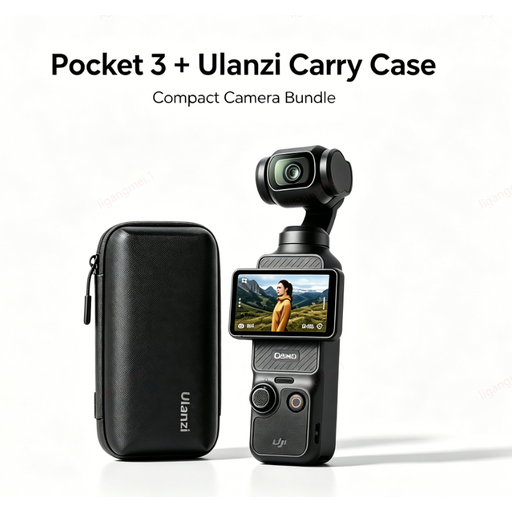 No image available
The product description identifies this model as a compact handheld camera for use on the move; check that it suits the way you want to photograph façades.
The title mentions a Ulanzi Custom Storage Carry Case.
 No image available
This pocket camera is listed for photography in the product title; for façades, check whether its angle of view suits where you’re standing.
The title lists a 1-inch CMOS sensor, 2× lossless zoom, 107 GB of built-in storage and a 2-inch rotating screen.
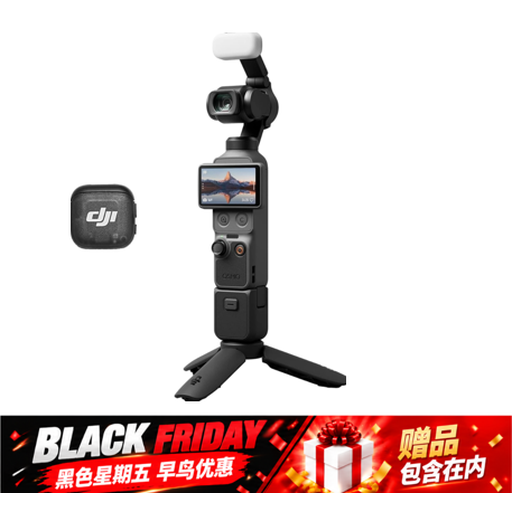 No image available
The product title describes a pocket gimbal camera; check whether its photo mode and angle of view are suitable for framing façades.
The title lists a 1-inch CMOS sensor, 2× lossless zoom, 107 GB of built-in storage and a handle with a 1/4-inch thread.
 No image available
The product title mentions photography and a point-and-shoot camera; check the controls and angle of view before choosing this model for photographing façades.
The title lists 80 MP and 18× zoom. Check which zoom range is available in photo mode and whether it is optical.
 No image available
The product title mentions photography and video; check whether the photo mode and angle of view suit the way you want to photograph façades from where you’re standing.
The title lists 44 MP and 16× zoom. The product description mentions autofocus.
Where possible, keep the camera level instead of tilting it sharply upwards, and leave some room for cropping if needed. Nikon explains that tilting the camera upwards when photographing a tall building can make parallel lines in the photo converge.
Make sure the battery is charged and a suitable memory card is ready, and try out the automatic mode and your preferred framing in advance. Check which accessories are included with each version.
If the product is faulty, contact the seller. ACM ConsuWijzer explains that the Dutch statutory guarantee doesn’t simply have a fixed two-year term; what you can reasonably expect depends, among other things, on the product and normal use.
Not necessarily: the GDPR may apply when people are identifiable, and an appropriate legal basis may be required. The Dutch Data Protection Authority distinguishes between private use within a very limited circle and wider publication. This is not a blanket ban on photographing façades.
No, not always. According to the Dutch Government, many distance purchases come with a 14-day cooling-off period, but there are exceptions. Check which terms and conditions apply to your purchase.