
Makers of intricate wood details
You want to show the grain, joints and carving individually. So assess both the focusing and the framing at the zoom setting you plan to use.


Choose a compact camera based on the smallest wood detail you want to photograph and the distance you need to capture the whole miniature. Compare the focusing distance at the zoom setting you’ll actually use. For consistent wood colours, adjustable white balance, steady framing and controllable lighting also matter.
You want to show the grain, joints and carving individually. So assess both the focusing and the framing at the zoom setting you plan to use.
You photograph several miniatures for one portfolio and want to keep the colour, background and direction of the light consistent from shot to shot.
You regularly take both overview and detail shots, and want a stable frame and a setup you can repeat.
Start by checking the focusing distance at your preferred zoom setting. Then make sure there’s enough room for your framing and lighting.
| What to consider | What to look for when buying | Who is this important for? |
|---|---|---|
| Fine details | Compare the minimum focusing distance and the framing you want at the same zoom setting. Canon specifies 1 cm for the SX740 HS Lite Edition in macro mode at wide angle only. | I want to capture the grain and small joints in close-up without the lighting getting in the way; around 31% of consumers prioritise these fine details. |
| Wood colour and finish | Check whether you can adjust the white balance and repeat the same lighting and background for future shots. Take test photos of both light and dark wood. | I want different types of wood and finishes to remain recognisable in one portfolio; around 25% of consumers prioritise colour and finish. |
| Sharpness throughout the depth | Assess whether a single shot gives you enough sharpness. If necessary, check which focusing or stacking feature the exact model offers and what post-processing it requires. | I also want to show the front and back of deeply carved details clearly; around 25% of consumers prioritise sharpness throughout the depth. |
| Repeatable framing | Measure the space available for the entire miniature, camera, tripod and lighting. Then check whether both the overview and detail shots will work in that setup. | When I photograph several pieces for the same portfolio, I want to use the same frame and background each time; around 19% of consumers prioritise this consistency. |
The minimum focusing distance can vary considerably depending on the zoom setting. Panasonic specifies 3 cm at wide angle and 200 cm at telephoto for the DC-TZ99 in macro settings. Sony gives figures of approximately 8 cm at wide angle and approximately 100 cm at telephoto for the RX100 VII.
Compare the focusing distance and framing at the same zoom position you plan to use for your wood detail.
Lighting and the background affect how a product photo looks. Adobe describes controlled lighting as part of product photography, while Nikon points out that white balance can change how colours appear.
Take test shots using your own wood, finish and lighting before assuming extra features or accessories will solve the problem.
A repeatable lighting and tripod setup takes up space and needs preparation. Bear this in mind when deciding where to put your photo table.
Canon lists focus bracketing for the G7 X Mark III, while Panasonic lists focus stacking for the DC-TZ99. Don’t assume that both models automatically combine the shots into the same final result without checking.
Check what the exact model does and how much selecting and post-processing you’re willing to do yourself.
Taking several shots at different focus points can mean extra time spent selecting and editing them.
Canon offers compact models with different approaches to close-ups and focusing.
The Tough TG-7 is a rugged compact camera with a microscope mode, which OM SYSTEM describes as being designed for very close-up details.
According to Panasonic, the LUMIX DC-TZ99 combines travel zoom, RAW and focus stacking. It may be worth considering if you’ll also use the camera at other distances.
Ricoh Imaging describes the PENTAX WG-8 as a rugged compact camera with a built-in ring light.
The RX100 VII is a compact alternative if you also need a greater zoom range beyond the photo table.
Below are cameras with product information relevant to photography, framing or a fixed setup. For wooden miniatures, pay particular attention to the close-focusing capabilities of the exact model; zoom and video specifications don’t tell you this on their own.
 No image available
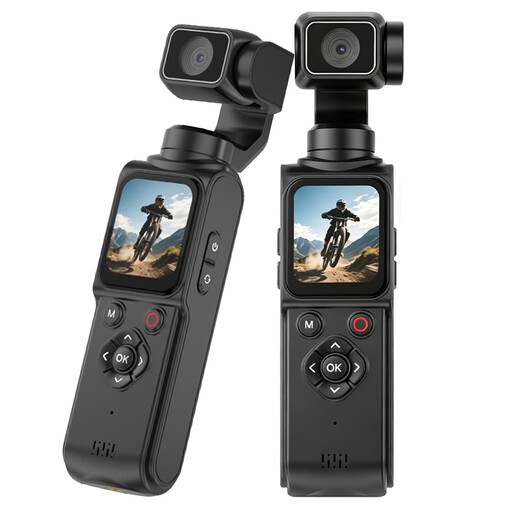
The product details list a mini tripod, which could suit a fixed photo table setup. Check separately whether the focusing distance is suitable for your wood details.
The product name specifies a 330° rotating lens and a 1.72-inch touchscreen.
 No image available
The product name specifies 18× zoom. Check the focusing distance and framing at the zoom setting you want to use for miniature details.
The title specifies 4K video and 80 MP. These specifications alone don’t tell you about the camera’s close-focusing capabilities.
 No image available
The product name specifies 18× zoom. For wood details, check the focusing distance at the zoom setting you want to use.
The title specifies 5K video and 80 MP. These specifications alone don’t tell you how close the camera can focus.
 No image available
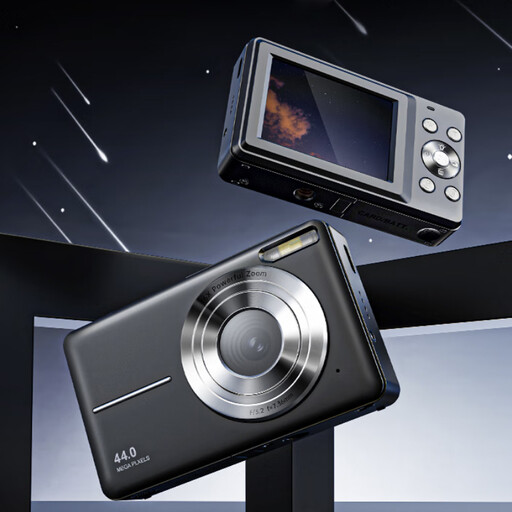
The product name describes a pocket camera for photos and video. Check whether it provides the framing and focusing you need on your photo table.
The product details specify 4K and 44 MP. The description also lists 16× digital zoom; check the close-focusing capabilities separately.
 No image available
The product details describe this model as a mirrorless camera, not a compact camera. Consider it only if you’re also looking at this type of camera.
The product details specify manual focusing and a 16–50 mm lens. Check the close-focusing capabilities and the setup you’ll need for your miniatures.
No. That distance alone doesn’t determine whether the detail will appear large enough in the frame. For the Canon SX740 HS Lite Edition, the stated 1 cm applies at wide angle in macro mode. Check with your own piece whether the framing works and leaves room for lighting.
Keep the lighting, background and camera position as consistent as possible, and assess the white balance under that lighting. Canon describes using a tripod to keep framing consistent; Nikon shows that automatic white balance can change how colours appear.
Before buying, check which accessories are actually included with the version you’ve chosen. OM SYSTEM describes the TG-7 Micro Adventure Kit as including an LG-1 light guide and an extra battery. For a private purchase in the Netherlands, the seller is your point of contact if a product is faulty; the Dutch government states that there is no fixed statutory guarantee period.
For many online distance purchases made as a consumer from a business, the Dutch government specifies a 14-day cooling-off period. The rules may differ if you buy from a private seller or make a business purchase, so check who the seller is and which terms apply to your purchase.