
Photographers dealing with changing light
You want to assess both the bright sky and the less brightly lit windmill, and adjust the exposure as you walk. Nikon explains that outdoor lighting conditions can change constantly.


First, choose the angle of view you need from your planned shooting position, then consider how you can adjust the exposure. A fixed lens requires you to find a suitable position, while a zoom camera gives you more flexibility to change the framing. In bright light, a viewfinder can be useful. Features such as exposure bracketing and RAW are factors to consider, not a guarantee of a successful shot.
You want to assess both the bright sky and the less brightly lit windmill, and adjust the exposure as you walk. Nikon explains that outdoor lighting conditions can change constantly.
You want to capture the windmill, sky and foreground together with a camera that has a fixed lens. The Consumers’ Association describes compact cameras as cameras with a fixed lens.
You can’t always get closer to the windmill, so you want to work out in advance how much optical zoom you need. Canon and Panasonic list different zoom ranges for their travel zoom models.
First decide which part of the landscape you want to capture from your intended shooting position. Then compare the exposure features and how easy the camera is to frame with.
| Buying concern | What to look for | Who is this most important for? |
|---|---|---|
| Exposure in sun and cloud | Check exposure compensation and RAW. If you want multiple exposures, see whether the model supports exposure bracketing. | If I’m looking from a bright sky towards a windmill in the shade, I want to be able to adjust the exposure. Around 33% of consumers put exposure at the top of their list of buying concerns. |
| Framing the whole landscape | Compare the equivalent focal length at the aspect ratio you want, and consider whether you can step back at the location. | I want to capture the windmill, sky and foreground together from where I’m standing. Around 27% of consumers prioritise landscape framing. |
| Photographing the windmill from a distance | Check that the zoom range is optical and look at the telephoto focal length. Assess the sensor size and maximum aperture separately. | If I can’t get closer to the windmill, I want to know how far I can zoom in optically. Around 20% of consumers put zoom range at the top of their list of buying concerns. |
| Carrying the camera and framing in bright light | Check the weight including the battery and card, whether it has a viewfinder, and whether the controls suit you. | I take my camera on walks and want to be able to frame shots clearly in bright daylight. Around 20% of consumers prioritise portability and screen visibility. |
Telephoto reach and the width of the landscape framing are two different things. With the Panasonic LUMIX DC-TZ99, the stated equivalent range also depends on the aspect ratio.
First decide how you want to frame the shot from your actual shooting position, then compare the zoom options.
The Fujifilm X100VI, Ricoh GR IIIx and Leica Q3 each have a fixed focal length, and therefore a different angle of view.
Check whether you can change position at the location and whether the fixed angle of view works for your composition.
In the Netherlands, statutory consumer rights are separate from any additional manufacturer’s warranty. If a product is faulty, the retailer is your point of contact, according to the Dutch government.
Keep your proof of purchase and check what any additional warranty covers.
The RX100 VII is an example of a compact zoom camera with an electronic viewfinder and a 24–200 mm-equivalent lens.
The PowerShot G7 X Mark III has a shorter zoom range, while the PowerShot SX740 HS Lite Edition offers more telephoto reach, according to Canon.
The X100VI is suited to anyone who deliberately wants to use a fixed 35 mm-equivalent angle of view.
The LUMIX DC-TZ99 is a travel zoom for anyone who wants to frame both a wide view and a distant windmill.
The GR IIIx is an option for anyone who deliberately chooses a fixed 40 mm-equivalent angle of view.
This Joybuy selection includes cameras for photography and pocket cameras. Check each model to make sure its stated zoom type and shooting features suit your windmill landscape.
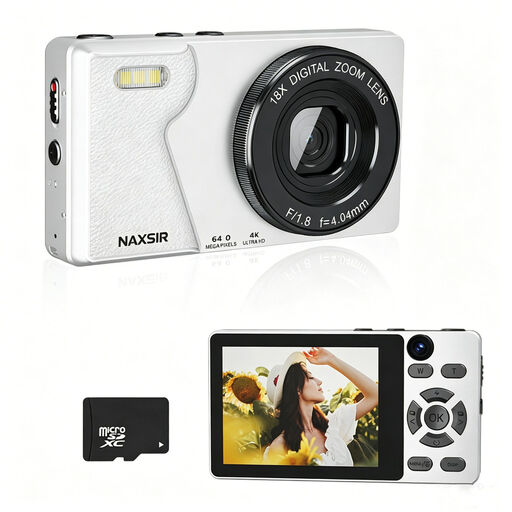 No image available
For anyone looking for a camera with digital zoom; digital zoom is not the same as optical zoom.
The product name lists 4K Ultra HD, 64 MP, autofocus and an included 32 GB memory card.
 No image available
For anyone who wants to frame shots from different positions and is looking for optical zoom.
The product information lists 18× optical zoom and autofocus; the product name specifies 5K, 80 MP and the white version.
 No image available
The product description mentions landscape photography; check that the angle of view and controls suit your shooting position.
The product name lists 12× optical zoom, 4K, Wi-Fi and 64 MP.
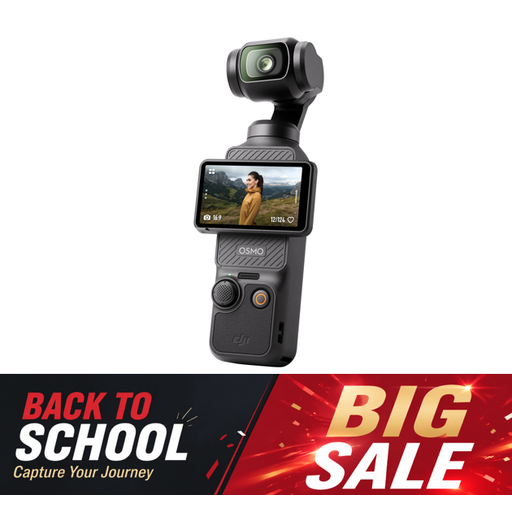 No image available
The product information mentions both video and still images; consider this model if you also want to shoot video.
The product name lists a 1-inch CMOS sensor, 4K/120fps video, 3-axis stabilisation and a 2-inch rotating touchscreen.
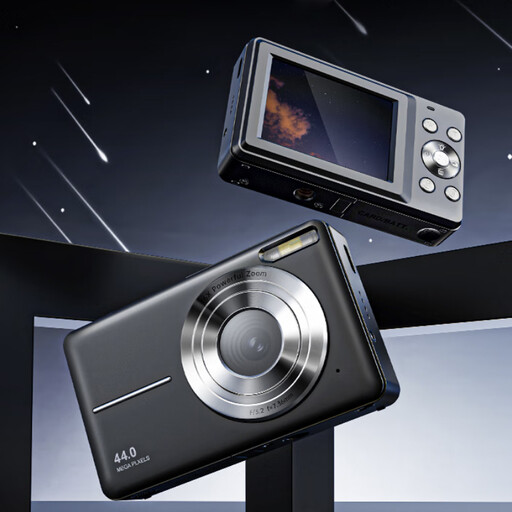 No image available
For anyone looking for a pocket camera with autofocus and digital zoom; digital zoom is not optical zoom.
The product name lists 4K, 44 MP and the black version.
First, check the exposure in the most important parts of your photo. If you want to take shots at different exposures, check whether the camera supports exposure bracketing; Canon lists AEB for the PowerShot G7 X Mark III. Taking multiple shots is most practical when the framing can stay the same between them.
No. According to the Consumers’ Association, compact cameras do not have interchangeable lenses. So check whether the fixed lens or built-in zoom will give you the framing you want from your shooting position.
Keep the camera and your arms close to your body; a viewfinder can help with framing. Check the stabilisation on the exact model, but don’t treat it as a substitute for other shooting choices.
Contact the retailer. The Dutch government says the retailer must provide a solution if a product is faulty, and that the Netherlands has no fixed statutory warranty period. Normal wear and tear or damage caused by you does not automatically entitle you to a free solution.
First, consider the privacy rules for your intended use. The Dutch Data Protection Authority distinguishes between private use within a limited circle and wider public or commercial sharing of images showing identifiable people; the latter may require a legal basis under the GDPR. This is not a general rule for every photo that shows only a windmill.