If you want to capture a sweeping view of the trees and canal while out for a walk, a fixed wide-angle lens could suit you if you’re happy with its framing. Choose a compact zoom if you also want to capture details further away from the same spot. Compare how easy the exact model is to use and how quickly it starts up, then weigh the extra reach against sensor size and lens brightness in low light.
Who should consider this choice?
Spontaneous canal-side walkers
If you want to take a quick photo as you walk, without choosing a lens or adjusting lots of settings first, compare how easy the exact model is to use and its stated start-up time. Ricoh quotes a start-up time of 0.6 seconds for the GR IV; this is a manufacturer’s figure.
Fans of sweeping autumn scenes
If you want to capture the trees, canal bank and reflections together, consider whether the wide-angle setting suits the space available from where you’re standing. The Consumers’ Association (Consumentenbond) highlights factors such as your subject, camera size and zoom range when choosing a camera.
Photographers who capture distant details
If you want to frame leaves or buildings further along the canal from the bank, compare the optical zoom range with the sensor size and lens brightness. A longer zoom range alone doesn’t tell you how a camera performs in low light.
Which factors matter most?
Fixed wide-angle lens
A good fit if: you want to capture a sweeping view as you walk and don’t need to zoom in. Ricoh specifies a fixed 28 mm-equivalent lens for the GR IV.
Trade-off: there’s no optical zoom, so check that the fixed framing works from where you’ll be standing.
Versatile zoom
A good fit if: you want to switch between a wide view and details on the other side of the canal. Sony specifies a 24–200 mm-equivalent zoom and a 1.0-type sensor for the RX100 VII.
Trade-off: you’ll need to choose your framing and operate the zoom; the stated specifications don’t tell you how long it takes to capture the first photo.
Shorter, brighter zoom
A good fit if: you mainly take photos nearby and want some flexibility in your framing. Canon specifies a 24–100 mm-equivalent zoom and f/1.8–f/2.8 for the PowerShot G7 X Mark III.
Trade-off: this model has less telephoto reach than the Sony and Panasonic models mentioned; lens brightness alone can’t predict the result of every shot.
Zoom for distant details
A good fit if: you can’t get closer to a tree or architectural detail. Panasonic specifies 30× optical zoom for the Lumix DC-TZ99 and a 24–720 mm-equivalent range for 4:3 photos.
Trade-off: Panasonic lists a 1/2.3-inch sensor and f/3.3–6.4 for this model. Weigh these features against your lighting conditions.
| Factor to consider |
What to check before buying |
Who should care about this? |
| Getting started quickly |
Check how to switch on and use the exact model; distinguish its stated start-up time from the time it takes you to capture your first photo. |
If I want to spend little time adjusting settings while out walking, I look for a straightforward start-up; around 36% of consumers put speed first. |
| Wide framing |
Compare the wide-angle setting in 35 mm equivalents and decide whether it works from where you’ll be standing. |
If I want to capture the trees, canal bank and water together from the spot available, a wide-angle lens is the deciding factor for me; around 29% of consumers prioritise a wide canal-side view. |
| Taking photos in low light |
Compare the sensor size and maximum aperture at the focal length you’ll actually use. |
If I often take photos on overcast days or later in the day, I want to consider the sensor and lens brightness; around 21% of consumers put low-light performance first. |
| Distant details |
Compare the optical zoom range in 35 mm equivalents; don’t count digital zoom as optical reach. |
If I want to frame details on the other side of the canal from the same spot, optical reach comes first for me; around 14% of consumers prioritise distant details. |
Buying pitfalls
-
Confusing digital zoom with optical reach
A zoom figure may refer to digital or combined zoom. That’s not the same as the optical range you should compare when looking for a camera to capture distant details.
Compare the optical wide-angle and telephoto ends of the exact model, and check which aspect ratio is used.
-
Assuming a long zoom is automatically suited to gloomy days
Zoom range, sensor size and lens brightness are separate features. The Consumers’ Association (Consumentenbond) points out that cameras with a long zoom often have a small sensor.
Compare the sensor size and maximum aperture at the focal length you use most often.
-
Only preparing the camera itself
The storage type and capacity need to suit your camera and the kind of photos and videos you take.
Check the requirements for the exact model and what’s included in the box. You may need to buy a compatible memory card or spare battery separately.
Camera brands to consider
Ricoh
The GR IV is worth considering if you want to capture a sweeping view spontaneously with a fixed wide-angle lens.
- Ricoh specifies an APS-C sensor, 28 mm equivalent and a start-up time of 0.6 seconds for the GR IV.
- The lens is fixed and offers no optical zoom; the start-up time is a manufacturer’s figure.
Sony
The RX100 VII is worth considering if you want to switch between a wide view and more distant details with one compact camera.
- Sony specifies a 1.0-type sensor and 24–200 mm-equivalent optical zoom for this model.
- The stated specifications don’t provide an independently measured time to the first photo.
Canon
Two different PowerShot models offer different approaches to zoom; their features don’t belong to the same camera.
- Canon specifies 24–100 mm equivalent and f/1.8–f/2.8 for the G7 X Mark III; the SX740 HS Lite Edition has 40× optical zoom.
- The features of these two models aren’t interchangeable; check the exact model name and variant.
Panasonic
The Lumix DC-TZ99 is worth considering if you need both a wide-angle view and distant details from the same spot.
- Panasonic specifies 30× optical zoom and a 24–720 mm-equivalent range for 4:3 photos.
- Panasonic lists a 1/2.3-inch sensor and f/3.3–6.4; the stated range doesn’t prove that the camera takes better photos in low light.
Joybuy cameras
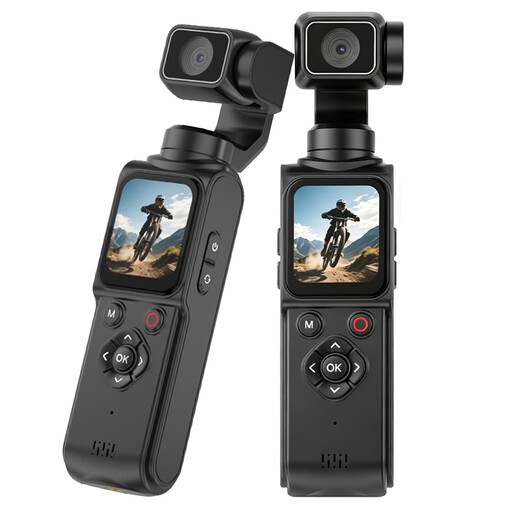
These Joybuy products are compact or pocket cameras for photography on the go. Compare each model’s stated zoom range and controls with the framing you need along the canal.
 No image available
KINSI Mini Vlog Camera 4K, 64 MP
For anyone considering a mini vlog camera for photography on the go; the product name lists 4K and 64 MP.
The product name also lists a 330° rotating lens, a 1.72-inch touchscreen and Wi-Fi.
View on Joybuy
 No image available
DJI Osmo Pocket 4 Standard Combo
For anyone considering a pocket camera for photography, with zoom and built-in storage according to the product name.
The product name lists a 1-inch CMOS sensor, 4K/240fps, 3-axis stabilisation, 2× lossless zoom and 107 GB of built-in storage.
View on Joybuy
 No image available
Komery W6 digital camera
For anyone considering a digital camera with optical zoom for distant subjects.
The product name lists 12× optical zoom, 4K and 64 MP.
View on Joybuy
 No image available
DJI Osmo Pocket 3
For anyone considering a small camera for photography and video on the go.
The product name lists a 1-inch CMOS sensor, 4K/120fps, 3-axis stabilisation, fast focusing and a 2-inch rotating touchscreen.
View on Joybuy
 No image available
Songdian 5K digital camera, 56 MP
For anyone considering a digital camera with optical zoom for photography.
The product name lists 10× optical zoom and front and rear cameras.
View on Joybuy
Frequently asked questions
How can you get ready quickly by the canal?
Decide in advance what you want to capture, then check how to switch on and use the exact model. Ricoh quotes a start-up time of 0.6 seconds for the GR IV; this manufacturer’s figure doesn’t necessarily include the time you need to frame and take the shot.
Should you focus mainly on a long zoom for a row of trees?
No. First check whether the wide-angle setting captures the trees and canal together from where you’re standing. Zoom is most useful if you also want to frame distant details from the same spot; a longer zoom range alone doesn’t prove better photo quality.
What should you check before buying a memory card?
Check which card type is supported by the manual for your exact camera model. The capacity you need depends on how you take photos and videos; a high speed rating alone doesn’t determine whether the card suits your camera and how you use it.
What if the camera breaks after the manufacturer’s warranty expires?
In the Netherlands, your statutory guarantee may still apply if a product breaks sooner than you could reasonably expect under normal use. ACM ConsuWijzer explains that the retailer must resolve the issue in accordance with the law; a manufacturer’s warranty doesn’t replace your statutory rights.


