
Sellers of fragile glassware
You want the shape and colour to remain clear in the main photo, without reflections dominating the image.


Choose a compact camera based on the distance at which you can photograph both the whole piece and small markings or damage. Pay attention to the minimum focusing distance at each zoom setting. A suitable camera won’t eliminate reflections on its own: lighting, the background and a stable setup are still important for clear listing photos.
You want the shape and colour to remain clear in the main photo, without reflections dominating the image.
Alongside the whole item, you want to clearly show a signature, engraving or damaged area. The minimum focusing distance can vary between cameras and zoom settings.
You want to take several listing photos with similar framing, without much room to move the camera or the glassware.
First, check whether you can fit the whole item into the frame from your working distance. Then make sure you can focus on the details, while also allowing for the lighting and space needed for a stable setup.
| What to consider | What to look for | Who is this important for? |
|---|---|---|
| Reflections and colour | Check whether you can adjust the exposure, and leave room for controlling the light and using a plain background. | I want the colour and shape of my glassware to remain clear, without reflections dominating the image. Around 36% of consumers prioritise controlling reflections. |
| Small details | Compare the minimum focusing distance at the zoom setting you’ll use to photograph the marking or sign of wear. | I want to show an engraving or small damaged area clearly alongside the main photo. Around 29% of consumers give close-up shots top priority. |
| Fitting the whole item into the frame at close range | Measure the available distance and check whether the angle of view will fit the whole item into the frame. | My photo table is small, so I want to photograph the whole piece of glass without having to move the camera far back. Around 21% of consumers prioritise framing the whole item. |
| A repeatable setup | Check whether you can keep the camera and background in fixed positions, and whether you can operate the camera from there. | I create several listings and want to set up the camera in roughly the same way each time. Around 14% of consumers prioritise a repeatable workflow. |
On some cameras, the minimum focusing distance at telephoto is much greater than at wide angle. So a high zoom setting doesn’t automatically mean you can get a sharp image of a small marking from the same spot.
Compare the minimum focusing distance at each zoom setting with the framing you need for the marking.
Lighting and the background play an important role when photographing glass. A different camera won’t automatically solve distracting reflections.
Start with a simple, controlled setup, then work out what needs adjusting.
A background, light diffuser or tripod also takes up space on your photo table.
A Joybuy listing for a Songdian camera gives both 44 MP in the title and 64 MP in the variant text. These conflicting figures don’t provide a clear specification for the version on offer.
Check the exact variant and its documented focusing and exposure options. Don’t rely on the stated megapixel count alone to decide whether it’s suitable for photographing glass.
The PowerShot G7 X Mark III is worth considering if you want a single compact model for main shots, close-ups and manual control.
The LUMIX DC-TZ99 combines a broad zoom range with a dedicated macro mode.
The Tough TG-7 is a model to consider when capturing very small details is a priority.
The RX100 VII may be worth considering if you also take photos from further away.
The GR IIIx is worth considering if you want to work deliberately with a fixed angle of view and a consistent setup.
Below are compact cameras and pocket gimbal cameras included for this topic. Check whether the features listed for each model are suitable for still listing photos of glass.
 No image available
The rotating screen may be useful when framing shots with a small setup. The product name positions this model as a vlogging camera, so check whether its features suit still product photos for listings.
The product name lists a 1-inch CMOS sensor, 2× lossless zoom, 4K/240fps and 107 GB of built-in storage.
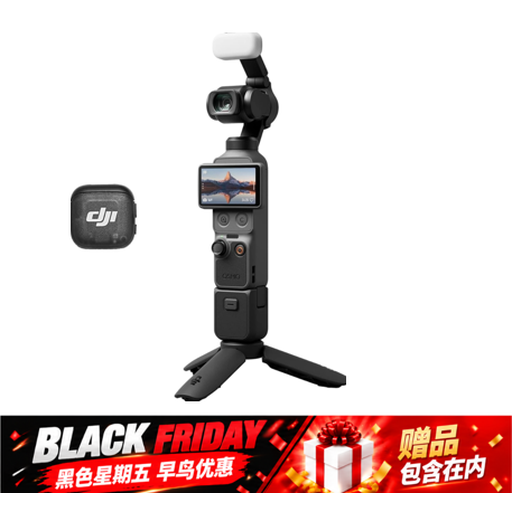 No image available
The product name lists a handle with a 1/4-inch thread, which may be useful if you use a compatible mount for a fixed setup. Check that the setup is suitable for your still product photos.
The product name lists a 1-inch CMOS sensor, 2× lossless zoom, 4K/240fps, 107 GB of built-in storage and a handle with a 1/4-inch thread.
 No image available
The rotating touchscreen may be useful if you operate the camera from a low or fixed position. Consider separately whether this vlogging model is suitable for listing photos of glass that isn’t moving.
The product name lists a 1-inch CMOS sensor, 4K/120fps video and a 2-inch rotating touchscreen.
 No image available
The product name mentions photography and video. Check the exact version and its focusing capabilities before considering this model for detail shots of glass.
The listing gives both 44 MP in the title and 64 MP in the variant text. Don’t treat the megapixel count as a clear specification without checking the version.
No. For the Canon PowerShot G7 X Mark III, Sony RX100 VII and Panasonic LUMIX DC-TZ99, the stated minimum focusing distance differs between wide angle and telephoto. Compare the setting you’ll actually use to photograph the marking with the distance at which you’ll be working.
Keep the camera and background in fixed positions, and check that the edges, colour and any damage remain visible. Canon Netherlands recommends using a tripod for consistent product composition.
Not necessarily. Start by controlling the available light and using a plain background, then see whether your setup needs extra lighting or a diffuser. Photography tips from Orbitvu and Canon Netherlands describe techniques, not essential equipment for every seller.
If you buy online from a trader as a consumer, ACM ConsuWijzer generally states that you have a cooling-off period ending 14 days after delivery. You’re also entitled to a product that meets what you could reasonably expect; the statutory guarantee isn’t simply a fixed two-year period. Check who the seller is. Consumer rights don’t automatically apply to a business purchase.
No. This depends, among other things, on the capacity in which you’re selling. The Dutch Government gives an online purchase from a private individual as an example of a transaction that doesn’t count as distance selling under consumer regulations. So establish whether you’re selling as a private individual or as a trader.