Who is this buying guide for?

Vintage glassware seller

If you want to photograph the whole object and show its distinctive shape and colour, don’t just consider the camera: the space, background and position of the light all affect what you see reflected in the glass. Adobe explains how much the appearance of glassware can vary with the quality of the light.

Engraved glass collector

If you want to show maker’s marks, cut patterns or engravings, check the focusing distance at the lens setting you plan to use, and allow room for your lighting.

Photographer looking for one camera for different situations

If you want to photograph both glassware on a table and subjects at a distance, weigh up the optical zoom range against the focusing distance and lens aperture at the telephoto end.

What should you look for?

A camera with a fast lens for wider shots

Choose this if: you mainly photograph whole glasses and vases under limited artificial light.

Bear in mind: Canon lists a focusing distance of 5 cm at the wide-angle end for the PowerShot G7 X Mark III, but 40 cm at the telephoto end. The shortest distance is therefore not available at every zoom setting.

A close-up camera for small details

Choose this if: engravings or maker’s marks are your main subject and you can work close to the glass.

Bear in mind: OM Digital Solutions lists a focusing distance of 1 cm for the Tough TG-7; Canon lists 1 cm for the SX740 HS Lite Edition in macro mode at the wide-angle end. That distance doesn’t tell you how much room you’ll have for lighting.

A camera with a greater optical zoom range

Choose this if: you want to photograph subjects at a distance as well as objects on a table.

Bear in mind: Sony lists a minimum focusing distance of approximately 100 cm at the telephoto end for the RX100 VII; Panasonic lists 200 cm in AF Macro at the telephoto end for the TZ99. So check the setting you’ll use when photographing objects on a table.

What to consider What to look for when buying Who is this important for?
Reflections and outlines Check whether you can move the light, background and camera independently. If I want to reduce distracting reflections and keep the outlines of the glass clear, I look at how I can direct the light. Around 31% of consumers put reflection control first.
Engravings and maker’s marks Compare the focusing distance at the lens setting you want to use and the actual distance from your table. If I want to capture engravings or maker’s marks clearly, I check whether there’s still room for lighting at that distance. Around 25% of consumers prioritise small details.
Colour and exposure Check the white balance, file formats and maximum aperture at the zoom setting you plan to use. If I want the glass to retain its recognisable colour under my own lights, I take a test shot and check which white balance and file format options are available. Around 25% of consumers put colour accuracy first.
Working distance and zoom Measure your usual distance between the camera and subject, then compare the focusing distance at that zoom setting. If I want one camera for both glassware and subjects at a distance, I weigh up the zoom range against the distance at which the lens can focus. Around 19% of consumers prioritise versatility and working distance.

Pitfalls to avoid

  • The shortest macro distance doesn’t apply at every zoom setting

    The stated focusing distance can differ between the wide-angle and telephoto ends. So a short distance at the wide-angle end won’t necessarily tell you how close you can focus at the telephoto end.

    Before choosing a camera, compare the focusing distance and the framing you want at the same lens setting.

  • A big zoom range isn’t automatically useful for glass on a table

    On some models, the minimum focusing distance increases towards the telephoto end. A long zoom range won’t help if the lens can’t focus at your working distance.

    Measure the space between the camera and the glass, and prioritise the focusing distance at the lens setting you’ll use over the maximum zoom range.

  • A new camera won’t automatically solve reflections

    Glass can reflect the position and shape of light sources; changing the camera specifications alone won’t make those reflections disappear.

    Try moving the light and camera, and use white or black cards to influence the visible outlines.

    Setting up suitable lighting and using simple cards or background materials may take extra preparation.

Camera brands to compare

Canon

According to Canon Netherlands, the PowerShot G7 X Mark III and SX740 HS Lite Edition offer different options for tabletop photography and close-ups.

  • Canon lists a 1.0-type sensor, f/1.8–2.8 and a minimum focusing distance of 5 cm at the wide-angle end and 40 cm at the telephoto end for the G7 X Mark III.
  • For the SX740 HS Lite Edition, Canon lists 1 cm at the wide-angle end in macro mode; according to the specifications, photos are saved as JPEGs.
  • The minimum focusing distance of the G7 X Mark III varies depending on the lens setting. The 1 cm distance for the SX740 HS Lite Edition applies specifically to the wide-angle end in macro mode.

Sony

According to Sony, the RX100 VII combines a 1.0-type sensor with a 24–200 mm equivalent zoom range.

  • Sony lists a maximum lens aperture of f/2.8 at the wide-angle end and f/4.5 at the telephoto end.
  • According to Sony, the minimum focusing distance is approximately 8 cm at the wide-angle end and approximately 100 cm at the telephoto end. So the zoom range alone doesn’t prove that the telephoto end is suitable for tabletop close-ups.

Panasonic

According to Panasonic, the LUMIX TZ99 combines 30× optical zoom with RAW, manual exposure modes and focus stacking.

  • The stated minimum focusing distance is 3 cm at the wide-angle end.
  • At the telephoto end, Panasonic lists 200 cm in AF Macro. The TZ99 has a 1/2.3-inch sensor and a maximum aperture of f/3.3–6.4; the manufacturer’s specifications aren’t an independent image quality test.

OM SYSTEM

According to OM Digital Solutions, the Tough TG-7 is a rugged compact camera with a stated short working distance for capturing small details.

  • The manufacturer lists a minimum focusing distance of 1 cm, approximately 12 megapixels and a 25–100 mm equivalent zoom range.
  • The short focusing distance alone doesn’t tell you how much room you’ll have for lighting or how the camera will perform under your artificial lights.

Cameras at Joybuy

Here you’ll find Joybuy cameras with a range of stated zoom features. For vintage glassware, it’s also worth checking the focusing distance, lens aperture, white balance and available file formats for each model.

KOMERY G7-A 4K digital camera, pink

KOMERY G7-A 4K digital camera, pink

For glassware close-ups, check the focusing distance and zoom setting that suit your working distance from the table.

The product title lists 80MP, 18× zoom, 4K and a portable pink design.

View at Joybuy
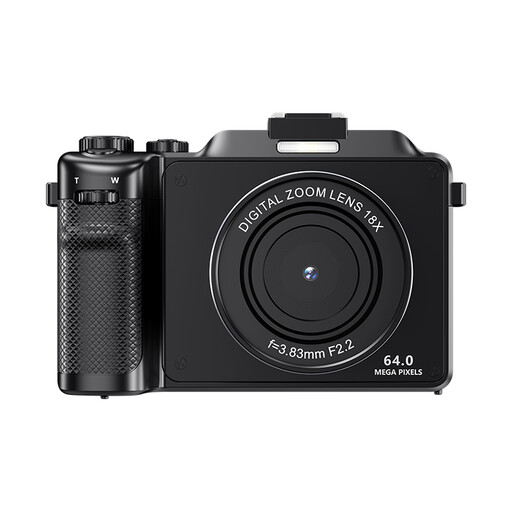
Komery X9 4K camera with autofocus, black

Komery X9 4K camera, black

For glassware, check the focusing distance and whether you can get the framing you want without unwanted reflections in shot.

The product title lists 64MP, autofocus, 18× digital zoom, flash and anti-shake.

View at Joybuy

Komery W6 camera with 12× optical zoom

Komery W6 camera

For tabletop photography, compare the focusing distance at the zoom setting you want to use.

The product title lists 12× optical zoom, 4K, 64MP and Wi-Fi.

View at Joybuy

Songdian Pocket Camera 4K, pink

Songdian Pocket Camera 4K, pink

If you’re using it to capture small details, check that the camera can focus at your working distance.

The product title lists 44MP and 16× zoom.

View at Joybuy
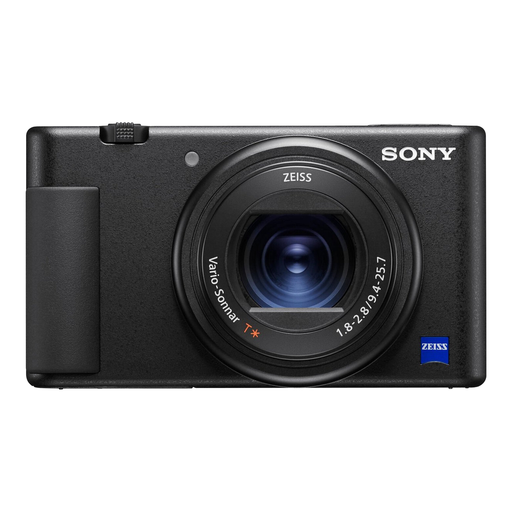
Sony ZV-1 compact camera

Sony ZV-1 compact camera

The stated RAW shooting and lens aperture are features to consider under artificial light; also check the focusing distance for your shooting distance.

The product information lists a 1-inch sensor, a 24–70 mm range, f/1.8–2.8 and a tilting screen.

View at Joybuy

Frequently asked questions

Is a built-in flash useful for photographing glassware?

A light source close to the camera’s direction can show up as a reflection in glass. First try adjusting the position and softness of the light, then review a test shot; decide which reflections you want to keep based on the look you’re after.

How can I avoid a yellow or blue colour cast under artificial light?

Take a test shot under the lights you plan to use and adjust the white balance for those conditions. Adobe also describes correction using a neutral reference point; for the editing discussed, RAW offers more white balance options than JPEG.

What should I check before buying a camera for macro details?

Check the minimum focusing distance at the lens setting you’ll use to frame your shot. The distances listed by Canon, Sony and Panasonic vary between the wide-angle and telephoto ends; also check that you’ll have room for lighting at your working distance.

How long is the statutory guarantee on a camera I buy in the Netherlands?

For a consumer purchase, the product must meet what you could reasonably expect. According to the Dutch government, there’s no fixed statutory guarantee period in the Netherlands; if a product is faulty, the retailer is your point of contact. A manufacturer’s guarantee is in addition to this.

Can I return a camera ordered online within 14 days?

According to the Dutch government, a 14-day cooling-off period applies in many cases when you buy from a business at a distance as a consumer. This doesn’t automatically apply to purchases from a private seller, so check the terms and conditions that apply to your purchase.
