What should you look for when photographing glass?
Zoom compact for changing your framing
A good fit if: you switch between a whole glass, a group of glasses and a close-up.
Trade-off: Canon says the PowerShot G7 X Mark III has a 24–100 mm-equivalent zoom; the stated focusing distance varies from 5 cm at the wide-angle end to 40 cm at the telephoto end.
Compact camera for very small details
A good fit if: you mainly want to capture an engraving, base or rim close up.
Trade-off: OM Digital Solutions quotes a minimum focusing distance of 1 cm and a 25–100 mm-equivalent zoom for the Tough TG-7. These specifications alone say nothing about colour reproduction in window light.
Fixed angle of view for a permanent setup
A good fit if: you can move the camera and glass, and want to choose a fixed angle of view in advance.
Trade-off: Ricoh quotes a fixed 40 mm-equivalent angle of view and a focusing distance of 12 cm in macro mode for the GR IIIx; to change the framing, you’ll need to adjust the position.
Longer zoom range for other subjects
A good fit if: you also want to use the camera away from your glass setup and are looking for a wider zoom range.
Trade-off: Sony specifies a 24–200 mm-equivalent zoom for the RX100 VII, with a focusing distance of around 8 cm at the wide-angle end and around 100 cm at the telephoto end.
The percentages below show how consumers choosing a compact camera for this specific photography task divide according to their main buying priority.
| What to consider |
What to look for |
Who might find this especially important? |
| Capturing small engravings in focus |
Compare the focusing distance measured from the front of the lens with the zoom setting and framing you want to use. |
If I want to fill the frame with small engravings or cut details, the camera I choose needs to focus at the framing I want. Around 36% of consumers in this choice context give close-ups top priority. |
| Framing a whole glass |
Measure the available working distance and see which angle of view will work there. |
At a small table, I want to be able to frame a whole glass or a group of glasses without the setup feeling cramped. Around 29% of consumers give capturing complete glasses top priority. |
| Managing reflections and glass colour |
Try side lighting and backlighting before looking to extra camera features to solve reflection problems. |
If colour and light transmission matter, I want to see how the position of the window light affects reflections and the edges of the glass. Around 21% of consumers prioritise light and colour. |
| A simple, complete setup |
Check the exact version, the included items, any accessories you’ll need and the seller’s terms. |
I want to use as few separate items as possible and know in advance what’s included. Around 14% of consumers give a simple setup and straightforward purchase top priority. |
Joybuy cameras for this photography task
These cameras differ in design and zoom options. For vintage glass, check that the focusing distance and framing suit your tabletop setup; those details aren’t listed here for every model.
 No image available
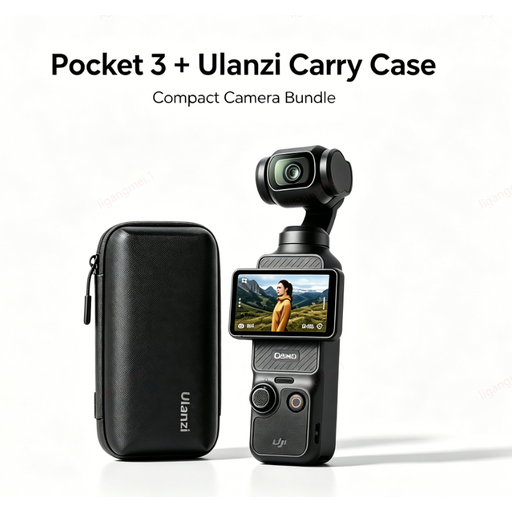
DJI Pocket 3 camera with Ulanzi Custom Storage Carry Case
The product name lists a DJI Pocket 3 camera with a Ulanzi storage case; check that the camera suits your chosen framing and focusing distance for glass.
Joybuy
 No image available
KOMERY G7 5K, 80MP, 18× optical zoom, white
The stated 18× optical zoom could be useful if you want to try different framings; also check that the camera can focus at the distance your glass setup requires.
Listed features: 80MP, 18× optical zoom, white.
Joybuy
 No image available
KOMERY W6, 12× optical zoom, 4K, 64MP
The product description lists 12× optical zoom for changing your framing; check that the focusing distance suits the framing you want.
Listed features: 12× optical zoom, 4K, 64MP.
Joybuy
 No image available
Songdian, 8× optical zoom, 5K, 64MP, dual lens, white
The product description mentions optical zoom and autofocus, as well as manual focus; check which focusing options are available for the glass detail you want to capture.
Listed features: 8× optical zoom, 5K, 64MP, dual lens, white.
Joybuy
 No image available
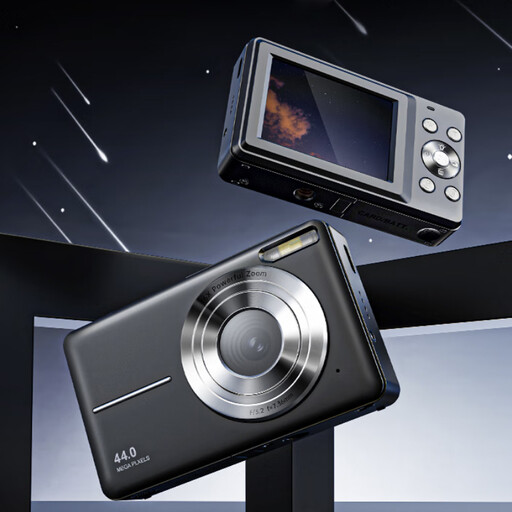
Songdian pocket camera, 4K, 44MP, 16× digital zoom, black
This pocket camera lists digital zoom; check that the framing and focusing distance are suitable for the glass you want to photograph.
Listed features: 4K, 44MP, 16× digital zoom, black.
Joybuy
Frequently asked questions
Is the shortest focusing distance enough to fill the frame with an engraving?
Not always; the angle of view and zoom setting matter too. Canon quotes 5 cm at the wide-angle end and 40 cm at the telephoto end for the G7 X Mark III, while Sony lists around 8 cm and 100 cm for the RX100 VII. So try the framing you want at the zoom setting you’ll actually use.
How can I get started with window light without unwanted reflections?
First, try the glass with the window light coming diagonally from the side, then with the light behind it. Adobe Lightroom Academy describes side lighting and backlighting as different techniques for glassware; see how the edges, colour and reflections appear in each setup.
What checks should I make when using and caring for my camera?
Check that the glass and shooting surface are clean and stable, and consult the manual for operating and care instructions. Canon lists a battery and battery charger in the box for the G7 X Mark III, but no USB-C charger; don’t assume another version or bundle contains the same items.
What warranty applies when buying a camera in the Netherlands?
In the Netherlands, you’re entitled to a product that meets the expectations you can reasonably have of it, but according to the Dutch Government there is no fixed statutory warranty period. A manufacturer’s or seller’s warranty is in addition to that right; if there’s a fault, contact the seller.
Can I return a camera bought online within 14 days?
According to the Dutch Government, a 14-day cooling-off period applies to many distance purchases, but not every transaction. For example, an online purchase from a private individual isn’t covered by these distance-selling rules. Check who the seller is and which terms apply to your purchase.


