
Photographing the whole square
You want to capture the square and surrounding buildings in one shot without carrying much equipment. Compare the angle of view from a spot where you can actually stand.


If you want to photograph both a wide square and details across it from the same spot, look for a compact camera with optical zoom. For walks and wide street scenes, a fixed wide-angle lens may suit you better. Check the angle of view from your usual position, and weigh the zoom range against the lens aperture, sensor size and the weight you’re happy to carry.
You want to capture the square and surrounding buildings in one shot without carrying much equipment. Compare the angle of view from a spot where you can actually stand.
You want a camera that’s easy to carry and quick to point at street scenes. A fixed angle of view may suit you if you’re comfortable composing that way.
You can’t keep walking over to a subject on the other side and want to zoom in optically without carrying a second lens.
Start with the angle of view you need to capture the square from your position. Then decide whether you need optical zoom for details or would rather carry a fixed lens.
| What to consider | What should you check? | Who is this important for? |
|---|---|---|
| Width of the frame | Compare the 35mm-equivalent focal length in the photo mode you use; try out the angle of view from a similar distance. | If I want to capture the square from one practical spot, I look at the wide-angle setting first. Around 33% of consumers prioritise how much of the square fits in the frame. |
| Portability | Compare dimensions and weight, ideally including the battery and card; also consider whether you need a viewfinder. | For a camera I can comfortably carry throughout a walk, the total weight I’ll be carrying matters. Around 25% of consumers put portability first. |
| Optical zoom range | Check the optical zoom range and maximum aperture at the telephoto end; also check which photo mode the range applies to. | When distant details matter, I want to reframe without changing lenses. Around 25% of consumers put optical zoom range at the top of their list. |
| Low-light photography | Compare sensor size and maximum aperture at the focal length you use; stabilisation doesn’t automatically prevent motion blur when photographing people. | If I also want to take photos in the shade or after sunset, I look beyond the zoom factor alone. Around 17% of consumers prioritise low-light photography. |
Panasonic lists different equivalent focal lengths for the TZ99 depending on the aspect ratio and video mode. The stated 24–720 mm equivalent applies to photos in 4:3.
Compare the wide-angle and telephoto ends in the photo mode you actually plan to use.
The Ricoh GR III has a fixed 28 mm-equivalent angle of view and doesn’t zoom optically. The separate GW-4 conversion lens widens the view; it doesn’t bring distant subjects closer.
Choose optical zoom if distant details are a key reason for your purchase. You’ll also need a GA-1 adapter to use the GW-4 on the GR III.
With the conversion lens and adapter, you’ll carry more separate equipment than with the camera alone.
The MPB selection on 9 October 2026 includes the Ricoh GR III and Panasonic TZ200, among others. The GR IV and TZ300 are separate models and shouldn’t be mistaken for those cameras.
Check the full model name and compare the specifications of the exact version you’re considering.
According to ACM ConsuWijzer, statutory warranty in the Netherlands depends on what you could reasonably expect from the product under normal use. The seller is responsible for providing an appropriate solution if a product is faulty.
Keep your proof of purchase and report any fault to the seller. Don’t treat a commercial warranty as a substitute for your statutory rights.
The RX100 VII is a compact zoom camera for anyone who wants to frame wide views and distant details with one device.
The GR III and GR IV are fixed wide-angle cameras for anyone who wants to capture wide street scenes on the go with simple, compact equipment.
The X100VI is an option if a fixed 35 mm-equivalent angle of view suits your shooting positions and style.
The TZ99 offers a long travel zoom; according to Panasonic, the TZ300 combines a 24–360 mm-equivalent zoom with a 1.0-type sensor.
The PowerShot G7 X Mark III is a compact zoom alternative if 24–100 mm equivalent is enough for your compositions.
The Q3 shows that a fixed-lens camera can still be a heavier piece of kit.
This selection includes compact cameras and zoom models for capturing squares and distant details. One Sony kit has an interchangeable lens, so it falls outside the fixed-lens scope of this article.
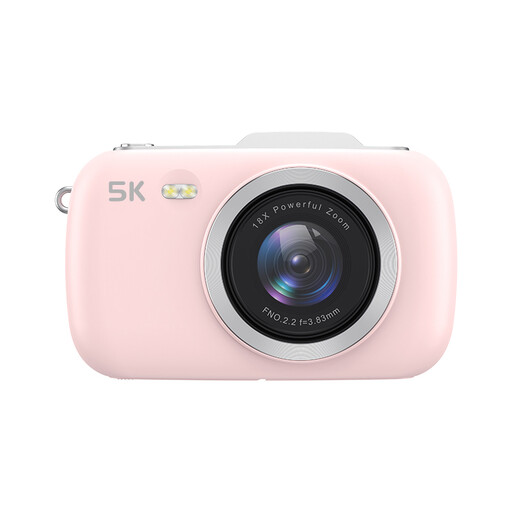 No image available
The product name lists 18× zoom for anyone who wants to frame distant details without an extra lens.
An SD card isn’t included.
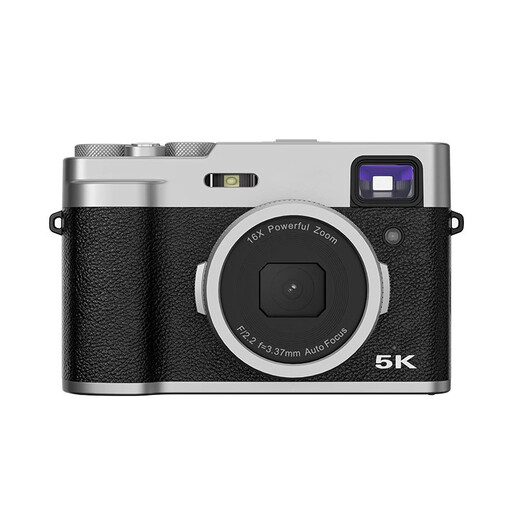 No image available
The product information lists autofocus and an optical viewfinder for photography on the go.
The product name specifies a 48MP camera.
 No image available
The product name lists 8× optical zoom for framing distant subjects without changing lenses.
According to the product information, zoom and focus are controlled using a manual lens ring.
 No image available
The product name lists 10× optical zoom for anyone who wants to capture distant details without changing lenses.
The product name also lists front and rear cameras and a 56MP camera.
 No image available
This kit includes a 16–50 mm power zoom lens for different compositions, but the lens needs to be attached to the E-mount body.
The product information lists a 24.2MP APS-C sensor and a 16–50 mm f/3.5–5.6 OSS lens. According to that information, an SD card and adapter/charger aren’t included.
Start with the wide-angle setting and test it from somewhere you can actually stand. In the stated photo modes, the zoom models discussed here start at 24 mm equivalent; the Ricoh GR IV has a fixed 28 mm-equivalent lens, while the Fujifilm X100VI has a fixed 35 mm-equivalent lens. None of these figures guarantees that a particular square will fit entirely in the frame.
Sony recommends using a blower to remove dust from the lens surface first, and advises against applying cleaning fluid directly to the lens. For other cleaning instructions, follow the manual for your exact camera model, and don’t open the body to clean the sensor yourself.
According to ACM ConsuWijzer, statutory warranty depends on what you could reasonably expect from the product under normal use; the seller must provide an appropriate solution if a product is faulty. Online purchases generally come with a cooling-off period of up to 14 days after delivery, subject to legal exceptions. Also check what’s included with the specific offer.
Not automatically. The Dutch Data Protection Authority distinguishes between images kept private or shared with a very limited circle and wider publication. If people are recognisable, the GDPR may apply to wider publication and you’ll need an applicable legal basis. The exception for personal or household use doesn’t apply to professional or commercial use. This isn’t a general answer that gives permission or imposes a ban on every photo taken in every square.