
Photographers working with light and shadow
You want to expose deliberately for the bright sky and dark foreground from a tripod, and perhaps edit a RAW file afterwards.


Start with your biggest limitation: exposure control, reframing from one spot, or protection from damp and cold. Then compare each model’s angle of view, controls and RAW capability. A long zoom, a larger sensor and a rugged body are different features, and having all three does not guarantee a better photo. Also check whether your viewpoint is accessible around sunrise.
You want to expose deliberately for the bright sky and dark foreground from a tripod, and perhaps edit a RAW file afterwards.
You’ll be staying at one viewpoint and want to switch between a wide view of the polders and a smaller subject further away. The angle of view determines which compositions are possible from that spot.
You’ll be carrying the camera as you walk and may encounter damp or cold conditions outdoors. Portability and the protection offered by the exact model are important considerations.
| What to consider | What should you check? | Who should pay extra attention? |
|---|---|---|
| Exposure control | Check whether the exact model offers RAW, manual exposure or automatic exposure bracketing. Canon lists AEB for the PowerShot G7 X Mark III; Fujifilm lists 14-bit RAW for the X100VI. | If I want to expose deliberately for the bright sky and dark foreground, I focus on the shooting settings. Around 36% of consumers say exposure control is their main reason for buying. |
| Composing from one spot | Compare the equivalent focal length and check whether a quoted range applies to a particular aspect ratio. Sony lists a 24–200 mm equivalent range for the RX100 VII; Panasonic lists 24–720 mm equivalent for 4:3 photos with the TZ99. | If I can’t move around and want to capture both the horizon and details further away, the available zoom range matters. Around 29% of consumers give flexible composition top priority. |
| Carrying it to your viewpoint | Compare the weight including battery and card on a like-for-like basis. Canon lists approximately 304 g for the G7 X Mark III and Panasonic approximately 322 g for the TZ99, both including battery and card. | If I’m walking to my photography spot, I want a camera that’s easy to carry without losing sight of the angle of view I need. Around 21% of consumers say portability is their main reason for buying. |
| Damp and cold | Check the operating conditions for the exact model and compare them with the conditions at your location. OM Digital Solutions lists frost resistance down to −10 °C for the Tough TG-7; Canon specifies an operating temperature range of 0–40 °C for the G7 X Mark III. | If my chosen spot could be wet or cold, I want to know what protection the model actually offers. Around 14% of consumers prioritise protection from the elements. |
A greater zoom range gives you more ways to reframe from the same spot, but it doesn’t, in itself, say how well a camera captures a sunrise. Models can also differ in sensor size and maximum aperture.
First decide which compositions you want, then compare the angle of view, controls and model specifications. With the Panasonic TZ99, also note that the 24–720 mm equivalent range applies to photos in 4:3.
From a given viewpoint, a fixed angle of view doesn’t offer the same optical framing flexibility as a zoom lens. The FUJIFILM X100VI has a 35 mm equivalent angle of view; the Ricoh GR IIIx has a 40 mm equivalent angle of view.
Decide in advance whether the horizon, foreground and any distant subjects will fit into your desired composition.
Staatsbosbeheer states that most of its nature reserves are open from sunrise to sunset. Rules can vary by area.
Before you set off, check the information and access signs for the specific viewpoint.
The PowerShot G7 X Mark III is an option if you’re looking for wide framing, a short zoom and adjustable exposure.
The X100VI is a good fit for a viewpoint where a fixed 35 mm equivalent angle of view is sufficient and RAW and manual control matter.
The RX100 VII is an option if you want more optical framing flexibility from one position than a short zoom can offer.
The LUMIX TZ99 is a travel zoom option if you want to capture subjects at a range of distances from the same viewpoint.
The Tough TG-7 is a rugged option if damp or cold conditions at your photography spot are a major concern.
This selection includes portable digital cameras and an action camera with listed zoom or exposure features. In particular, check that the camera type, angle of view and type of zoom suit taking photos from a fixed spot.
 No image available
For anyone looking for a portable camera they can reframe with from one spot.
The product title lists 4K, 80 MP and 18× zoom. Check which type of zoom this version uses before relying on the zoom factor.
 No image available
An option if you want to reframe from a fixed spot using the listed optical zoom.
The product title lists 5K and 80 MP; the product description mentions 18× optical zoom.
 No image available
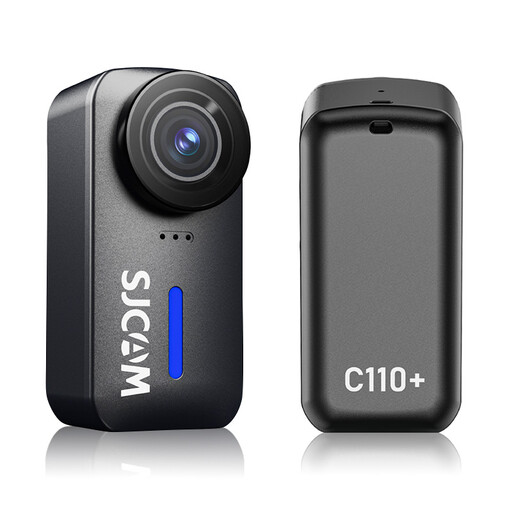
An action camera to consider if its listed angle of view and adjustable shooting features suit your composition.
The product title lists 4K, a 170° lens, f/1.8 and 20 MP photos. The product description mentions adjustable ISO and exposure compensation.
 No image available
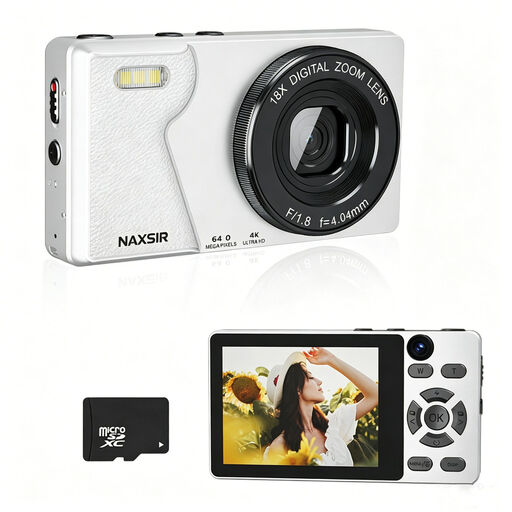
For anyone looking for a compact camera with autofocus who wants to assess digital zoom as an aid to cropping.
The product title lists 4K, 64 MP, 18× digital zoom and a 32 GB memory card. Digital zoom is not optical reframing.
 No image available
A pocket camera worth considering if you like the idea of a portable model for photography and video.
The product title lists 4K and 44 MP; the product description mentions 16× digital zoom and autofocus. Digital zoom doesn’t offer optical reframing from your viewpoint.
No, not for every shot. A low ISO and a smaller aperture can mean a longer shutter speed; Canon recommends using a tripod in that situation to reduce camera shake. It won’t freeze moving reeds or clouds.
It varies by area. Staatsbosbeheer says that most of its nature reserves are open from sunrise to sunset and directs visitors to the access signs for local rules. Natuurmonumenten also refers visitors to area information and site signs, so check the rules for the specific viewpoint.
Check the battery, memory card and shooting mode, and compare the temperature and damp conditions at your location with the operating conditions for your model. Don’t automatically treat a camera with a stated weather-resistance rating as equivalent to a model without that specification.
According to the Dutch government, you’re entitled to a product that’s fit for purpose. Depending on the fault and circumstances, you may be entitled to a free repair, replacement or refund. The Netherlands has no fixed statutory two-year guarantee: the reasonable lifespan depends on the product and the circumstances.
First, consider the privacy rules that apply to the situation. The Dutch Data Protection Authority notes that identifiable people in images count as personal data, and that taking and publishing such images can affect their privacy.