Start with the shot you find most challenging: balancing a bright sky with a dark foreground, getting a sharp shot before sunrise or framing a distant subject. To assess exposure control, check features such as a histogram, RAW and exposure modes. For low-light performance, compare the sensor and maximum aperture at the zoom setting you plan to use. A tripod or exposure bracketing can help with a static landscape, but won’t prevent motion blur from a moving subject.
Who is this advice for?
Sky and landscape photographer
Wants to expose deliberately for both a bright sky and a dark polder in a fast-changing scene, and may want to edit the images afterwards. Nikon discusses exposure bracketing, while Canon Netherlands explains how to use the histogram to assess highlights.
Early-morning walker without a tripod
Wants to travel light and take photos before sunrise, so pays attention to lens speed, shutter speed and motion blur. Nikon recommends a tripod for sunrise photography; if you’re leaving yours at home, it’s worth considering how well the camera performs when shooting handheld.
Photographer of distant polder details
Wants to capture not just the landscape but also a distant windmill, bird or other detail. The Consumers’ Association highlights the sensor as something to consider when choosing a camera; Panasonic and Canon also specify the zoom range and sensor size for their travel zoom models.
What to consider when choosing
First decide which limitation matters most for your photos, then check the relevant camera settings and equipment.
| What to consider |
What should you check? |
Which consumers should pay closest attention? |
| Highlights and shadows |
Check exposure compensation, manual or semi-automatic modes, the histogram, RAW and, where available, exposure bracketing on the exact model. |
If I want to capture both a bright sky and a dark foreground, I look for exposure control and options for editing afterwards. Around 36% of consumers say exposure control is their main consideration. |
| Sharpness in low light |
Compare the maximum aperture at the zoom setting you’ll use, and check the sensor size and available shutter speeds. |
If you’re taking photos before sunrise without a tripod, you’ll want to know which aperture and shutter speed are suitable for handheld shots. Around 29% of consumers prioritise sharp photos in low light. |
| Reach and framing |
Compare the 35 mm equivalent wide-angle and telephoto focal lengths, not just the zoom factor, and consider where you’ll be standing. |
If I want to frame a distant windmill or bird from one spot, optical reach matters more than simply capturing a wide view. Around 21% of consumers say framing distant subjects is their main consideration. |
| Portability and equipment |
Check the weight with the battery and memory card, what’s included, which card is compatible and whether you want to bring a tripod. |
If you’re walking to a photo spot, you’ll want to keep the amount of equipment you need to carry to a minimum and know in advance which accessories you’ll need. Around 14% of consumers prioritise portability and knowing what equipment they’ll need. |
Common buying mistakes
-
Assuming the highest zoom factor is best for low light
The long-zoom models discussed here combine their stated zoom capabilities with a 1/2.3-type sensor. On the Panasonic TZ99, the maximum aperture also changes from f/3.3 at the wide-angle end to f/6.4 at the telephoto end.
First decide whether you really take photos of distant details. Then compare the sensor size and aperture at the zoom setting you’ll use for those shots.
-
Choosing a fixed wide-angle lens when you want to zoom in on distant subjects
The Fujifilm X100VI and Ricoh GR IV have fixed focal lengths, while a travel zoom camera can zoom optically.
Choose based on your usual shooting position and subjects. Don’t assume that cropping digitally is the same as zooming optically.
-
Focusing only on the camera and forgetting the equipment you’ll need
You may need a memory card, spare battery or tripod, depending on how you plan to take photos.
Check what’s included with the exact camera, which memory card is compatible and whether you want to bring a tripod for long exposures.
Camera brands and models for reference
Sony
The RX100 VII is a compact zoom option for anyone who wants to frame both wide views and distant details.
- Sony specifies a type-1.0 sensor, a 24–200 mm equivalent zoom range, and manual and semi-automatic exposure modes.
- According to Sony, the maximum aperture changes from f/2.8 at the wide-angle end to f/4.5 at the telephoto end. These are manufacturer specifications, not independent measurements of sunrise performance.
Fujifilm
The X100VI is a fixed-lens option for anyone who prefers a fixed angle of view to optical zoom.
- Fujifilm specifies an APS-C sensor, RAW shooting and a fixed lens with a 35 mm equivalent angle of view.
- With a fixed angle of view, you can’t optically bring a distant subject closer from the same shooting position.
Panasonic
The LUMIX TZ99 is a travel zoom option for anyone who wants to switch between a wide view and a distant subject while out walking.
- Panasonic specifies 30× optical zoom, a 1/2.3-type sensor and RAW shooting.
- The stated maximum aperture ranges from f/3.3 to f/6.4. This difference matters when you zoom in before sunrise.
Canon
The G7 X Mark III and SX740 HS Lite Edition represent different trade-offs between aperture and telephoto reach.
- Canon specifies a type-1.0 sensor and a 24–100 mm equivalent f/1.8–2.8 lens for the G7 X Mark III. For the SX740 HS Lite Edition, Canon lists a 24–960 mm equivalent range and a 1/2.3-type sensor.
- Features of the G7 X Mark III don’t automatically apply to the SX740 HS Lite Edition; check the specifications of the exact version.
Ricoh
The GR IV is a compact fixed wide-angle option for anyone who doesn’t need optical zoom.
- Ricoh specifies an APS-C sensor, a fixed focal length equivalent to 28 mm and manual exposure.
- The fixed lens offers less flexibility if you want to fill the frame with a distant subject from the same spot.
Cameras at Joybuy
This selection of Joybuy products includes digital cameras for photography, including zoom models. Check each model for the type of zoom and the exposure features you need for taking photos before sunrise.
 No image available
KOMERY G7 5K digital camera, white
An option to consider if you want to frame distant subjects while out walking.
The product name lists 80 MP, 5K and 18× zoom. Before buying, check whether the zoom is optical and which exposure modes the camera offers.
View at Joybuy
 No image available
Songdian 5K digital camera, black
A model to consider if you want to use optical zoom to frame distant subjects.
The product name lists 56 MP and 10× optical zoom. Also check whether its exposure options are suitable for low-light photography.
View at Joybuy
 No image available
NAXSIR 4K digital camera
A compact camera to take with you for photography on the go.
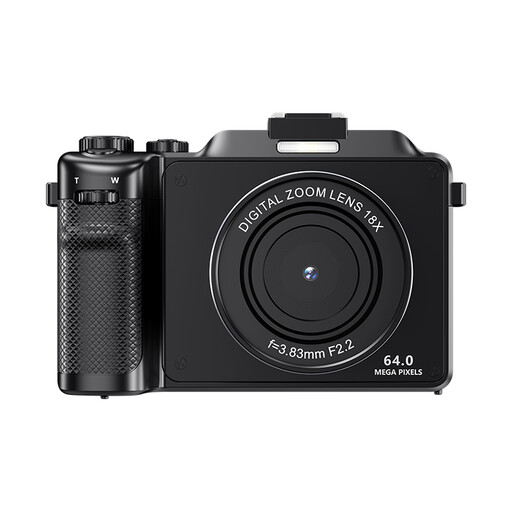
The product name lists 64 MP, autofocus and a 32 GB memory card. The stated 18× zoom is digital; the product information warns that this may reduce image quality.
View at Joybuy
 No image available
KOMERY X9 4K digital camera, black
A compact digital camera to consider if you’re looking for a model for photography on the go.
The product name lists 64 MP and 18× digital zoom. The product information warns that digital zoom may reduce image quality.
View at Joybuy
 No image available
Songdian 4K pocket camera, pink
A pocket camera to consider if you’re looking for a compact camera for photography while out walking.
The product name lists 44 MP and 16× zoom. Check which type of zoom this refers to and which exposure features are available.
View at Joybuy
Frequently asked questions
How can I stop the sky from turning completely white at sunrise?
Check whether the camera has a histogram and exposure compensation. Canon Netherlands explains that a sharply cut-off peak on the right-hand side of the histogram may indicate lost detail in the brightest areas; adjust the exposure if needed. For a static landscape with high contrast, you can take shots at different exposures if your camera supports it.
Do I need a tripod and a memory card?
A tripod can help with a static landscape and a slow shutter speed, but it won’t prevent motion blur from a bird or reeds. Check what’s included with the exact camera and which memory card is compatible so you can work out what equipment you’ll need.
What should I do if my new camera doesn’t work properly?
According to the Dutch government, if a product has a problem, the seller must provide a solution under the statutory guarantee. A manufacturer’s guarantee is separate; before taking out any extra cover, check exactly what it includes.
Can I enter a nature reserve before sunrise and publish my photos?
Access depends on the specific location and the signs and rules there. Staatsbosbeheer says most of its nature reserves are open from sunrise to sunset, though local rules may differ. For photos in which people are identifiable, the Dutch Data Protection Authority distinguishes between strictly personal use and wider publication; the exception for personal or household use does not apply to wider publication.


