What should you look for when choosing?
First decide whether you want to capture the whole skyline from where you’re standing or pick out distant buildings. Then choose between a fixed field of view that suits the scene and leaves room for cropping, or a zoom lens that lets you adjust the frame from the same spot.
| What to consider |
What should you check? |
Who should give this more weight? |
| Fine detail in the overall view |
Compare full-resolution sample files of a similar cityscape. Check the exact model’s fixed field of view, sensor, resolution and RAW support. |
If I want to preserve the details of façades in one wide shot, I look at the field of view and the files I’ll be able to crop later. Around 33% of consumers say detail in the overall cityscape is their main buying concern. |
| Framing both wide and tight shots |
Compare the wide-angle and telephoto ends in 35mm-equivalent focal lengths, and try both from a similar distance. |
If I want to capture both the river view and a smaller section of the skyline from the same bank, a flexible frame is important. Around 25% of consumers put this flexibility first. |
| Buildings on the other side |
Check the optical range, not just the highest zoom figure, and look at sample photos taken at the telephoto end you plan to use. |
If I can’t get closer to a building, I want to frame it larger using optical zoom. Around 25% of consumers say distant buildings are their top priority. |
| Water and low light |
Check the adjustable shutter speed and maximum aperture at each zoom setting. Also consider whether you can use a stable surface or tripod. |
If I want to photograph reflections, ripples or smooth water in the evening, the shutter speed needs to suit the effect I’m after. Around 17% of consumers start by considering how the camera handles water or low-light photography. |
Brands to compare
The models below offer different options for field of view, zoom and size. Assess each specification in relation to where you’ll be standing and the photo you want to take.
Sony
The RX100 VII is worth considering if you want one small zoom camera for capturing both a wide skyline and tighter shots.
- Sony specifies a 1.0-type sensor, 20.1 MP and a 24–200 mm-equivalent range for the RX100 VII.
- According to Sony, the maximum aperture ranges from f/2.8 at the wide-angle end to f/4.5 at the telephoto end. These specifications don’t show how sharp each zoom setting is in practice.
FUJIFILM
The X100VI is a fixed-lens option if the skyline fits within the 35mm-equivalent field of view from where you’re standing.
- FUJIFILM specifies an APS-C sensor, 40.2 MP and 14-bit RAW for the X100VI.
- The fixed lens can’t optically zoom in on a building on the other side of the water.
Canon
The PowerShot G7 X Mark III has a shorter zoom range, while the SX740 HS Lite Edition is a separate option with a much greater stated range.
- Canon specifies a 24–100 mm-equivalent range and f/1.8–2.8 for the G7 X Mark III. For the SX740 HS Lite Edition, Canon lists a 24–960 mm-equivalent range.
- The SX740 HS Lite Edition has a 1/2.3-type sensor. Don’t assume specifications for one model apply to the other.
Panasonic
The LUMIX TZ99 is worth considering if you want to switch between the whole skyline and distant features.
- Panasonic specifies a 24–720 mm-equivalent range and 30× optical zoom for the TZ99.
- Panasonic’s claim of clear results in low light is a manufacturer claim, not an independent comparison.
Leica
The Q3 is a larger fixed-lens compact camera for those who value high image resolution and have a suitable field of view.
- Leica specifies 60.3 MP effective resolution, DNG and a weight of approximately 743 g including the battery for the Q3.
- The resolution doesn’t prove that this camera will produce the best skyline photo from every viewpoint. Also consider whether its size suits the way you plan to use it.
Joybuy products
Joybuy cameras for photography, from compact models to cameras with a stated zoom function.
 No image available
DJI Osmo Pocket 4 Standard Combo
The product title describes this model as a pocket gimbal camera for photography and video. Check that its still photography features suit your skyline shots.
The title lists a 1″ CMOS sensor, 4K/240 fps, 3-axis stabilisation, 2× lossless zoom and 107 GB of built-in storage.
View at Joybuy
 No image available
KOMERY G7 5K digital camera
The product title describes a point-and-shoot camera for photography. Check whether the stated zoom range is suitable for framing buildings on the other side of the water.
The title lists 80 MP and 18× zoom. Check whether this is optical zoom before choosing the camera for distant subjects.
View at Joybuy
 No image available
KOMERY W6
The product title lists landscapes and close-ups as possible uses. Check whether the range suits the distance to the buildings you want to photograph.
The title lists 12× optical zoom, 4K and 64 MP.
View at Joybuy
 No image available
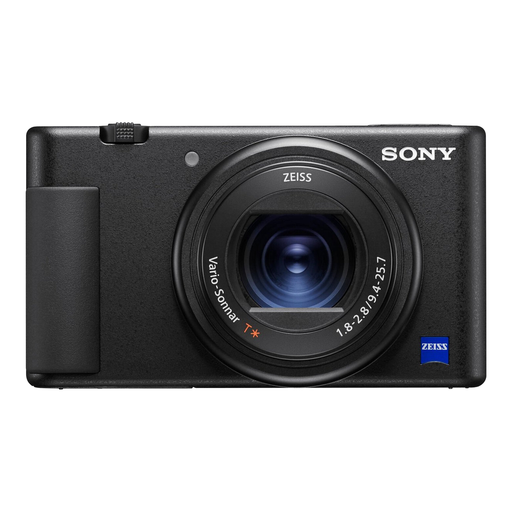
Sony ZV-1
The product title identifies this model as a compact camera. Check that the field of view suits the skyline from your spot on the bank, and whether you’ll want to zoom in further.
View at Joybuy
 No image available
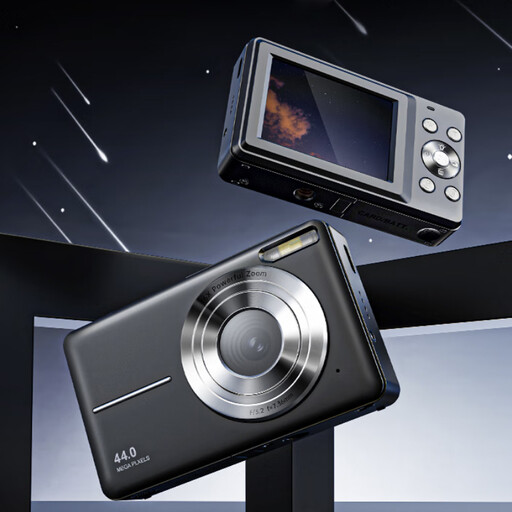
Songdian Pocket Camera 4K 44MP
The product title describes this model as a pocket camera for photography and video. Check the type of zoom if you want to capture individual buildings on the other side of the water.
The title lists 44 MP and 16× digital zoom. Digital zoom isn’t the same as optical magnification.
View at Joybuy
Frequently asked questions
Should you focus more on megapixels or zoom range?
Start with the photo you want to take from your spot on the bank. High resolution can give you room to crop a suitable wide shot, while optical zoom helps you frame a distant building larger. Neither specification on its own tells you how sharp the final photo will be.
Do you need a tripod for reflections or smooth water?
For a very slow shutter speed, Nikon recommends using a tripod or another stable support. First decide whether you want moving ripples to remain visible or the water to look smooth, as each effect calls for a different shutter speed.
What about returns and guarantees when buying online in the Netherlands?
When you buy online from a business, you’re generally entitled to a 14-day cooling-off period, according to the Government of the Netherlands. When you buy a product, it must be of satisfactory quality. There’s no fixed statutory guarantee period, and if something is faulty, the seller is your point of contact.
Can you post a skyline photo online if passers-by are recognisable?
It depends on how you use the photo. According to the Dutch Data Protection Authority, identifiable people count as personal data. Photos you keep private or share with only a very limited group are covered by the exception for personal or household use. That exception doesn’t apply to wider publication or commercial use, where a lawful basis under the GDPR may be needed.


