
Skyline photographer in changing light
Wants to expose the bright sky and darker buildings well from a spot by the river, including around dusk.


Start by choosing a field of view that captures the skyline you want from your spot by the river. Opt for more optical zoom if you also want to photograph individual buildings across the water. As the light fades, exposure controls, the aperture at your chosen zoom setting and a steady shot also matter: a high zoom alone doesn’t tell you how a camera performs at dusk.
Wants to expose the bright sky and darker buildings well from a spot by the river, including around dusk.
Wants to fit the skyline and foreground into one frame; the right field of view will also depend on how far away the subject is.
Wants to switch between a wide view and a closer crop of buildings further away, from the same riverbank.
A good fit if: you want to capture both a wide view and slightly tighter shots from the same riverside spot as the light changes.
Trade-off: Canon says the PowerShot G7 X Mark III has a 24–100 mm equivalent optical zoom and a maximum aperture of f/1.8–f/2.8; its telephoto reach is shorter than that of the travel zoom models mentioned here.
A good fit if: you want to frame individual buildings across the water more tightly from the same spot.
Trade-off: Sony lists a 24–200 mm equivalent range for the RX100 VII, Panasonic lists 24–720 mm for the TZ99, and Canon lists 24–960 mm for the SX740 HS Lite Edition. Range alone doesn’t tell you how a camera performs in low light.
A good fit if: you’re happy to work with one field of view and can choose where to stand.
Trade-off: Fujifilm says the X100VI has a fixed 35 mm equivalent field of view; Ricoh lists 28 mm equivalent for the GR III and 40 mm equivalent for the GR IIIx. Without optical zoom, you can’t switch to a different framing from the same spot.
| What to consider | What should you check? | Who is this important for? |
|---|---|---|
| Exposure as daylight changes | Compare the maximum aperture at the zoom setting you want to use, and check which exposure settings you can adjust. | If I want to capture a bright sky and darker buildings as the light fades, I focus on exposure controls and the lens setting I’ve chosen. Around 37% of consumers prioritise exposure in changing light. |
| Fitting the whole skyline in the frame | Compare the equivalent wide-angle setting and check from your intended spot whether the skyline and foreground fit in the frame. | If I want to photograph the river and the full skyline together, the field of view needs to be wide enough from where I’m standing. For around 27% of consumers, capturing the whole scene is their top buying priority. |
| Photographing distant buildings individually | Compare the optical telephoto range in full-frame equivalent millimetres; keep optical zoom separate from digital magnification. | If I want to make details across the river fill more of the frame from the same bank, I look for a suitable optical telephoto range. Around 18% of consumers give this reach the highest priority. |
| A camera that’s easy to take with you | Check the dimensions and weight, including the battery, and make sure it feels comfortable to hold and use. | If I’m taking the camera on walks, portability matters more to me than extra reach. Around 18% of consumers put ease of carrying at the top of their list. |
A high zoom factor doesn’t tell you whether the whole skyline will fit at the wide-angle setting or how the camera performs at dusk.
First, compare the field of view from your spot. Then look at the optical telephoto range, the maximum aperture at your preferred zoom setting and the available exposure controls.
Compact cameras can vary in size and weight.
Check the stated dimensions and weight, including the battery. Also consider whether the camera will be comfortable to use on a walk.
The Fujifilm and Ricoh models with a fixed field of view don’t offer optical zoom, so you can’t switch to a different range from the same position.
Before choosing a fixed field of view, check from your intended spot that the skyline you want will fit in the frame.
According to the Dutch government, there is no fixed statutory warranty period in the Netherlands; a manufacturer’s warranty or extended warranty is separate from this.
Read the terms of any additional cover and compare what it adds to your existing rights before paying for it.
The Canon models mentioned range from a short zoom to a long optical telephoto range.
According to Sony, the RX100 VII combines a 1.0-type sensor, a viewfinder and a 24–200 mm equivalent optical range.
According to Panasonic, the LUMIX TZ99 is a travel zoom compact camera with a 24–720 mm equivalent optical range.
Fujifilm lists an APS-C sensor and a fixed 35 mm equivalent focal length for the X100VI.
Ricoh lists a 28 mm equivalent field of view for the GR III and 40 mm equivalent for the GR IIIx.
This selection includes compact cameras and other cameras sold for photography. Before you decide whether a model suits your riverside location, compare its stated zoom or lens, the available framing options and the controls.
 No image available
The stated 18x optical zoom may be useful if you want tighter shots from the same riverbank; also check whether the wide-angle setting captures your whole skyline.
The product description lists 5K video, an 80MP sensor and 18x optical zoom.
The safety information advises against pointing the camera directly at strong light sources for extended periods.
 No image available
The stated zoom may help you take tighter shots of buildings across the water; for a full skyline view, check the wide-angle setting too.
The product information lists 12x optical zoom, a 64MP sensor, 4K and Wi-Fi.
 No image available
The product description mentions photography and video; check whether the controls and field of view suit the way you like to take pictures by the river.
The description lists a 1-inch CMOS sensor, mechanical 3-axis stabilisation and a rotating 2-inch touchscreen.
 No image available
The supplied 16–50mm zoom lens offers a range of focal lengths; check from your position whether its range covers the skyline shots you want.
The product description lists an APS-C sensor and a 16–50mm f/3.5–5.6 lens.
According to the product description, an adapter/charger and SD card are not included.
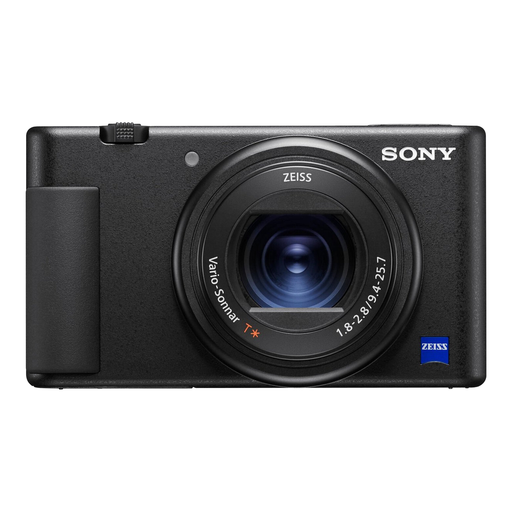 No image available
The stated 24–70mm focal length and optical zoom may suit you if you want to switch between a wide view and tighter shots.
The product description lists a maximum aperture of f/1.8–f/2.8 and RAW photo format.
The safety information warns against exposure to water and excessive moisture.
Reassess the exposure as the sky darkens, and adjust the shutter speed, aperture and ISO to suit the image you want. A slower shutter speed can show movement in the water, but you’ll need to keep the camera steady. Canon describes the twilight just after sunset as a good time for cityscapes.
Not just to capture the whole view: first check whether the wide-angle setting can fit the entire skyline from your spot. Optical telephoto zoom is mainly useful if you want to make individual buildings across the water appear larger; with a fixed focal length, you’ll need to move or crop the image later.
Try framing your shot from the spot where you plan to take it, and see whether you can hold or position the camera steadily. When buying, also check how to adjust the exposure and what screen or viewfinder options the exact model offers.
According to the Dutch government, there is no fixed statutory warranty period in the Netherlands. You can expect a product to do what you’d reasonably expect it to do, and if there’s a problem, the seller must provide a solution. Before paying, check what an extra warranty adds to your existing rights.
The Dutch Data Protection Authority distinguishes between strictly personal use and wider sharing, for example on a public page. The exception for personal or household use doesn’t apply to wider sharing, so consider the specific photo and how you intend to use it before publishing.