
Photographing knitting details
You want to capture stitches and finishing clearly. Compare the focusing distance at the zoom setting you’ll use: Canon Netherlands and Panasonic Netherlands list different distances for wide-angle and telephoto.


Choose a camera based on the type of shot you take most often. For stitches, close focusing is important, while a full-scarf shot needs enough space and a suitable angle of view. With shiny yarn or a reflective surface, the direction of the light and adjustable white balance matter too. The models mentioned have not been specifically tested for scarf photography.
You want to capture stitches and finishing clearly. Compare the focusing distance at the zoom setting you’ll use: Canon Netherlands and Panasonic Netherlands list different distances for wide-angle and telephoto.
You photograph several colour options and want to set the lighting, white balance and framing consistently. Canon Netherlands explains white balance settings for challenging lighting conditions and offers advice on creating consistent product photos.
You’re working with shiny yarn, embellishments or a reflective surface and want to control distracting highlights. Shopify Netherlands highlights reflections as something to consider when photographing shiny products.
First decide whether detail, the whole scarf or colour consistency matters most to you. If you’re dealing with reflections, also consider whether you can change the direction of the light and the space around the camera.
| What to consider | What should you check? | Who should pay extra attention? |
|---|---|---|
| Reflections and lighting | Check whether you can adjust the exposure and shooting angle, and leave room to change the direction of the light. | If I’m photographing shiny yarn or a reflective surface, I want to minimise distracting highlights. Around 31% of consumers put controlling reflections first. |
| Stitches and texture | Compare the focusing distance at the zoom setting you want, and leave room for lighting. | If I want to show individual stitches, I check the focus distance I’ll actually use. Around 25% of consumers give knitting details their highest priority. |
| Colour consistency | Check whether you can adjust the white balance, and take test shots in your own lighting. | If you’re photographing several colour options, you’ll want to keep the lighting conditions and colour settings consistent. Around 25% of consumers put colour consistency first. |
| Framing the whole scarf | Measure the scarf, background and available camera distance, and consider whether a fixed set-up will work. | If I want to capture the whole scarf in a similar way each time, I take the available space into account. Around 19% of consumers make repeatable full-scarf framing their top priority. |
The stated focusing distances for the Canon, Panasonic and Sony models reviewed vary between wide-angle and telephoto. So a distance that works at wide-angle won’t necessarily work at telephoto.
Compare the distance at the setting you’ll use to frame the stitches, and leave room for lighting too. Canon Netherlands lists 5 cm at wide-angle and 40 cm at telephoto for the PowerShot G7 X Mark III; Panasonic Netherlands lists 3 cm at wide-angle and 200 cm at telephoto in macro mode for the DC-TZ99.
Shiny products and surfaces can create distracting highlights and reflections. Macro mode is for close focusing; it doesn’t solve lighting issues.
Before deciding which camera controls you need, try changing the direction of the light and adjusting your set-up using your own scarf. A different set-up may take more time, and you may need suitable lighting.
The Dutch Government distinguishes between statutory rights and additional manufacturer, seller or extended warranties. According to the Dutch Government, there is no fixed statutory warranty period that applies to all products in the Netherlands.
Before buying any additional cover, read what extra rights it provides and check who the seller is if there’s a problem.
According to Canon, the PowerShot G7 X Mark III combines a zoom lens with options for both wide shots and close-ups.
The LUMIX DC-TZ99 is an option if you want to photograph subjects at a distance as well as scarves.
The RX100 VII is a compact option if you also want to use the same camera at a range of shooting distances.
The Tough TG-7 is worth considering if you need close-up shooting as well as a rugged compact camera.
The GR IV is an option for anyone who deliberately wants to shoot with a fixed wide-angle lens and no zoom.
Joybuy product picks related to this topic.
 Image unavailable
If you’re considering this camera for scarf photos, check that its controls and framing suit your shooting set-up.
The product title mentions autofocus and a 32 GB memory card.
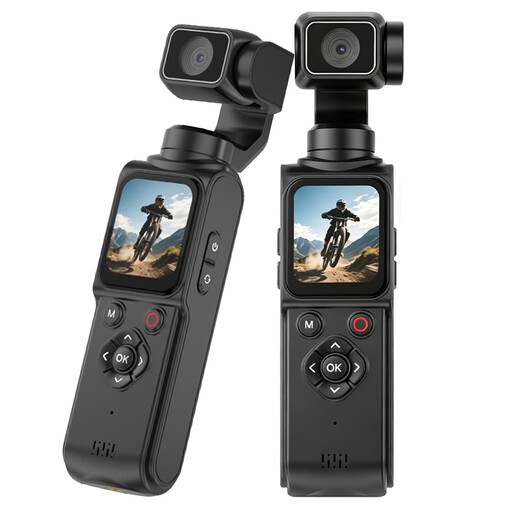 Image unavailable
If you’re considering this mini camera for scarf photos, check that the rotating lens and screen suit the shooting position you want.
The product title mentions a 330° rotating lens, a 1.72-inch touchscreen, a tripod and Type-C.
 Image unavailable
If you’re considering this pocket gimbal camera for scarf photos, check that the rotating screen position works with your fixed framing.
The product title mentions a 1″ CMOS sensor, 4K/240fps, 3-axis stabilisation, 2× lossless zoom, 107 GB of built-in storage and a 2-inch rotating screen.
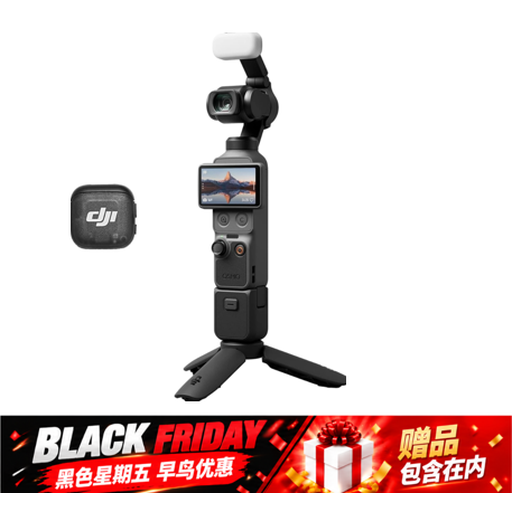 Image unavailable
If you’re considering this camera for scarf photos, check that the included set-up suits your shooting arrangement.
The product title mentions a 1″ CMOS sensor, 4K/240fps, 3-axis stabilisation, 2× lossless zoom, 14-stop dynamic range, 107 GB of built-in storage and a handle with a 1/4″ thread.
 Image unavailable
If you’re considering this camera for scarf photos, check whether the rotating screen helps you frame your shot from the position you want.
The product title mentions a 1″ CMOS sensor, 4K/120fps video, 3-axis stabilisation, fast focusing and a 2-inch rotating touchscreen.
No. Macro mode is designed for close focusing. To manage reflections, you’ll also need to consider the light source, your set-up and the shooting angle. Check the focusing distance at the zoom setting you plan to use.
Keep the shooting position and background the same, and use a tripod if needed. Canon Netherlands describes a tripod as a way to keep the framing and background consistent in product photos.
For a consumer purchase, the seller is your point of contact for statutory rights. According to the Dutch Government, there is no fixed statutory warranty period that applies to all products in the Netherlands. What you can expect depends, among other things, on the product and the information provided at the time of sale.
No, not in every case. According to the Dutch Government, distance purchases from a business often come with a 14-day cooling-off period; an online purchase from a private seller isn’t covered by this description. Check who the seller is and which terms and conditions apply.