
Scarf sellers with several colour options
You photograph several scarves under the same lights and want to keep colour, exposure and framing as consistent as possible.


Start with a fixed lighting setup that is as even as possible, then adjust the white balance to suit it: Nikon USA explains that automatic and preset white balance can produce different results under artificial light. Then choose a camera based on the distances at which you can frame the whole scarf and photograph details. Canon lists a minimum focusing distance of 5 cm at wide angle and 40 cm at telephoto for the PowerShot G7 X Mark III, while OM SYSTEM lists microscope and super macro modes for the TG-7.
You photograph several scarves under the same lights and want to keep colour, exposure and framing as consistent as possible.
As well as photographing the whole scarf, you want close-ups of the stitches or yarn texture. The usable focusing distance also depends on the zoom setting you choose.
You want to fit the whole scarf into the frame within the available distance and background, without using a larger camera setup.
First decide which type of shot matters most: consistent colours across a series, visible knitting details, repeatable full-scarf shots, or the option to use the camera away from your product table too.
A good fit if: you want to take both full-scarf shots and close-ups with one compact zoom camera, and can use the wide-angle setting for close-ups.
Bear in mind: Canon lists a minimum focusing distance of 5 cm at wide angle and 40 cm at telephoto. Check that you can get the framing you want with your own setup.
A good fit if: close-ups of stitches and yarn texture are your main reason for buying; OM SYSTEM lists microscope and super macro modes, as well as RAW shooting.
Bear in mind: at very short working distances, check that the camera and lighting do not get in each other’s way and that you can achieve the framing you want.
A good fit if: you also want to use the camera for other subjects and like the stated 24–200 mm equivalent zoom range.
Bear in mind: Sony lists a minimum focusing distance of around 8 cm at wide angle and around 100 cm at the telephoto end. The zoom range does not mean you can focus close at every setting.
A good fit if: a wide zoom range for other subjects is also important and you can use the wide-angle macro mode for knitting details.
Bear in mind: Panasonic lists a minimum focusing distance of 3 cm in wide-angle macro and 200 cm in telephoto macro. Zoom alone is no guarantee of better photos under artificial light.
A good fit if: you want a compact camera with a fixed angle of view and have enough room to adjust the distance from the whole scarf.
Bear in mind: the lens has no optical zoom. Before choosing, check that its fixed angle of view and working distance suit your setup.
| What to consider | What should you check? | Who is this important for? |
|---|---|---|
| Colour under artificial light | Check the white balance settings and keep the lighting as consistent as possible throughout a series. | If I photograph different colours under the same lights, I want the whole series to look as consistent as possible. Around 36% of consumers put colour consistency first. |
| Knitting and yarn details | Compare the minimum focusing distance at the zoom setting you plan to use and take a test shot. | When the stitch texture is the subject, I want to know whether I can get it in focus with the framing I want. Around 29% of consumers prioritise detail. |
| Fitting the whole scarf in the frame | Measure the available distance and check which angle of view will fit the entire scarf in the frame. | If I want to photograph a whole scarf every time, a suitable angle of view and repeatable framing matter. Around 21% of consumers put an overall view first. |
| Using the camera away from the product table | Decide whether zoom for other subjects matters more than having a fixed lens and moving the camera to change the framing. | If I also want to use the camera for other subjects, I weigh portability and flexibility against the focusing distance at each setting. Around 14% of consumers prioritise versatility. |
The stated minimum focusing distance can vary considerably between zoom settings. Sony lists around 8 cm at wide angle and around 100 cm at telephoto for the RX100 VII; Panasonic lists 3 cm in wide-angle macro and 200 cm in telephoto macro for the TZ99.
Compare the focusing distance at the setting you actually plan to use, and check with a test shot that the stitches appear large enough in the frame.
Light sources with different colour temperatures can make it harder to achieve consistent white balance. Nikon USA explains that automatic white balance can produce different results under artificial light from a setting adjusted to suit the light source.
Take a test shot under your planned lighting and keep the setup the same throughout the series. This may save you time spent retaking shots or correcting colours.
Photographing close to the fabric leaves less room for the camera and lights. The stated focusing distance also varies by model and may differ between settings.
Test focus, framing and unobstructed light together on your actual worktable.
The PowerShot G7 X Mark III is a compact zoom option for full-scarf shots and close-ups.
The Tough TG-7 is worth considering if close-ups of stitches are an important use for you.
According to Sony, the RX100 VII combines a built-in zoom lens with a stated range equivalent to 24–200 mm.
The Lumix DC-TZ99 combines a travel zoom with a wide-angle macro mode.
According to Ricoh, the GR IV has a fixed angle of view equivalent to 28 mm, for those who can adjust their working distance to suit it.
The selection below ranges from pocket cameras to a camera with a kit lens. For each model, check whether the close-up distance, framing and white balance settings suit photographing knitted scarves under your artificial lighting.
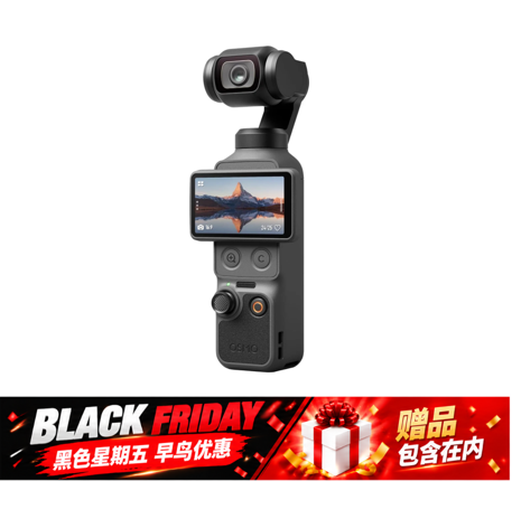 No image available
A pocket camera for anyone looking for a compact setup; for knitting close-ups, check that it can focus at your desired distance.
The product name lists a 1-inch CMOS sensor, 4K/240fps, 3-axis stabilisation, 2× lossless zoom, 107 GB of built-in storage and a 2-inch rotating screen.
 No image available
A digital camera for photography; before buying, check that the close-up distance and settings are suitable for small stitches and colour series.
The product name lists 4K, 80 MP and 18× zoom.
 No image available
A pocket camera for anyone looking for a compact device; check the focusing distance for the framing you need to capture knitting details.
The product name lists 44 MP and 4K. The product description lists autofocus, 16× digital zoom and 1080P video.
 No image available
A camera with a kit lens for anyone who wants to adjust the framing; check that the close-up distance and space required suit your worktable.
The product description lists a 24.2 MP APS-C sensor and a 16–50 mm kit lens. According to the product description, the adapter/charger is not included.
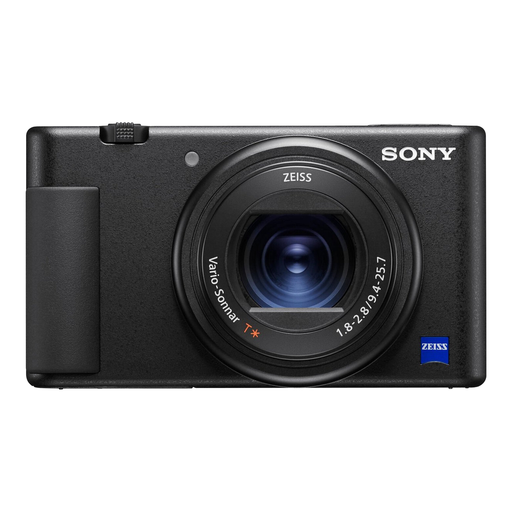 No image available
A compact camera for anyone looking for a zoom lens and RAW photo format; check the focusing distance before planning shots of small stitches.
The product specifications list a 20 MP camera, 2.7× optical zoom, a 24–70 mm range and RAW photo format.
Use the same lighting as much as possible throughout the series and adjust the white balance to suit the setup. Nikon USA explains that automatic white balance and a setting adjusted using a white reference can produce different results under artificial light; using several types of light makes it harder to keep the colour setting consistent.
Not always: compare the distance for the zoom setting you plan to use and test the framing. Canon lists 5 cm at wide angle and 40 cm at telephoto for the PowerShot G7 X Mark III; Panasonic lists 3 cm in wide-angle macro and 200 cm in telephoto macro for the DC-TZ99.
A tripod can help you keep the framing and background consistent from one product photo to the next. Canon Europe describes it as a way to support a consistent setup; check that the camera and tripod head let you position the camera where you want, above or in front of the scarf.
For a consumer purchase in the Netherlands, the seller is responsible for the legal guarantee if the product does not meet what you could reasonably expect. ACM ConsuWijzer says that, depending on the situation, you may be entitled to a free repair, a replacement or a refund; a manufacturer’s warranty does not replace this right.
According to ACM ConsuWijzer, online consumer purchases generally come with a statutory cooling-off period of up to 14 days after delivery. Check the terms for trying and returning the camera before you buy; this answer does not assess any specific order.