
Scarf seller photographing in the evening
You regularly take overview and detail photos of knitted items and want a practical, consistent set-up for colour, framing and lighting.


Choose a compact camera with a zoom lens if you want to switch between a full view of the scarf and close-ups of the stitches from a small table. A fixed-angle camera may suit you if you can adjust the framing by changing your position. Compare the focusing distance at each zoom setting, and consider the aperture, white balance and how to keep the camera steady. A wider aperture lets in more light, but also reduces depth of field, as Canon Europe explains.
You regularly take overview and detail photos of knitted items and want a practical, consistent set-up for colour, framing and lighting.
You want to photograph a pattern up close, so you need to consider the focusing distance and the space available for lighting with your chosen framing.
You want to frame the whole scarf without having to step far back, and are weighing up an adjustable zoom against a fixed angle of view.
Best when: you want to switch between a full view and close-ups of the stitches from a small photo table. Canon Netherlands lists a 24–100 mm equivalent zoom range and f/1.8–2.8 for the PowerShot G7 X Mark III; Sony Netherlands lists a 24–70 mm equivalent range and f/1.8–2.8 for the ZV-1.
Keep in mind: the minimum focusing distance varies with the zoom setting. Canon lists 5 cm at the wide-angle end and 40 cm at the telephoto end; Sony gives approximately 5 cm and 30 cm for the ZV-1.
Best when: you can adjust the distance to the scarf and want to work with a single angle of view. Ricoh specifies an equivalent of approximately 28 mm for the GR IV, with a macro mode of around 6–15 cm; Fujifilm lists an equivalent of approximately 35 mm for the X100VI.
Keep in mind: without optical zoom, you’ll need to change your position or crop the photo to achieve different framing.
Best when: you also want to take different shots from one position beyond this particular photo session. Sony lists an equivalent zoom range of 24–200 mm for the RX100 VII.
Keep in mind: Sony gives this model an aperture range of f/2.8–4.5 and a minimum focusing distance of around 100 cm at the telephoto end, so check that you can get close enough for the details you need.
| What to consider | What to look for | Particularly relevant if |
|---|---|---|
| Sharpness in evening light | Compare the maximum aperture at the zoom setting you’ll use, and think about how to keep the camera steady. | You want to capture the stitches in evening light, so consider both exposure and depth of field. Around 32% of consumers prioritise sharp stitches in low light. |
| Stitches and yarn texture | Check the focusing distance at your preferred zoom setting and measure how much working distance you have. | If you mainly want to frame individual stitches, you need to be able to position the camera close enough without losing space for lighting. Around 25% of consumers make this detail their top priority. |
| Accurate colour | Check whether you can adjust the white balance, and take a reference shot under the lighting you’ll use for your photo session. | White balance matters if you want the yarn’s colour to look true to life under evening lighting. Around 25% of consumers put colour reproduction first. |
| Overview and detail | Compare the angle of view and focusing distance from your workspace, and consider whether you can move the camera. | You want to photograph both the whole scarf and a stitch from a fixed position, so the freedom to change the framing matters. Around 18% of consumers particularly value being able to capture both overviews and details from a practical position. |
The minimum focusing distance may be greater at the telephoto end than at the wide-angle end, meaning you’ll need to position the camera further from the knitting.
Check the focusing distance at the zoom setting you want to use, and see whether you can fit both the stitch and the whole scarf in the frame.
The extra distance you need may require more workspace than your photo table can offer.
A wider aperture lets in more light, but it can also leave parts of the scarf outside the plane of focus.
Consider exposure and depth of field together, and try your preferred framing with a stable camera set-up.
You may need a support or an adjusted lighting set-up to get a steady shot.
The Dutch government states that there is no fixed statutory warranty period in the Netherlands, and that the seller remains your point of contact if a product is faulty.
Check who the seller is and read any additional warranty terms as a supplement to your statutory rights.
The PowerShot G7 X Mark III is a compact zoom camera to consider if you want to switch between overview and detail shots.
The ZV-1 has a shorter zoom range, while the RX100 VII offers greater optical reach. These differences apply to these models, not to every Sony camera.
The GR IV is a fixed-angle option, with an equivalent angle of view of around 28 mm and a dedicated macro mode.
The X100VI has a fixed angle of view, equivalent to around 35 mm, for anyone able to plan their set-up around it.
Joybuy product picks for photographing a knitted scarf. For evening shots, check the focusing distance and white balance settings for the exact model. Zoom and resolution figures alone don’t tell you whether the stitches and colours you want will appear as intended.
 No image available
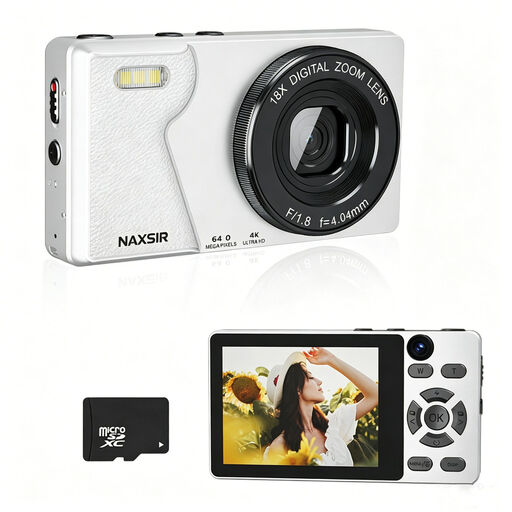
The title mentions digital zoom and a memory card; check whether the focusing distance is suitable for photos of stitches.
The product title lists 64 MP photo resolution, autofocus, 18x digital zoom and an included 32 GB memory card.
 No image available
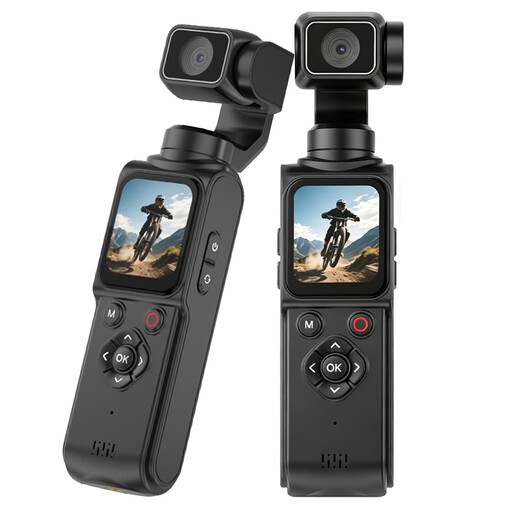
The product details mention photography and a rotating lens; check whether the focusing distance and controls are suitable for still-life close-ups.
The title lists Wi-Fi, face recognition and an included tripod. The product description mentions 18x digital zoom and electronic image stabilisation.
 No image available
The product description mentions close-ups and optical zoom; check the minimum focusing distance for the stitches you want to photograph.
The product description lists 12x optical zoom, 64 MP, Wi-Fi and 4K video.
 No image available
The product details mention stills; check the focusing distance and photo controls for close-ups of knitting.
The title lists a 1-inch CMOS sensor, 3-axis stabilisation and a 2-inch rotating touchscreen. The product description mentions stills and fast focusing.
 No image available
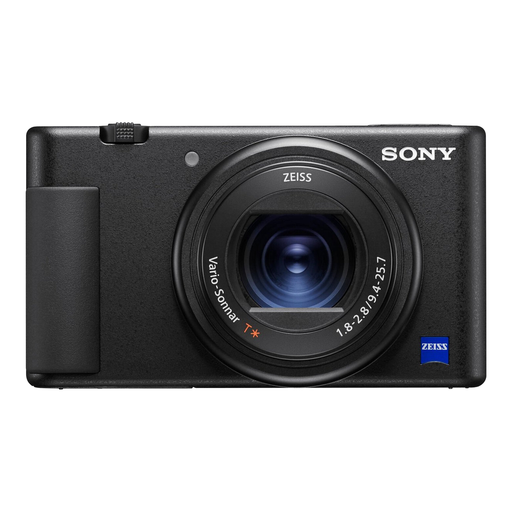
The zoom can help you switch between overview and detail shots; tailor the framing to the working distance available.
Sony Netherlands specifies a 24–70 mm equivalent zoom range and f/1.8–2.8. The minimum focusing distance is around 5 cm at the wide-angle end and 30 cm at the telephoto end.
Not always. A wider aperture lets in more light, but also reduces depth of field. If needed, position the scarf and camera securely, then check whether the areas beyond the point of focus are sharp enough too.
Check the white balance under the lighting you’ll be using, and, if you like, take a reference shot with a neutral card. Adjustable white balance or a RAW file can help with assessment and editing; the final colour also depends on the lighting you use.
Keep the background, camera position and lighting set-up consistent if you want to compare photos. Follow the manual for the exact model when cleaning and handling the lens and battery.
For distance purchases, you usually have a 14-day cooling-off period; the Dutch government states that the seller must inform you about this. You’re also entitled to a product that is fit for purpose. There’s no fixed statutory warranty period in the Netherlands, and a manufacturer’s warranty doesn’t replace this right.
The exception for personal or household use may apply if the photo is used solely for private purposes. If you publish more widely or use photos featuring recognisable people for business purposes, the GDPR may apply and you’ll need an appropriate legal basis for processing. According to the Dutch Data Protection Authority, this is consent in many cases.