
Photographers who want to retain shine and reflections
You want to capture the sheen on wet cobbles while keeping detail visible in both the light and dark areas of the shot.


First, decide whether you want the reflection to remain part of your photo. Nikon explains that a polarising filter can reduce reflections, but may also remove the effect you want. Then compare the field of view and the options for assessing bright areas. If you often take photos in the rain, factor in the camera’s stated weather resistance.
You want to capture the sheen on wet cobbles while keeping detail visible in both the light and dark areas of the shot.
You’re looking for a small camera that lets you frame the whole square or deliberately work with a fixed field of view.
You often take photos in wet conditions and want to weigh the camera’s stated weather resistance against its field of view and other specifications.
Start by deciding whether you want the reflection to remain in the shot. Then compare the field of view and how much control you have over bright areas. If you regularly use the camera in wet conditions, factor in its weather resistance too.
| What to consider | What should you check? | Who is this important for? |
|---|---|---|
| Exposure and reflections | Check whether you can assess and adjust the exposure, and whether a polarising filter, if you plan to use one, fits the exact model. A filter like this can reduce reflections, so don’t use it automatically if the reflection is part of your subject. | If the sheen itself matters, I want to be able to assess bright areas without accidentally removing the reflection. Around 36% of consumers say retaining reflections and controlling bright areas are their main considerations. |
| Framing the square | Compare focal lengths in 35 mm equivalent terms, and consider whether you can capture the whole square from where you’re standing. Ricoh specifies a fixed 28 mm-equivalent lens for the GR IV; Canon lists a 24–100 mm-equivalent zoom for the PowerShot G7 X Mark III. | I want to fit the square and cobbles into one shot without constantly changing where I’m standing. For around 29% of consumers, capturing the whole square is the priority. |
| Taking photos in the rain | Check the stated weather resistance and the manufacturer’s usage conditions for the exact model. OM System lists the Tough TG-7 as waterproof to 15 m; that specification alone says nothing about how it handles reflections. | If I often take photos in wet conditions, I want to know the usage conditions for the model I choose. Around 21% of consumers prioritise regular use in the rain. |
| Distant details | Compare optical zoom and stated focal lengths, not just the maximum zoom figure. Sony lists a 24–200 mm-equivalent lens for the RX100 VII; Panasonic specifies 30× optical zoom and a 1/2.3-inch sensor for the TZ99. | When I can’t get closer to a façade or detail, I want to frame it larger from where I’m standing. Around 14% of consumers put reach for distant details ahead of the other considerations. The Consumers’ Association points out that a high zoom range often goes hand in hand with a small sensor. |
A polarising filter can reduce certain reflections. But it could also remove the mirror-like effect you want to keep in your photo. Nikon describes using this type of filter to reduce reflections from surfaces including water and glass.
First decide whether you want to retain the reflection, then check whether a filter with the right fitting is compatible with your exact camera model.
An ND filter reduces the amount of light entering the camera. That’s a different function from selectively reducing reflections. Fujifilm describes the built-in ND filter on the X100VI as useful in bright light, including when using a slower shutter speed.
Choose an ND filter to achieve an exposure or shutter-speed effect, not because you expect it to remove reflections.
A high zoom range can go hand in hand with different sensor and lens specifications. The Consumers’ Association warns generally that compact cameras with a high zoom range often have a small sensor.
First decide what range you need from where you’ll be standing, then compare the sensor, lens aperture and controls too.
The PowerShot G7 X Mark III combines a wide view with the option to zoom in optically on details.
The GR IV is a compact option for anyone who wants to work deliberately with a fixed 28 mm-equivalent wide-angle lens.
The RX100 VII is worth considering if you also want optical reach for distant details in a compact camera.
The Lumix TZ99 is a travel-zoom option if a wide optical zoom range is your priority.
The Tough TG-7 is worth considering if you regularly take photos in wet conditions.
The X100VI is an option if you want to work with a fixed 35 mm-equivalent field of view and a built-in ND filter.
This Joybuy selection is suited to anyone looking for a compact camera for portable photography. For reflective cobbles, also check the exposure controls, the field of view you need, the type of zoom and whether the exact model offers weather resistance.
 No image available
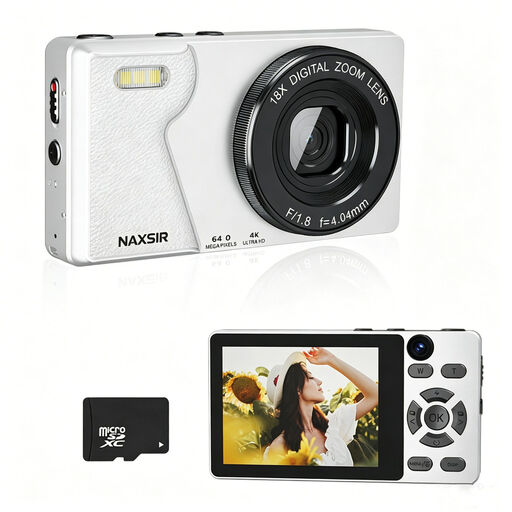
Worth a look if you’re after a compact camera for portable photography; the listed zoom is digital.
The product title lists 4K Ultra HD, 64 MP photo resolution, 18× digital zoom and a 32 GB memory card.
 No image available
A portable camera to consider if you’re after a compact design; check separately which controls you need for high-contrast scenes.
The product title lists 4K, 80 MP and 18× zoom.
 No image available
This version could suit you if you’re looking for a portable camera; for the square, also consider the field of view and exposure controls.
The product title lists 5K, 80 MP and 18× zoom.
 No image available
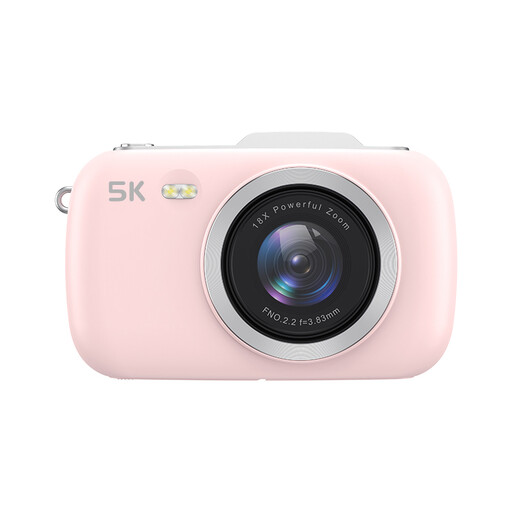
A portable camera to consider if you’re looking for a compact model; remember to factor in how much storage you need.
The product title lists 5K, 80 MP and 18× zoom. An SD card is not included.
 No image available
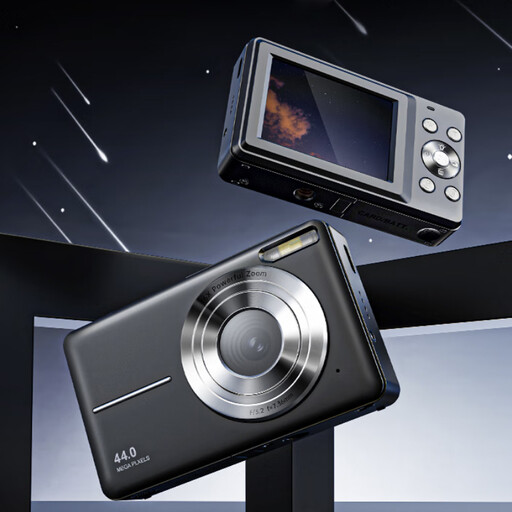
This pocket camera could suit you if you want a portable device for photography and video; check which exposure controls are available for your scene.
The product title lists 4K, 44 MP and 16× zoom. A memory card is required for storage and is not included.
No, not if the reflection itself is the subject. A polarising filter can reduce certain reflections, so first decide which sheen you want to retain and check whether a suitable filter can be fitted to your camera model.
After taking a test shot, check the histogram if your camera has one. Canon Europe explains that lost detail in the brightest areas can show up in the histogram. Exposure compensation shifts the brightness of the shot, but won’t resolve every difference in contrast.
Report the fault to the retailer. According to the Dutch government, the retailer must provide a solution if there’s a problem; any manufacturer’s warranty is separate.
First check which privacy rules apply. According to the Dutch Data Protection Authority, the exception for private use does not apply when you share images more widely. You’ll then need a lawful basis under the GDPR for identifiable people; the regulator says consent is required in many cases.