
Photographers looking to reduce reflections
If you want to shoot through shop windows or tone down distracting reflections on wet surfaces, check whether a polarising filter can be fitted to the camera you choose.


If you want to reduce distracting reflections in glass or on wet paving, choose a camera with a compatible adapter and polarising filter, such as the Ricoh GR IV or Fujifilm X100VI. A polarising filter can also remove reflections you want to capture, though. If you’re mainly looking for a camera that can handle a mix of wide square scenes and close-up details, compare compact zoom cameras and check separately whether a filter will fit.
If you want to shoot through shop windows or tone down distracting reflections on wet surfaces, check whether a polarising filter can be fitted to the camera you choose.
To capture buildings, paving and their reflections together, the angle of view and the space you have to step back both matter. A fixed angle of view can be limiting.
If you want to switch between a wide view and architectural details from the same spot, compare the zoom range and check whether the camera also supports a suitable filter solution.
A good fit if: you want to use a compatible polarising filter to reduce unwanted reflections.
Bear in mind: the angle of view is fixed. Check that you have enough distance from where you’ll be standing, and that the adapter and filter fit the model.
A good fit if: you want to switch between a wide view of the square and zoomed-in details without changing lenses.
Bear in mind: zoom alone tells you nothing about controlling reflections; check filter compatibility separately.
| Consideration | What to look for | Who is this important for? |
|---|---|---|
| Reducing reflections | For the exact model, check the adapter, filter size and compatibility with a polarising filter. | If I’m shooting through glass or across wet paving, I want to be able to tone down distracting reflections. Around 36% of consumers rank controlling reflections as their top purchase priority. |
| Capturing the whole square | Compare the angle of view with where you’ll be standing. Fixed 28 mm and 35 mm equivalents frame a scene differently from a zoom that starts at a 24 mm equivalent. | If I want to capture the square and its reflection together, the wide-angle view needs to work from where I’m standing. Around 29% of consumers give capturing the whole square top priority. |
| Bright and dark areas | Check the exposure options. An ND filter reduces the amount of light entering the camera, but it is not a polarising filter. | In bright light, I want to manage highlights and deep shadows myself, without confusing one type of filter with another. Around 21% of consumers put exposure control first. |
| Switching between wide views and details | Compare the wide-angle setting and optical zoom range; digital zoom is not the same as optical zoom. | On a city walk, I want to be able to switch from a view of the square to details from the same spot. Around 14% of consumers make this versatility their top purchase priority. |
An ND filter reduces the amount of light; that doesn’t mean it will reduce reflections in glass or water. Ricoh describes the GR IV HDF as having a highlight diffusion filter, which serves a different purpose from polarisation.
Check the full model name and decide whether you want to affect the amount of light, highlights or reflections.
A compatible adapter and polarising filter may need to be purchased separately.
A telephoto range helps you frame distant details, but it doesn’t tell you whether the whole square will fit in the frame from where you’re standing.
First compare the widest angle of view for the exact model, then check whether the telephoto range suits the photos you want to take.
An accessory product page may mention camera models only to indicate compatibility; this doesn’t mean that the camera itself is available to buy.
When buying, check the product category, full model name, version and product detail page.
The GR IV is a compact camera with a fixed wide-angle lens; an optional adapter allows you to use filters.
The X100VI combines a fixed angle of view with a built-in ND filter and a listed adapter ring for filters.
The RX100 VII is a compact zoom camera for anyone who wants to frame different shots from one spot.
The PowerShot G7 X Mark III is a compact zoom option for wide views of squares and more tightly framed city details.
The LUMIX TZ99 is a compact zoom camera for anyone who also wants to zoom in on distant details optically.
These Joybuy products are compact digital cameras with ‘zoom’ in their product titles. Check for each model whether the zoom is digital or optical, and whether a polarising filter can be used with a compatible adapter.
 No image available
The product title mentions digital zoom for varying your framing; this is not optical zoom.
The title lists 4K, 64 MP, autofocus and a 32 GB memory card.
 No image available
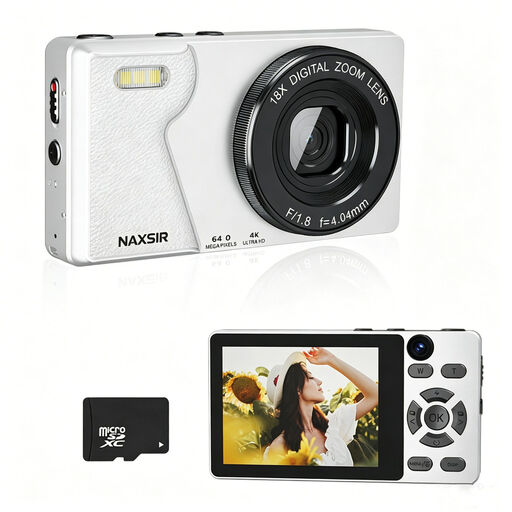
The title mentions 18x zoom; check separately whether you can use a filter with this camera.
The product title lists 4K, 80 MP and the pink version.
 No image available
The title mentions 18x zoom for different framing options; check separately whether a polarising filter fits the model.
The product title lists 5K, 80 MP and the white version.
 No image available
The title mentions 12x optical zoom, letting you switch between different framings from the same spot.
The product title lists 4K, 64 MP and Wi-Fi; check filter compatibility separately.
 No image available
The title lists 16x digital zoom, not optical zoom; check filter compatibility separately.
The product title lists 4K and 44 MP.
No. An ND filter reduces the amount of light entering the camera; it doesn’t work like a polarising filter. A polarising filter can reduce unwanted reflections in glass and water. First decide whether you want to tone down the reflection or capture it.
For the GR IV, Ricoh describes the optional GA-3 with a 49 mm filter thread. For the X100VI, Fujifilm lists the AR-X100 adapter ring and a compatible 49 mm filter size. Before fitting a filter, check the instructions and make sure it is compatible with your specific filter.
Don’t use a polarising filter if you want to retain the reflection, or check the effect on the spot. Canon recommends calm water for a clear reflection; finding shelter or waiting for the wind to drop can help.
When you buy remotely from a business, you’re usually entitled to a 14-day cooling-off period. According to the Dutch government, there is no fixed term for the statutory guarantee in the Netherlands: what you can expect from a product depends partly on the product itself. Check the terms and conditions for your specific purchase.
According to the Dutch Data Protection Authority, public sharing is not covered by the exception for personal or household use. If people are identifiable, you need to take account of the GDPR and an applicable legal basis; this doesn’t mean that every photo of a square is automatically prohibited.