Who is this buying guide for?

Photographer capturing reeds and reflections

You want to capture the landscape and its reflection in the water together, while deciding how much reflection remains visible. Angle of view, composition and the possible effect of a polarising filter matter more to you than maximum zoom.

Photographer capturing distant reed details

You take photos from an accessible path and want to frame a distant reed bed on its own. Optical telephoto reach matters more to you than a large sensor or fixed angle of view.

Walker looking for a lightweight camera

You want to frame shots quickly while out and about, including from low down by the water or in bright light. Compare the weight of each model and check whether it has a tilting screen or viewfinder.

What should you look for when choosing?

Wide-angle or moderate zoom

Choose this if: you want to capture reeds, the water’s edge and the reflection in a single composition. Sony and Canon specify a 24 mm full-frame equivalent wide-angle setting for the models mentioned.

Bear in mind: a shorter zoom range makes distant reed details appear smaller in the frame.

Travel zoom

Choose this if: you want to switch between a wide view and a tighter shot of distant reeds from one spot. Panasonic lists 30× optical zoom for the DC-TZ99; Canon lists 40× for the SX740 HS Lite Edition.

Bear in mind: consider the wide-angle and telephoto ranges together; a high zoom figure alone doesn’t tell you how the camera performs.

Fixed angle of view

Choose this if: you want to work deliberately with a single angle of view. Fujifilm lists a fixed 23 mm F2 lens, tilting screen and hybrid viewfinder for the X100VI.

Bear in mind: without optical zoom, you can’t bring a distant reed bed closer; check that the framing works from your usual shooting position.

What to consider What to look for when buying Who should consider this?
Keeping or reducing reflections Decide what effect you want and check that a polarising filter fits the exact camera model. Nikon explains that this type of filter can reduce reflections. If you want to keep the reflection as a subject, you won’t necessarily want to filter out all the glare; around 36% of consumers prioritise controlling reflections.
Framing reeds and their reflection together Compare the wide-angle setting of the exact model. Sony, Panasonic and Canon list a 24 mm full-frame equivalent for the models mentioned, with differences depending on the model and aspect ratio. If you want to capture the landscape, shoreline and reflection from one spot, a wide view is important; around 29% of consumers prioritise wide landscape shots.
Photographing distant reed details Compare optical zoom and the full-frame equivalent telephoto range. Distinguish between optical zoom and digital or combined zoom. If you’re taking photos from an accessible path and want to frame a distant reed bed larger, optical reach matters; around 21% of consumers prioritise distant details.
Portability and ease of use Compare weights on the same basis and check whether you want a tilting screen or electronic viewfinder. Panasonic lists the DC-TZ99 at approximately 322 g, including battery and SD card. If you want to frame shots easily in your usual shooting position while out walking, weight and controls matter; around 14% of consumers prioritise portability and ease of use.

Buying pitfalls

  • Buying a polarising filter to remove every reflection

    The reflection of the reeds may be the subject of your photo. In that case, reducing reflections won’t necessarily give you a better result.

    First decide whether you want to reduce glare or keep the reflection. Then check the filter fitting for the exact model.

  • Confusing digital zoom with optical zoom

    Zoom figures can describe different features. For example, Canon distinguishes between optical zoom and ZoomPlus on the SX740 HS Lite Edition.

    For distant reed details, compare the optical range and the full-frame equivalent telephoto setting.

  • Expecting a camera with a fixed lens to zoom in optically

    The Fujifilm X100VI and Ricoh GR IIIx have the fixed angles of view described. This means a distant reed bed may remain small in the frame from a fixed position.

    Choose a fixed focal length only if the framing works from your usual shooting distance.

Brands to compare

Sony

The RX100 VII is a zoom option for anyone looking for a wide view, moderate telephoto reach and an electronic viewfinder in one camera.

  • Sony specifies a 1.0-type sensor and an optical range equivalent to 24–200 mm on a full-frame camera for the RX100 VII.
  • These specifications alone don’t represent measured image quality. Check separately whether your chosen filter fits the model.

Panasonic

The LUMIX DC-TZ99 is a travel zoom option; the DC-TZ300 is a separate model with different specifications.

  • Panasonic lists 30× optical zoom, RAW and a 1/2.3-type sensor for the TZ99. For the TZ300, Panasonic lists a 1.0-type sensor and a 24–360 mm full-frame equivalent range.
  • The TZ99’s features don’t automatically apply to the TZ300, or vice versa; compare the exact model variant.

Canon

The PowerShot SX740 HS Lite Edition is designed for long optical reach; the G7 X Mark III has a shorter zoom range.

  • Canon specifies a 24–960 mm full-frame equivalent range and a 1/2.3-type sensor for the SX740 HS Lite Edition. For the G7 X Mark III, Canon lists a 24 mm wide-angle setting, 4.2× zoom and a 1.0-type sensor.
  • These specifications aren’t a like-for-like measure of image quality. Also make sure you’re looking at the exact SX740 HS Lite Edition variant.

Fujifilm

The X100VI is an option for anyone who prefers a fixed angle of view and direct control over zoom.

  • Fujifilm lists a fixed 23 mm F2 lens, hybrid viewfinder and tilting screen. The built-in ND filter reduces the amount of light.
  • An ND filter doesn’t work like a polarising filter for reflections. The fixed lens limits how tightly you can frame distant reeds.

Ricoh

The GR IIIx offers a fixed, narrower angle of view than a dedicated wide-angle lens.

  • Ricoh specifies an APS-C sensor and an angle of view equivalent to approximately 40 mm on a full-frame camera for the GR IIIx.
  • From a fixed position, that angle of view may be too narrow to frame a wide reed landscape and the full reflection together.

Cameras at Joybuy

This selection includes pocket, digital and action cameras. Check each model to see whether its controls and zoom suit landscape photography, and whether you can attach the filter you want.

DJI Osmo Pocket 4 Standard Combo pocket camera with rotating screen

DJI Osmo Pocket 4 Standard Combo

The rotating screen position mentioned may be useful when framing from different heights; check whether the model suits the type of landscape photography you have in mind.

The product name lists a 1-inch CMOS sensor, a 2-inch rotating screen and 2× lossless zoom.

View at Joybuy

KOMERY G7 5K digital camera

KOMERY G7 5K

If you want to try different framings, check what type of zoom the model uses before comparing its range with optical travel zoom cameras.

The product name lists 18× zoom, 5K and a portable point-and-shoot design.

View at Joybuy
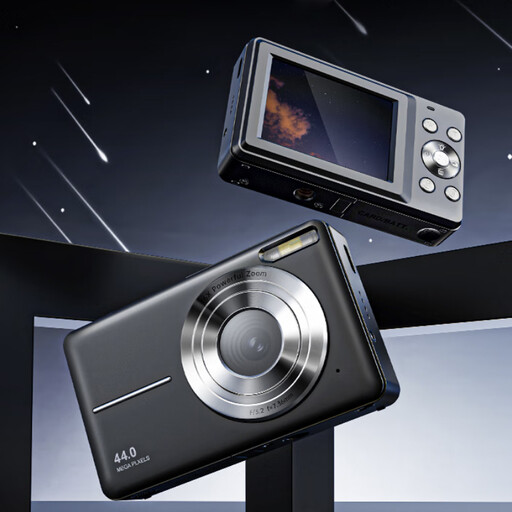
Songdian 4K pocket camera with 44 MP

Songdian Pocket Camera 4K 44MP

Before choosing, check whether digital zoom suits the way you want to frame distant reed details; digital zoom isn’t the same as optical zoom.

The product information lists 16× digital zoom, autofocus and 44 MP.

View at Joybuy
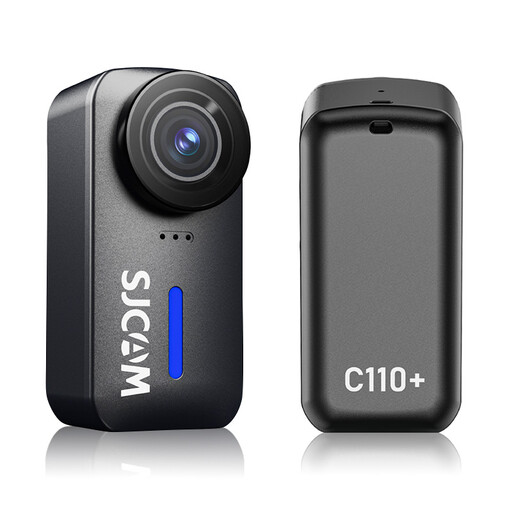
SJCAM C110+ 4K action camera with ultra-wide-angle lens

SJCAM C110+ 4K

An action camera is different from a traditional zoom compact camera; check that its controls and lens suit the way you take landscape photos.

The product name lists a 170° ultra-wide-angle lens and photos up to 20 MP.

View at Joybuy
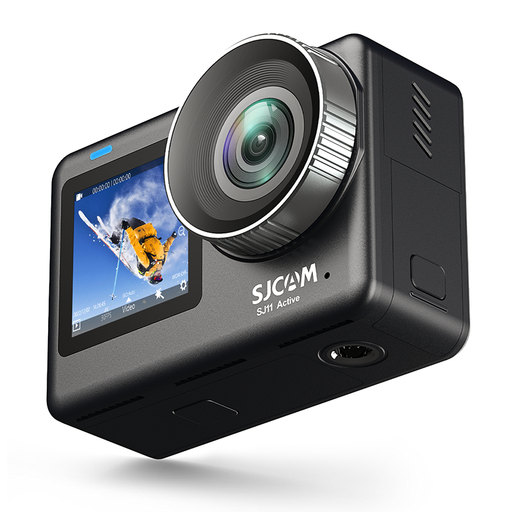
SJCAM SJ11 Active action camera with dual screens

SJCAM SJ11 Active

Compare the screen layout with your preferred shooting position and check that the model suits the compositions you want to create.

The product name lists a 2.33-inch touchscreen, a 1.3-inch selfie display and 4K at 30 fps.

View at Joybuy

Frequently asked questions

Can a polarising filter help with strong reflections on the water?

A polarising filter can reduce unwanted reflections, but it may also weaken the reflected image you want to capture. First decide what effect you’re after, then check that the filter fits your camera model.

Is a built-in ND filter the same as a polarising filter?

No. Fujifilm describes the X100VI’s ND filter as a way to reduce light, including for longer shutter speeds; Nikon describes a polarising filter as a way to reduce reflections. The filters therefore serve different purposes.

How can you make a reflection more prominent in your composition?

Try taking photos from different camera heights in an accessible spot. Canon explains that the height you shoot from changes the visibility and appearance of a reflection in water.

What can you do if your compact camera develops a fault after purchase?

If a product is faulty, you have statutory rights in the Netherlands. According to the Dutch government, there is no fixed statutory guarantee period, and the retailer is your point of contact if there’s a problem. Damage caused by you or normal wear and tear doesn’t automatically entitle you to a repair at no cost.

Can you enter a protected reed area to take a photo?

It depends on the location. The Dutch government says that provinces decide what is permitted in their area; Staatsbosbeheer advises taking photos while staying on the path. Check the signs and local rules, and keep out of closed areas.
