Choose based on where you’ll be standing: a fixed wide-angle lens is a good fit if the whole landscape is your priority, while optical zoom helps you frame distant details from the same path. Sony lists a 24–200 mm equivalent range for the RX100 VII, while Panasonic lists 24–720 mm for the TZ99 when shooting in 4:3. Also weigh up aperture, stabilisation and shutter speed, as stabilisation won’t freeze moving reeds. If your route is likely to be wet, check the protection offered by the exact model.
Who is this choice relevant to?
Walkers who want to capture the whole reedbed
You’re taking photos from a path and want to know whether a wide angle will fit the landscape into a single frame. Sony, Canon, Panasonic and Ricoh list wide-angle ranges or fixed wide-angle lenses for the models mentioned here.
Photographers who want to frame distant details
You can’t easily change where you’re standing and want to fill the frame with reed heads or other details further away. The listed zoom ranges of the Sony RX100 VII and Panasonic TZ99 offer different ways to frame your subject more tightly from the same spot.
Photographers working in changing light
You’re taking handheld photos as the light or wind changes, and want to weigh up aperture, stabilisation and shutter speed. Stabilisation helps counter camera shake, but shutter speed also affects how movement in the reeds is captured.
Which camera features matter?
First decide what kind of framing you need from where you’ll be standing. Then consider shutter speed and the model’s protection for your route.
| What to consider |
What to look for when buying |
Who is this important to? |
| Framing the landscape from the path |
Compare the equivalent focal length using the same aspect ratio, and decide whether a fixed wide-angle lens will be enough. |
If I want to capture the whole reedbed from where I’m standing, choosing the right wide angle is my first concern. Around 31% of consumers in this situation prioritise framing the landscape. |
| Capturing distant details handheld |
Check the optical zoom, image stabilisation for stills and the aperture at the telephoto end. |
If I can’t get closer, I want to frame distant details more tightly without moving. Around 31% of consumers put optical reach first. |
| Sharpness in changing light and with moving reeds |
Check the aperture across the zoom range, image stabilisation for stills and the adjustable shutter speed. |
When the light and wind change, I want to weigh up shutter speed and stabilisation for my shot. Around 25% of consumers focus mainly on these conditions. |
| Taking the camera on a wet route |
Check the water and dust protection of the exact model, and the conditions under which it applies. |
If my route could be wet, I want to know what protection the camera actually offers. Around 13% of consumers prioritise protection in wet conditions. |
What to look out for when buying
-
Confusing image stabilisation with freezing moving reeds
Stabilisation is designed to counter camera movement. Moving reeds can still look blurred, even if you hold the camera steady.
Check both image stabilisation for stills and the adjustable shutter speed. Choose a setting based on the movement you want to freeze or deliberately show.
-
Comparing only the highest zoom figure
A listed zoom range alone doesn’t tell you what aperture is available at the telephoto end. Equivalent focal lengths can also depend on the aspect ratio you choose.
Compare equivalent optical focal lengths on the same basis, and check the aperture at the zoom setting you plan to use.
-
Assuming every compact camera can withstand rain
A compact size on its own doesn’t prove that a camera is water- or dust-resistant.
Check the protection rating for the exact model before taking the camera on a wet route.
Camera brands to consider
Sony
The RX100 VII is a compact zoom option if you want to capture both a wide landscape and a tighter frame from one spot.
- Sony specifies a 24–200 mm equivalent range, a 1.0-type sensor, optical image stabilisation for stills and an electronic viewfinder.
- Its listed range is shorter than the 24–720 mm Panasonic specifies for the TZ99 when shooting stills in 4:3. This compares manufacturer specifications, not performance in a test.
Panasonic
The LUMIX TZ99 is a travel zoom option if capturing distant details from the path matters more to you than having a larger listed sensor.
- Panasonic specifies 30× optical zoom and a 24–720 mm equivalent range for stills in 4:3.
- According to Panasonic, the TZ99 has a 1/2.3-inch sensor and an f/3.3–6.4 aperture. The equivalent range changes with the aspect ratio.
Ricoh
The GR IV is a good fit if you’d rather have a fixed wide-angle lens for the reedbed landscape than optical zoom.
- Ricoh specifies around 28 mm equivalent, an APS-C sensor and five-axis sensor-shift stabilisation.
- The fixed lens can’t optically bring distant details closer. Stabilisation doesn’t remove subject movement.
Canon
The PowerShot G7 X Mark III combines a wide-angle setting with a shorter zoom range, making it an option if you also want to weigh up aperture in changing light.
- Canon specifies a 24–100 mm equivalent range, f/1.8–2.8 and a 1.0-type sensor.
- Its listed telephoto range is shorter than that of the Sony and Panasonic models mentioned here. These specifications are not an independent comparison of image quality.
OM SYSTEM
The Tough TG-7 is worth considering if protection on a wet outdoor route is your priority.
- OM Digital Solutions specifies waterproofing to 15 m, IP6X dust protection and a 25–100 mm equivalent range for this model.
- Consider whether the listed range suits the distance to your subject. This protection applies to this model and not automatically to other cameras from the brand.
Joybuy products for this use
This selection of Joybuy products includes compact cameras, pocket gimbal cameras and action cameras. Focus on comparing the listed zoom, angle of view and protection with how you plan to take photos from the path.
 No image available
DJI Osmo Pocket 4 Standard Combo
Could suit you if you want to frame your shot more tightly from one spot. Check whether a pocket gimbal camera is right for the landscape photos you want to take.
The product name lists 2× lossless zoom, a 1-inch CMOS sensor, 3-axis stabilisation and 107 GB of built-in storage.
View at Joybuy
 No image available
KOMERY G7-A, pink
If you want to frame distant details from the path, the product description lists 18× optical zoom. Bear in mind the warning to keep the camera away from water and moisture.
The product name describes a portable point-and-shoot camera. The product description lists autofocus and a removable memory card.
View at Joybuy
 No image available
DJI Osmo Pocket 3
Could suit you if you value a compact camera with stabilisation for handheld shots. Consider separately whether its framing is right for your landscape.
The product name lists a 1-inch CMOS sensor, 3-axis stabilisation and 4K/120 fps video recording.
View at Joybuy
 No image available
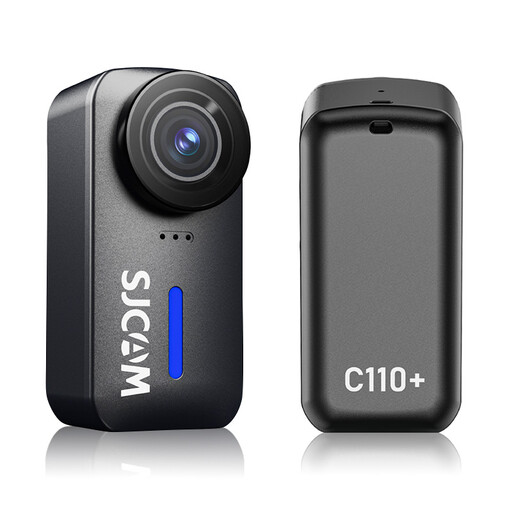
SJCAM C110+ 4K action camera
For an extra-wide composition, the product name lists a 170° ultra-wide-angle lens. Check whether that angle of view suits the framing you want for the reedbed landscape.
The product description lists 20 MP photos and gyro-EIS. The stated waterproofing to 30 m applies when used with the included waterproof housing.
View at Joybuy
 No image available
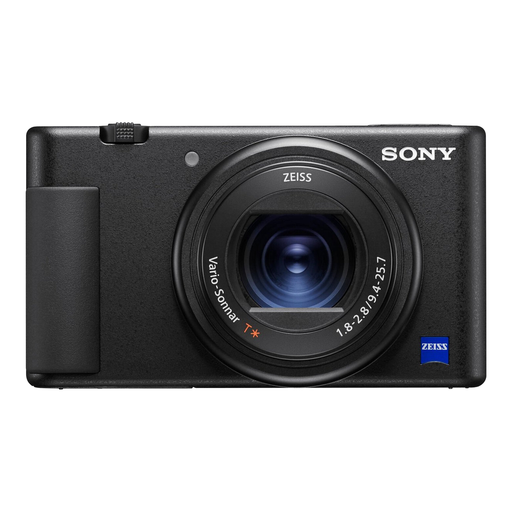
Sony ZV-1
Could suit you if you want to switch between a wide and tighter frame from one spot. Bear in mind the warning to avoid exposure to water and excessive moisture.
The product specifications list 24–70 mm and 2.7× optical zoom, a 1-inch sensor and image stabilisation.
View at Joybuy
Frequently asked questions
Does image stabilisation help with reeds blurred by the wind?
It won’t prevent every kind of blur: stabilisation is designed to reduce camera movement. For moving reeds, also choose a shutter speed that suits the movement you want to freeze or deliberately show. Nikon explains how a fast shutter speed can freeze action.
Where should you start when setting up for a handheld photo?
First choose the framing you want, then check that the shutter speed suits the wind and your subject. After that, check the image for motion blur; a slower shutter speed shows more movement. No single shutter speed can guarantee sharp reeds in every situation.
What costs or rights should you check when buying online?
Before you buy, check what’s included with the specific version and who the seller is. ACM ConsuWijzer states that consumers in the Netherlands generally have a statutory 14-day cooling-off period for online purchases, starting after delivery, with some exceptions. The seller is also responsible if, under normal use, the product doesn’t do what you could reasonably expect. Cameras aren’t covered by a fixed statutory two-year guarantee in every case.
Can you walk into the reeds or use a closed path to take a photo?
Don’t assume you’re allowed in just because you’re only taking photos. The Dutch government states that provinces decide what is and isn’t allowed in their nature reserves. Staatsbosbeheer describes temporary closures during the breeding season, which are marked on site with signs. Check the rules and signs for the specific area, and respect any closures.


