
Photographing the textures of reeds
You want to capture a wide landscape in which the plumes and lines remain clear. So compare the angle of view, sensor and available settings before choosing a camera.


For a wide view of a reed landscape from a spot with a good vantage point, a compact camera with a fixed wide-angle lens is a good fit. If you can’t get any closer, optical zoom gives you more freedom to frame the reed bed. Then compare the lens, sensor and adjustable shutter speed: no single specification guarantees sharp photos of moving plumes. Ricoh Imaging Europe lists the GR IV as having a fixed lens with a 28 mm equivalent focal length, while Sony Netherlands gives the RX100 VII an optical zoom range of 24–200 mm equivalent.
You want to capture a wide landscape in which the plumes and lines remain clear. So compare the angle of view, sensor and available settings before choosing a camera.
You can’t always get closer to the reed bed. Optical zoom determines how much freedom you have to frame a more distant section from where you’re standing.
You’re looking for a camera that’s easy to carry and lets you adjust the shutter speed when it’s windy. Canon Netherlands recommends matching the shutter speed to the movement when photographing moving subjects.
Start with your distance from the reeds and the framing you want. Then compare the settings for taking photos in windy conditions and the weight you’re happy to carry on a walk.
| What to consider | What should you check? | Who does this matter most to? |
|---|---|---|
| Fine detail in a wide shot | Compare the angle of view, effective pixel count and sensor. Look at sample photos at the size you intend to use them. | I want to capture the whole reed field in a wide shot while keeping the fine detail of the plumes clear. Around 31% of consumers say fine detail in a wide landscape shot is their top buying priority. |
| Reeds at a distance | Check the optical zoom range in 35 mm equivalent and distinguish between optical and digital zoom. | If I can’t get any closer from the footpath, I want to frame a more distant reed bed so it fills the shot. Around 25% of consumers prioritise optical zoom for photographing reeds at a distance. |
| Movement in the wind | Check whether you can set the shutter speed, and take a test shot of the plumes when it’s windy. | I want to be able to judge whether moving reeds will come out sharp enough, even if that means changing the exposure settings. Around 25% of consumers prioritise sharpness in windy conditions. |
| Carrying it on a walk | Compare the dimensions and weight, including the battery and memory card. Also check whether the lens is suitable for the framing you want. | If I want to carry the camera on a nature walk, portability matters more to me than maximum zoom range. Around 19% of consumers say ease of carrying is their top buying priority. |
A longer stated zoom range doesn’t, by itself, tell you how well fine details will show up in low light. The Panasonic TZ300 and TZ99 also have different sensor types and zoom ranges.
Compare the framing and image quality at the zoom setting and in the lighting conditions you expect to use.
Image stabilisation and a tripod can reduce camera shake, but they won’t stop the plumes from moving.
Check a test shot in windy conditions and adjust the shutter speed. You can also change the ISO or aperture if needed.
A fixed lens can’t optically zoom in on a more distant section. Where you’re allowed to stand can also affect your composition.
Think about the accessible spots you’ll be photographing from and check whether the angle of view works from there.
These models illustrate different trade-offs between a fixed wide-angle lens, optical zoom and portability. Brand specifications are not an independent real-world test.
The GR IV is an option for wide-framed reed landscapes when you’re photographing from a suitable spot.
The X100VI has a fixed lens and is designed for those who value a wide angle of view more than optical telephoto reach.
The RX100 VII offers optical zoom for anyone who wants to frame both a wide landscape and a more distant reed bed from the same spot.
The PowerShot G7 X Mark III could be a good fit if a shorter zoom range is enough for you.
The TZ300 and TZ99 are separate options for anyone looking for a compact camera with optical zoom; they have different sensors and zoom ranges.
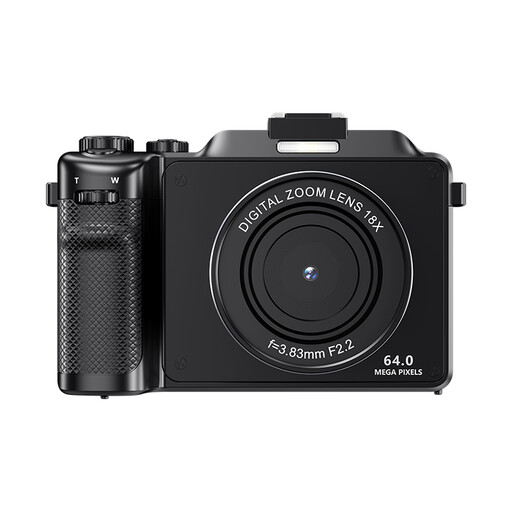
These compact cameras are designed for photography on the go. Both product listings specify digital zoom; check whether it suits the framing you need for the reeds.
 No image available
For anyone looking for a compact camera, the product listing specifies 64MP and 18X digital zoom. The description warns that digital zoom reduces image quality, so check whether it will give you the reed framing you want.
 No image available
This pocket camera is designed to be carried on a walk. The product listing specifies 16X digital zoom; digital zoom isn’t optical zoom, so check whether it can give you the framing you want without optical telephoto reach.
Choose a shutter speed that freezes enough of the movement, then check the plumes in your photo. Canon Netherlands points out that a tripod can reduce camera shake, but won’t stop the reeds moving. Adjust the ISO or aperture too if needed.
No, not if you want to show the whole landscape. First decide whether you want a wide shot or to frame a more distant section. Then compare the optical angle of view and telephoto reach; digital zoom is no substitute for optical zoom.
Compare the weight, including the battery and memory card, and consider the conditions in which you plan to use the camera. Check the instruction manual for your chosen model for guidance on cleaning, charging and storage.
For an online purchase, you can generally cancel the purchase within 14 days of delivery; ACM ConsuWijzer explains this statutory cooling-off period. Separately, the camera must meet what you can reasonably expect from it. In the Netherlands, the statutory guarantee doesn’t simply have a fixed two-year term.
That depends on the nature reserve and its management authority. Check the access signs and the rules for the specific location; Staatsbosbeheer asks visitors to stay on the paths during the breeding season.