For a wide reed landscape with a bright, cloudy sky, start by considering the angle of view you want and how much control you need over exposure. For distant reed details from a path, optical zoom matters more. A larger sensor or RAW shooting calls for a different trade-off than maximum zoom range, while a rugged camera is particularly relevant if you often take photos in wet conditions. Image stabilisation reduces camera shake, but it won’t freeze reeds moving in the wind.
Who is this buying guide for?
Landscape photographer on a walking trail
You want to capture the reeds, horizon and cloudy sky in a single composition, while being able to assess the exposure yourself. So consider the angle of view, file format and controls, not just the maximum zoom range. The Consumentenbond discusses different types of compact camera; Fujifilm lists RAW shooting for the X100VI.
Photographer of distant reed details
You can’t get any closer and want to frame parts of the reed bed larger from an accessible path. Optical range is then an important factor, along with how the camera performs in lower light. Sony, Panasonic and Canon publish different focal length ranges for their models.
Walker along wet banks
You often take photos in conditions involving splashes, mud or rain, and want a camera with a stated level of protection suited to this use. Check the specifications for the exact model; OM System lists water, dust and shock resistance for the TG-7.
What should you look for?
First decide whether you mainly need a wide landscape view, distant details, handheld shots or protection on wet walks. This priority will help you compare the relevant specifications without treating any one camera feature as the deciding factor for everyone.
| What to consider |
What to look for |
Who is this most important for? |
| Capturing sky and reeds with room to edit |
Check RAW support, exposure controls and whether the angle of view suits your shooting position. |
If I want to capture the bright sky and darker reeds together and edit the image later, I prioritise file format and exposure control. Around 36% of consumers give editing flexibility top priority. |
| Framing both the wide view and distant details |
Compare the optical range from wide angle to telephoto. Sony lists a 24–200 mm equivalent range for the RX100 VII, Panasonic 24–720 mm for the TZ99 and Canon 24–960 mm for the SX740 HS Lite Edition. |
If I can’t get closer to the reed bed from the path, I want the lens range to suit the crop I’m after. Around 29% of consumers prioritise optical range. |
| Taking sharp handheld photos |
Check whether stabilisation for stills is listed, and bear the shutter speed in mind when the reeds are moving. Sony and Canon describe stabilisation for the models mentioned. |
If I’m taking photos without a tripod in cloudy or windy conditions, I need to account for both camera shake and moving reeds. Around 21% of consumers give manageable handheld shots top priority. |
| Protection on wet walks |
Check the protection rating and usage instructions for the exact model. OM System lists the TG-7 as waterproof to 15 m, shockproof to 2.1 m and dustproof. |
If I often take photos along wet banks, I want to know whether the stated protection is suitable for those conditions. Around 14% of consumers prioritise protection from wet weather. |
Common buying mistakes
-
Confusing digital zoom with extra optical range
Manufacturers list optical and digital zoom separately. The stated optical focal length range describes what the lens itself covers.
Compare the focal length in 35 mm equivalent for the exact models, from wide angle to telephoto.
-
Assuming a 4K Photo feature produces a full-resolution photo
Panasonic describes the TZ99’s 4K PHOTO output as around 8 megapixels and lists a 20.3-megapixel sensor. So the output from a specific feature is not the same as a photo at the sensor’s full resolution.
Check which photo format you’re using if you plan to crop heavily or print your images later.
-
Expecting stabilisation to freeze moving reeds
Image stabilisation reduces camera shake, but it won’t stop moving reeds from appearing blurred.
In windy conditions, check the shutter speed and take a test shot if needed. Don’t choose a camera based solely on its stated stabilisation.
-
Choosing a fixed wide-angle lens without considering where you’ll shoot
A lens without optical zoom won’t let you bring distant reed details closer. Area rules may also determine where you’re allowed to take photos.
Compare the fixed angle of view with your preferred composition from the accessible path, and check the area’s rules in advance.
Brands to compare
Sony
The RX100 VII combines a compact zoom with both wide-angle and telephoto range.
- Sony specifies a 1.0-type sensor, a 24–200 mm equivalent range and optical stabilisation for stills.
- According to Sony, the maximum aperture ranges from f/2.8 at wide angle to f/4.5 at telephoto.
Canon
The G7 X Mark III has a shorter zoom range, while the SX740 HS Lite Edition reaches further at the telephoto end.
- Canon specifies equivalent ranges of 24–100 mm and 24–960 mm respectively.
- The G7 X Mark III and SX740 HS Lite Edition have different sensor formats and zoom ranges. Compare the exact model with your shooting needs.
Panasonic
The Lumix TZ99 is a travel zoom for framing more distant sections of reeds from one spot.
- The Dutch manufacturer’s website lists an equivalent range of 24–720 mm.
- Check which photo format you need; a 4K PHOTO shot is not the same as a photo at full sensor resolution.
Ricoh
The GR IV is a compact camera with a fixed wide-angle lens for photographers who like to compose their own shots.
- Ricoh specifies an APS-C sensor, approximately 28 mm equivalent and five-axis sensor stabilisation.
- The lens has no optical zoom, so it won’t bring distant reed details closer.
Fujifilm
The X100VI has a fixed angle of view for those who like to compose deliberately and want to shoot in RAW.
- Fujifilm specifies an APS-C sensor with 40.2 effective megapixels and RAW support.
- The fixed lens doesn’t zoom optically; check whether 35 mm equivalent is wide enough for your shooting position.
OM System
The Tough TG-7 is worth comparing if protection on wet or muddy walks is a priority.
- OM System lists water, dust and shock protection for this model, with an equivalent range of 25–100 mm.
- The stated protection alone doesn’t determine how well the camera suits your preferred angle of view or landscape details.
Cameras on Joybuy
This selection includes digital cameras described as being for photography, travel or zooming. Check each model to see what type of zoom is listed and whether its stated imaging capabilities suit your reed landscape.
 No image available
KOMERY G7 5K digital camera – White
The product title describes this model as a portable point-and-shoot camera for photography. Check whether the stated 18X zoom meets your need for optical range.
The product title lists 5K, 80MP UHD and 18X zoom. The colour White is also mentioned.
View on Joybuy
 No image available
KOMERY W6 digital camera
The stated optical zoom may be useful if you want to frame more distant landscape details from a path.
The product title lists 12X optical zoom, 4K and 64MP.
View on Joybuy
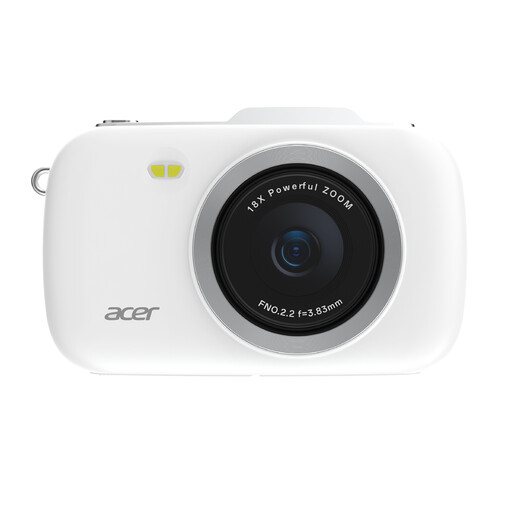 No image available
KOMERY G7-A 4K digital camera – White
The product title describes this model as a portable point-and-shoot camera for photography. If optical range matters to you, check what type of zoom is meant.
The product title lists 4K, 80MP UHD and 18X zoom. The colour White is also mentioned.
View on Joybuy
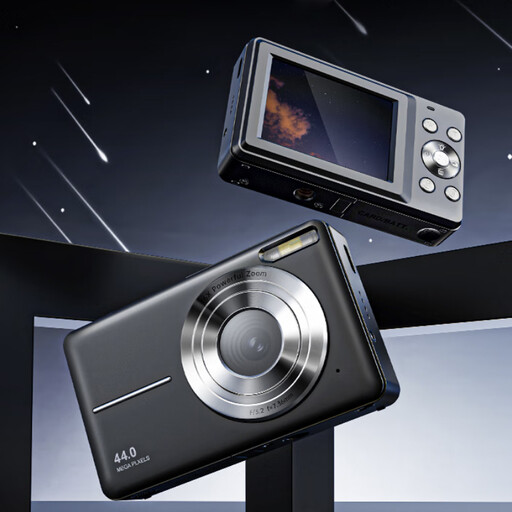 No image available
Songdian Pocket Camera 4K – Black
The pocket-sized design may suit anyone who wants to take a camera along on a walk. For distant reed details, it’s important to know that the stated zoom range is digital.
The product title lists 4K, 44MP and 16X digital zoom. The product description lists autofocus.
View on Joybuy
Frequently asked questions
How do you expose for a bright, cloudy sky with darker reeds?
Check the screen to see whether there’s still detail in the bright sky, and adjust the exposure if needed. If you want to edit the shot afterwards, check whether the model can capture RAW files. Neither step can restore detail that wasn’t recorded.
Will image stabilisation keep reeds moving in the wind sharp?
No. The stabilisation specified by manufacturers is designed to reduce camera shake. For moving reeds, also consider the shutter speed and how much movement you want to see in the shot.
What should you check on your camera before going for a walk?
Check the battery, memory card and photo settings. In wet weather, also read the usage instructions for the protection offered by your exact model. Fujifilm and OM System publish model-specific information for the X100VI and TG-7 respectively.
Can you leave the path to take a photo of reeds?
First check the rules for the specific nature reserve. Natuurmonumenten and Staatsbosbeheer refer visitors to access signs and area information, so you can plan your route in line with local rules.


