Start with a field of view that lets you frame both the water and the surroundings from the canal-side. Then decide whether you also want to zoom in from the same spot. A prime lens means choosing your position more carefully, while a zoom gives you more freedom to adjust the framing. In low morning light, check the aperture and sensor of the exact model too: a polarising filter could reduce the reflection you want to capture.
Which type of camera is right for you?
Photographer who carefully frames reflections
If you want to capture the reflected buildings and the water together, focus on the field of view and exposure controls. Fujifilm specifies a fixed 35 mm-equivalent field of view for the X100VI; Canon lists a 24–100 mm-equivalent zoom for the PowerShot G7 X Mark III.
Walker who zooms in from the canal-side
If you want to photograph both a wide view and details on the opposite bank from one spot, optical zoom range is an important factor. Sony specifies 24–200 mm-equivalent for the RX100 VII, while Panasonic specifies 24–720 mm-equivalent for the LUMIX DC-TZ99 in 4:3 mode.
Walker who plans for changeable weather
If you often take your camera with you and sometimes encounter wet weather, weigh portability against the protection specified for the exact model. OM SYSTEM specifies that the Tough TG-7 is waterproof to 15 m; this does not automatically apply to other compact cameras.
What should you look for when choosing?
Fixed field of view
Choose this if: you can carefully choose your position and usually work with a similar framing. Fujifilm specifies a fixed 35 mm-equivalent field of view for the X100VI.
Bear in mind: from a fixed position, you cannot adjust the framing with optical zoom.
Standard zoom
Choose this if: you want to switch between a wide canal view and a more magnified crop as you walk. Canon specifies 24–100 mm-equivalent for the G7 X Mark III; Sony lists 24–200 mm-equivalent for the RX100 VII.
Bear in mind: a greater zoom range alone does not tell you how a camera performs in low light; compare the aperture at the focal length you use.
Long-range travel zoom
Choose this if: you also want to capture distant details from the canal-side. Panasonic specifies 24–720 mm-equivalent for the DC-TZ99 in 4:3 mode; Canon lists 24–960 mm-equivalent for the SX740 HS Lite Edition.
Bear in mind: according to their manufacturers, the models mentioned have a 1/2.3-type sensor. In low morning light, compare the aperture too; Canon’s 40× optical zoom is not the same as 80× ZoomPlus.
| What to consider |
What to look for when buying |
Who should pay particular attention? |
| Reflections and composition |
Compare the field of view with the framing you want from the canal-side. Check that a filter fits the exact camera model. |
If you want to keep the reflected buildings visible, first consider the field of view and the effect of a filter. Around 36% of consumers prioritise reflections and composition. |
| Changing morning light |
Compare sensor size and maximum aperture at both ends of the lens; check the figures for the exact model. |
If you take photos in both open and shaded spots during a walk, consider the aperture and sensor alongside the zoom range. Around 29% of consumers prioritise photography in changing morning light. |
| Framing from the same spot on the canal-side |
Compare the 35 mm-equivalent wide-angle and telephoto focal lengths, and keep optical zoom separate from digital magnification. |
If you cannot get closer to details on the opposite bank, being able to zoom in without moving is important. This is the top concern for around 21% of consumers. |
| Portability and wet weather |
Compare weight on a like-for-like basis, for example including the battery and memory card. Check the water-resistance rating for the exact model. |
If you take your camera on walks and plan for wet weather, weigh portability against model-specific protection. Around 14% of consumers prioritise this combination. |
Buying pitfalls
-
Buying a polarising filter for “better reflections”
A polarising filter can reduce or remove reflections on water. That could weaken the very reflection you want to photograph.
First decide whether you want to keep the reflection or reduce glare. Then check that the filter fits the exact camera model.
A filter that does not suit the image you want may go unused; depending on the model, you may also need a compatible mount.
-
Mistaking the highest zoom figure for optical zoom
Canon distinguishes between 40× optical zoom and 80× ZoomPlus on the PowerShot SX740 HS Lite Edition. These figures do not refer to the same type of magnification.
Compare the stated optical focal lengths and assess digital magnification separately.
-
Assuming every compact camera saves RAW files
Canon lists JPEG for the SX740 HS Lite Edition, while Panasonic lists RAW for the DC-TZ99. Check the file format for the exact model before you decide.
If your workflow requires RAW files, a model that only lists JPEG may not give you the editing flexibility you want.
Camera brands to compare
Canon
Canon offers compact cameras with both standard zooms and longer zoom ranges.
- Canon specifies a 1.0-type sensor, a maximum aperture of f/1.8–f/2.8 and a 24–100 mm-equivalent range for the PowerShot G7 X Mark III.
- For the PowerShot SX740 HS Lite Edition, Canon lists 40× optical zoom and a 24–960 mm-equivalent range.
- The SX740 HS Lite Edition’s 80× ZoomPlus is not the same as optical zoom.
Sony
According to Sony, the RX100 VII combines a 1.0-type sensor with a 24–200 mm-equivalent zoom lens.
- Sony specifies optical image stabilisation for stills.
- According to Sony, the maximum aperture ranges from f/2.8 at the wide-angle end to f/4.5 at the telephoto end; bear this in mind when using the longer zoom range.
Fujifilm
According to Fujifilm, the X100VI is designed for photographers who work with a fixed 35 mm-equivalent field of view.
- Fujifilm specifies an APS-C sensor, RAW shooting, stabilisation and a built-in ND filter.
- The fixed lens offers no optical zoom for changing the framing from the same spot. An ND filter is not a polarising filter.
Panasonic
The LUMIX DC-TZ99 is a travel zoom with a stated 24–720 mm-equivalent range in 4:3 mode.
- Panasonic specifies RAW shooting and a weight of around 322 g, including the battery and memory card.
- The stated 1/2.3-inch sensor and f/3.3–f/6.4 aperture are worth considering if you also want to take photos in low light.
OM SYSTEM
The Tough TG-7 is a compact camera for anyone looking for model-specific protection in wet walking conditions.
- OM SYSTEM specifies waterproofing to 15 m, RAW shooting and a 25–100 mm-equivalent range.
- Its stated telephoto range is shorter than that of the travel zooms mentioned. The TG-7’s specification says nothing about the water resistance of other models.
Cameras at Joybuy
These Joybuy cameras are options to consider for photography on the go; check whether the features listed for each model suit taking photos from the canal-side.
 No image available
KOMERY G7-A 4K digital camera, 80 MP, 18× zoom, pink
An option for anyone who wants to take photos on a walk and compare the zoom figure in the product title.
The title lists 80 MP and 18× zoom; it does not specify the type of zoom.
View at Joybuy
 No image available
Komery W6 camera, 12× optical zoom, 4K, 64 MP
An option to compare if you want to take different shots from the same spot.
The product title lists 12× optical zoom, 4K and 64 MP.
View at Joybuy
 No image available
Songdian 5K camera, 56 MP, 10× optical zoom, black
An option for anyone looking to compare a camera with optical zoom for photography on the go.
The product title lists 5K, 56 MP and 10× optical zoom.
View at Joybuy
 No image available
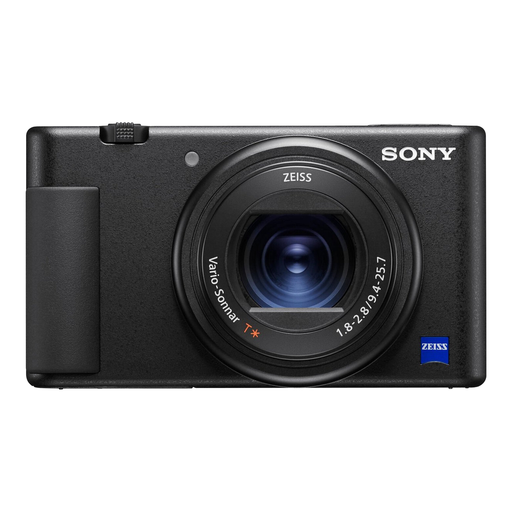
Sony ZV-1 compact camera
A compact camera to compare if you’re looking for a camera to take on walks.
View at Joybuy
 No image available
NAXSIR 4K Ultra HD camera, 64 MP, 18× digital zoom, 32 GB card
An option to compare if you want to zoom in digitally while taking photos.
The title lists 18× digital zoom and a 32 GB memory card; digital zoom is not the same as optical zoom.
View at Joybuy
Frequently asked questions
Will a polarising filter help you capture reflections in the canal?
Not necessarily: Nikon explains that a polarising filter can reduce or remove reflections on water. If the reflection is your subject, take a photo without a filter first, and check that a filter fits your exact camera before buying one.
Can you keep using a compact camera in the rain?
Do not assume a camera is water-resistant just because it is compact. OM SYSTEM specifies that the Tough TG-7 is waterproof to 15 m; for any other model, check its own operating and care instructions before exposing it to rain.
What are your rights if a camera bought online disappoints or breaks too soon?
For a standard online purchase, you generally have a statutory cooling-off period of up to 14 days after delivery, subject to legal exceptions. ACM ConsuWijzer also makes clear that the seller is responsible for faulty goods; the legal guarantee does not simply mean that every camera is covered for a fixed period of two years.
Can you publicly share a photo of the canal if passers-by are recognisable?
When sharing publicly, you cannot automatically rely on the exception for personal or household use. The Dutch Data Protection Authority states that a legal basis under the GDPR is needed for identifiable people in a photo shared more widely.


