What should you look for?
First, decide how close you can get to the pot and whether you mainly need accurate colour, fine detail or flexible framing. Then check that the camera settings and zoom range suit the lighting and space at the stall.
| What to consider |
What should you check? |
Who is this most important for? |
| Colour under artificial light |
Check the white balance settings and whether RAW is available on the exact model. Take a test shot in the stall’s lighting and check for reflections on the glaze too. |
If I want to showcase glaze colours in a catalogue or on social media, I want to see how the camera handles the light on my piece. Around 31% of consumers put colour reproduction first. |
| Sharpness in low light |
Compare the maximum aperture at both the wide-angle and telephoto ends, and check whether the model has image stabilisation. Also find out whether a tripod is allowed at the venue and whether there’s room to use one. |
When I’m taking handheld photos at a dimly lit stall, I’m mainly looking for a sharp shot without having to keep changing position. Around 31% of consumers prioritise sharpness in low light. |
| Fine details |
Check the minimum focusing distance separately for wide-angle and telephoto. Also consider whether you can photograph the detail from that distance without unwanted shadows or reflections. |
If I want to show a maker’s mark, relief or crazing, the camera needs to focus on the detail from the distance I’ve chosen. Around 23% of consumers give close-up detail top priority. |
| Framing at a busy stall |
Try out the available distance between the camera and the pot, and compare the optical zoom range with the focusing limit at your preferred setting. Allow room for a tripod, too. |
If I can’t move closer or further away, I want to be able to frame both a single pot and a wider view from where I’m standing. Around 15% of consumers give limited room to move top priority. |
Cameras at Joybuy
This selection includes portable cameras for photos and video, with models offering optical or digital zoom. Check each camera’s specifications to see how well they suit the artificial lighting, focusing distance and available space at your stall.
 No image available
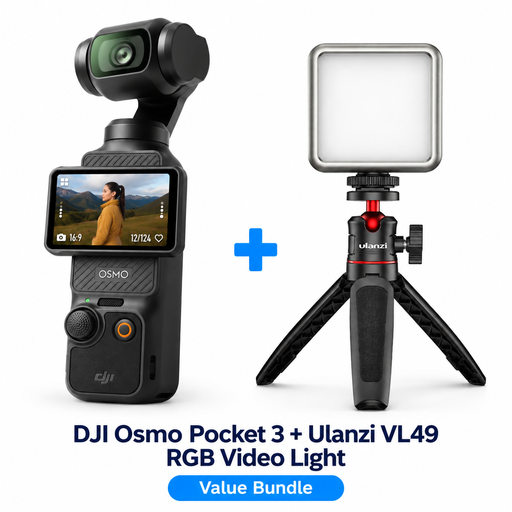
DJI Osmo Pocket 3 Creator Combo with Ulanzi VL49 RGB LED video light
The product information describes a compact camera and light for product photography where portability matters.
According to the product information, the camera has a 1-inch sensor and 3-axis gimbal stabilisation. The bundle includes an RGB LED light for additional lighting.
View at Joybuy
 No image available
KOMERY G7 5K digital camera, white
The product information describes this model as a portable point-and-shoot camera for travel.
The product information lists 18× optical zoom.
View at Joybuy
 No image available
KOMERY W6 digital camera with 12× optical zoom
This model is described as a camera for photography, with optical zoom.
The product name lists 4K and Wi-Fi.
View at Joybuy
 No image available
Songdian Pocket Camera 4K, pink
The product name describes a pocket camera for photos and video, designed to be portable.
The product information lists 16× digital zoom; this isn’t optical zoom.
View at Joybuy
Frequently asked questions
Do you need to use RAW to photograph pottery?
No, it isn’t essential. RAW gives you more scope to adjust colour and exposure afterwards, but it requires more storage and editing. If you want to share photos straight away, JPEG may be more practical; just check the colours under the stall lighting. Panasonic specifically lists RAW for the DC-TZ99.
Does a tripod help when photographing still pottery?
A tripod can reduce camera shake and help you take a series of product photos with the same framing. Check in advance whether there’s room to use one and whether the organiser allows it; permission varies by venue.
Can you use the shortest listed focusing distance when you zoom in?
Not always: the focusing distance can change with the zoom setting. Canon lists 5 cm at the wide-angle end and 40 cm at the telephoto end for the G7 X Mark III. For the Sony RX100 VII, Sony lists approximately 8 cm and 100 cm. So check the distances for both settings on the exact model.
Who should you contact about a faulty camera bought as a consumer in the Netherlands?
If your camera is faulty, contact the retailer. According to the Dutch government, the retailer must offer a solution if there’s a problem with the product; the legal guarantee gives you the right to a product that works as it should. An additional guarantee is mainly relevant if its terms give you extra rights.
Can you photograph identifiable visitors and publish market photos for business purposes?
That depends on how you use the photos and the specific circumstances. According to the Dutch Data Protection Authority, you need a GDPR legal basis to take and publish identifiable images; consent may be one such basis. There’s an exception for photos kept strictly for private use. If possible, frame the pot without identifiable visitors and consider the situation before publishing any images.


