
Potter with a small photo table
You photograph whole pots and sometimes want to get close to the glaze or texture. Check the focusing distance at each zoom setting, rather than just looking for a macro mode.


Start with the framing you need. For small glaze details, the focusing distance at your chosen zoom setting matters; for a whole pot, consider working distance, lighting and colour settings. A fast standard zoom, a travel zoom and a camera with a fixed angle of view each offer different options. No single specification, on its own, guarantees a true-to-life photo of glossy ceramics.
You photograph whole pots and sometimes want to get close to the glaze or texture. Check the focusing distance at each zoom setting, rather than just looking for a macro mode.
You want viewers to be able to judge the colour of your work accurately, even when the window light changes. White balance settings and, if you edit your photos, RAW may be worth considering.
You may not be able to walk around a table or set up a large display. Weigh a fixed angle of view against zoom, and think about whether you have room for the camera and any accessories.
First decide whether you mainly need to capture small details, get sharp shots in changing window light, reproduce colours accurately or switch framing quickly. This will help you find the right balance between close-up distance, aperture, colour settings and zoom.
| What to consider | What to look for | Who will find this most important? |
|---|---|---|
| Small glaze details | Check the focusing distance at your chosen zoom setting and whether the detail fills the frame as you want. | If you want to show texture or glaze up close, focusing at that distance is the priority; around 29% of consumers put close-ups of details first. |
| Sharpness in window light | Compare the maximum aperture at the zoom setting you’ll use, and see whether you can create a stable setup. | In changing light, your main priority is a sharp shot of a stationary piece of pottery; around 29% of consumers say this is their top priority. |
| Colour of clay and glaze | Check the white balance settings and, if you want to edit your photos, whether RAW capture is available. | If customers need to judge the colour of your work, accurate colour reproduction is important; around 24% of consumers put this need first. |
| Framing in a tight space | Think about whether you can move the camera and whether you want to capture both a whole pot and close-up details. | If you have little room to move around a trade fair stand, you’ll want to frame your shot quickly; around 18% of consumers say this is their main need. |
The minimum focusing distance can change as you zoom in. This means a small piece of pottery on a table may fall outside the focusing range, even if the camera has a macro function.
Compare the stated focusing distances at different zoom settings, and test the framing with an object of a similar size.
According to the Consumentenbond, the lens and sensor both play a part in image quality; a high zoom range can come with a smaller sensor. Specifications alone won’t tell you how a camera will capture your pottery in window light.
Compare the sensor, the maximum aperture at the zoom setting you plan to use, and the options for creating a stable setup.
The Dutch government says that statutory guarantees in the Netherlands do not have a fixed time limit, and that an additional warranty is on top of your existing rights.
Check what extra cover a paid warranty offers, and keep the seller’s details.
According to Canon Netherlands, the PowerShot G7 X Mark III is a compact camera with a stated zoom range equivalent to 24–100 mm and a maximum aperture of f/1.8–2.8.
According to Sony Netherlands, the RX100 VII has a zoom range equivalent to 24–200 mm.
According to Panasonic Netherlands, the Lumix DC-TZ99 is a travel zoom camera with 30× optical zoom and a macro mode.
According to Ricoh Imaging Europe, the GR IIIx combines an APS-C sensor with a fixed angle of view equivalent to 40 mm.
According to Fujifilm, the X100VI has an APS-C sensor, a fixed lens equivalent to 35 mm and RAW capture.
These product picks are related to compact cameras for photography and video. For each model, check whether the controls, angle of view and shooting style suit photographing pottery in window light.
 No image available
The product name describes a mini vlog camera. If you’re considering it for pottery, check whether the framing and controls suit your photo table.
The product name lists a 1.72-inch touchscreen, Wi-Fi, a tripod and Type-C.
 No image available
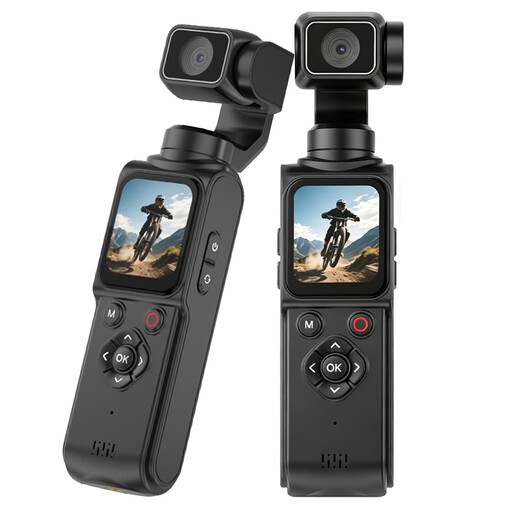
The product name describes a pocket gimbal camera for photography and video. Consider whether the controls suit photographing stationary pottery.
The product name lists a 1-inch CMOS sensor, 2× lossless zoom, 107 GB of built-in storage and a 2-inch rotating screen.
 No image available
The product name describes a small camera for video and photography. Check whether the controls and framing are suitable for your still product shots.
The product name lists a 1-inch CMOS sensor and a 2-inch rotating touchscreen.
 No image available
The product name describes a pocket camera for photography and video. Consider whether its size and controls suit photographing pottery at your trade fair stand.
The product name lists 16× zoom; check what kind of framing you can achieve with it from your preferred distance.
 No image available
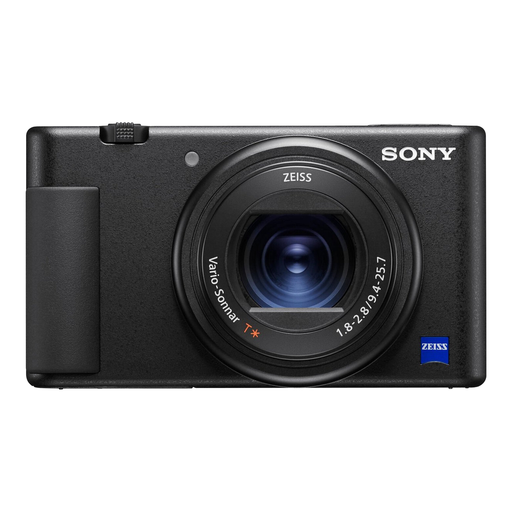
The product name describes a compact camera. If you’re considering it for product photography, check whether the available framing works for both whole pots and close-ups.
The product name lists 2.7× zoom and RAW photo format.
No. Also check the focusing distance at the zoom setting you want to use, and look at the final framing. The stated distances vary between the wide-angle and telephoto settings on the Canon, Sony and Panasonic models mentioned.
Choose a plain background and keep the composition the same between shots. Canon recommends using a tripod for product photos to keep the framing and background consistent and reduce camera shake; first check whether you’re allowed and able to use one at the trade fair.
Not automatically. According to the Dutch government, consumers in the Netherlands are entitled to a product that works properly, and statutory guarantees do not have a fixed time limit in the Netherlands. Compare what an additional warranty offers on top of your existing rights; if a product is faulty, the seller is your point of contact.
When you buy from a business at a distance, you often have 14 days to change your mind, but there are exceptions, and buying from a private seller is different. The Dutch government sets out these terms for consumer purchases; if you’re buying for business use, check which terms apply.
Recognisable people in photos published for business purposes or made publicly available may be covered by the GDPR. According to the Dutch Data Protection Authority, processing requires a valid legal basis, and consent is one example. Keep visitors out of shot if their image isn’t needed, or establish the applicable legal basis before taking and publishing photos. The same considerations don’t apply in the same way to photos showing pottery only.