Choose a compact travel zoom if you want to photograph birds on the far side of the pond from the path. For a wider view of the pond, the angle of view and sensor may matter more, while a macro model is better suited to small subjects close to the water’s edge. Each option involves trade-offs: a long telephoto reach can make framing more difficult, a fixed lens won’t bring distant subjects closer optically, and a camera designed for close-ups isn’t automatically suitable for bird photography.
Who takes photos at the pond?
Bird photographer on the path
You want to frame birds on the far side without walking towards the water’s edge or the animals. Optical telephoto reach and ease of handling at maximum zoom are then more important than megapixel count alone. Vogelbescherming Nederland advises keeping your distance and stopping if a bird shows signs of disturbance.
Photographer of pond landscapes
You photograph the water, the bank and the reflections as a whole. Consider the angle of view, sensor and lens, as well as how easy the camera is to use on a walk. Sony and Fujifilm list models with 1.0-type and APS-C sensors respectively; Fujifilm specifies a fixed lens for the X100VI.
Photographer of waterside details
You’re looking for small subjects nearby and may be taking photos in wet conditions. Check the macro capabilities and the protection offered by the specific model: a rugged camera doesn’t necessarily have a suitable telephoto lens for birds on the far side. OM SYSTEM lists a macro mode and water resistance to 15 m for the TG-7.
What should you look for when choosing?
Compact travel zoom
Suited to: photographing birds or other subjects on the far side from the path.
Trade-off: the models listed have a 1/2.3-type sensor; taking photos in low light remains a consideration at high telephoto zoom.
Versatile premium zoom
Suited to: anyone looking for a small camera for a wide view of the pond and subjects at a moderate distance.
Trade-off: the Sony RX100 VII has less telephoto reach than the travel zooms listed; Sony gives a minimum focusing distance of around 100 cm at maximum telephoto zoom.
Fixed lens for pond views
Suited to: photographing banks, reflections and the surroundings from a position where the fixed angle of view works for you.
Trade-off: the Fujifilm X100VI has no optical zoom to bring a bird on the far side closer.
Rugged camera for close-ups
Suited to: photographing small subjects close to the water’s edge and looking for a model that the manufacturer says can withstand water.
Trade-off: the OM SYSTEM TG-7 has a 25–100 mm equivalent lens, with less telephoto reach than the travel zooms listed.
| What to consider |
What to look for |
Who is this important for? |
| Distant birds |
Compare the optical telephoto end in the relevant photo mode, and consider stabilisation and handling at maximum zoom. |
If I want to frame birds on the far side from the path, optical reach comes first; around 33% of consumers put distant birds at the top of their priority list. |
| Pond views and light |
Compare the angle of view, sensor and lens; consider whether a fixed angle of view suits your position. |
I want to capture the water, bank and reflections together, so I consider the angle of view and the trade-offs around light; around 25% of consumers prioritise pond views and light. |
| Details and wet conditions |
Check the macro mode, focusing distance at the zoom setting you want, and the stated protection of the exact model. |
For small subjects nearby, I want to know whether the camera can focus close up and is suitable for wet conditions; around 17% of consumers prioritise waterside details or use in wet conditions. |
| What you have to carry |
Where possible, compare the weight including the battery and card, and check which items are included. |
If I want to head out with as few separate items as possible, size, weight and what’s in the box all matter; around 25% of consumers prioritise carrying as little as possible. |
Avoid common buying mistakes
-
Confusing digital zoom with optical zoom
Manufacturers list optical and digital zoom separately. For a bird on the far side, the optical telephoto end is the first thing to compare.
Compare optical focal lengths in 35 mm equivalent in the same shooting mode. For the Panasonic TZ99, also check the selected aspect ratio.
-
Choosing based only on maximum zoom or megapixels
A long telephoto reach can make it harder to keep a subject in frame. The sensor, lens and available light also matter.
First decide which subject matters most, then compare reach, sensor and lens as separate features.
-
Comparing the camera without considering what you’ll carry
Weight specifications aren’t always measured on the same basis, and the accessories you need affect how much you have to carry.
Where possible, compare the weight including the battery and card, and check what’s in the box before buying.
A suitable memory card or spare battery may need to be bought separately and will take up space in your bag.
Brands to compare
Panasonic
The Lumix DC-TZ99 is a compact travel zoom for subjects on the far side and wider views of the pond.
- Panasonic specifies 30× optical zoom and, in 4:3 photo mode, a 24–720 mm equivalent focal length. The stated weight is around 322 g including the battery and SD card.
- The camera has a 1/2.3-inch sensor. According to Panasonic, the maximum aperture ranges from F3.3 to F6.4 at telephoto; compare equivalent ranges using the same aspect ratio.
Canon
The PowerShot SX740 HS Lite Edition is a travel zoom option for anyone looking for optical reach in a small body.
- Canon specifies 40× optical zoom and a 24–960 mm equivalent focal length. The stated weight is around 299 g including the battery and memory card.
- Canon lists a 1/2.3-type sensor. Consider separately what you need in low light; zoom range alone doesn’t determine this trade-off.
Sony
The RX100 VII is a premium compact zoom for anyone who values versatility and a viewfinder, without needing a long travel zoom above all else.
- Sony specifies a 1.0-type sensor, an electronic viewfinder and 24–200 mm equivalent optical zoom.
- Its telephoto end is shorter than those of the travel zooms listed. Sony gives a minimum focusing distance of around 8 cm at wide angle and 100 cm at telephoto.
OM SYSTEM
The Tough TG-7 is suited to small subjects close to the water’s edge and situations where a rugged body matters.
- OM SYSTEM lists a macro mode and water resistance to 15 m for the TG-7.
- The lens has a 25–100 mm equivalent range. Its short telephoto end limits your ability to frame birds on the far side; the water-resistance rating is the manufacturer’s specification for this model.
Fujifilm
The X100VI is a compact camera with a fixed lens for anyone who mainly wants to photograph the park and pond scene.
- Fujifilm specifies an APS-C sensor and a fixed lens with a 35 mm equivalent focal length.
- The fixed lens offers no optical zoom to bring distant birds closer. The specifications alone don’t prove the outcome of a comparative image quality test.
Cameras at Joybuy
This selection includes cameras with zoom for distant subjects, a camera with an APS-C sensor and interchangeable lens, and compact models for photos and video. Check which features suit your subject for each model, and whether the camera can handle conditions by the pond.
 No image available
KOMERY G7 5K camera
The stated optical zoom may suit you if you want to frame distant subjects from the path.
The product title lists 18× optical zoom, 5K and 80MP. The product information warns against exposing the camera to water or damp conditions.
View at Joybuy
 No image available
KOMERY W6 camera
The stated optical zoom is relevant if you want to frame a distant subject.
The product title lists 12× optical zoom, 4K, 64MP and WiFi.
View at Joybuy
 No image available
Songdian camera with 8× optical zoom
The stated optical zoom may be useful for subjects further away across the pond.
The product title lists 8× optical zoom, 5K, 64MP and a dual lens. The product information warns against exposing the camera to damp conditions.
View at Joybuy
 No image available
Sony ZV-E10 + 16-50mm Zoom Black
This interchangeable-lens camera may suit you if an APS-C sensor matters more than having a compact camera with a built-in lens.
The product information lists a 24.2 MP APS-C sensor and an included 16–50mm zoom lens. According to the product information, the camera should not be exposed to moisture.
View at Joybuy
 No image available
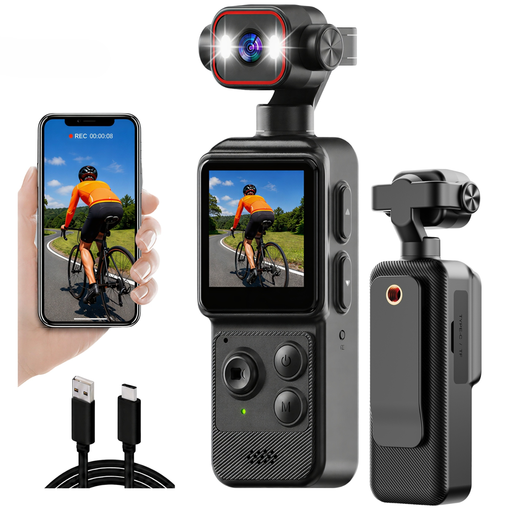
4K mini action camera with clip
This compact photo and video model may suit you if portability and filming are your priorities, but the stated digital zoom isn’t optical telephoto zoom for birds on the far side.
The product title lists a 1.54-inch screen, a 140° angle of view and a 1200 mAh battery. A 32 GB memory card is listed.
View at Joybuy
Frequently asked questions
Is more optical zoom always the best choice for the park pond?
No, it depends on what you want to photograph. Choose a longer optical telephoto reach if your subject is far away; for a wider view or photography in low light, the angle of view, sensor and lens also matter. The Consumentenbond also notes that a high zoom level can make it harder to keep a subject in frame.
What should I check before heading out with my camera?
Check that you have a suitable memory card and enough battery power, and try out the controls at the zoom setting you plan to use. The Consumentenbond lists a spare battery and SD card as separate purchases to consider.
Who should I contact if a camera develops a fault too soon during normal use?
Report the problem to the seller. According to ACM ConsuWijzer, your statutory rights exist alongside any manufacturer’s or seller’s guarantee; if a product is faulty despite normal use, the seller must provide an appropriate remedy free of charge. Your statutory rights aren’t simply the same as a fixed manufacturer’s guarantee period.
Can I publish photos of identifiable visitors to the park?
Keeping photos for private use is different from publishing them more widely. According to the Dutch Data Protection Authority, the exception for personal or household use applies to private use or sharing with a very limited circle; sharing identifiable people more widely requires a lawful basis under the GDPR. This doesn’t mean you need permission for every photo taken in a park.
Can I get closer to a nest to take a photo of a bird?
Don’t make walking closer to a nest part of your approach. Dutch rules may apply to harmful actions, such as deliberately disturbing wild birds or damaging nests; the assessment depends on the action and the circumstances. Vogelbescherming Nederland advises moving away as soon as birds show signs of distress. Also check the local rules for the park you’re visiting.


