If you want to capture fine ripples clearly, choose a camera that lets you set the shutter speed, and compare the sensor and lens rather than looking only at the megapixel count. For details from the bank, optical zoom range matters; in lower light, the sensor size and lens aperture are also important. A polarising filter can reduce glare, but it may also remove a reflection you want to photograph.
Who photographs a park pond?
Water-ripple photographer
You want to retain the fine texture on the water rather than smooth it out with a long exposure. Nikon USA explains how a longer shutter speed can make water look smooth, while the Consumers’ Association notes that megapixels alone do not determine photo quality.
Photographer on the bank
You can’t get closer to a pattern on the pond, so you need a useful crop from a distance. Compare focal lengths in millimetres, not just the zoom factor, as the Consumers’ Association advises.
Photographer in changing light
You also take photos when trees cast shade or it gets darker later in the day. So compare the sensor size and lens aperture at the zoom setting you use.
What should you look for when choosing?
| What to consider |
What to look for |
Who it matters to |
| Fine texture on moving water |
Check whether you can set the shutter speed. Nikon USA explains that a longer exposure can make water look smoother. |
If I want the ripples to look sharp, I want to choose the shutter speed myself. Around 36% of consumers say capturing water texture is their top priority. |
| Details at a distance |
Compare the optical 35 mm-equivalent range in millimetres, not just the zoom factor; the Consumers’ Association explains why the millimetre figure tells you more. |
From the bank, I can’t get closer to the pattern, so I look for a range that gives me a tighter frame. Around 29% of consumers prioritise zoom range from the bank. |
| Detail in shade or at dusk |
Compare the sensor size and maximum aperture at the zoom setting you actually use. |
When I’m taking photos in the shade, I want to assess the sensor and lens together rather than judging by megapixels alone. Around 21% of consumers prioritise performance in lower light. |
| Using the camera close to the water |
Check the protection and usage instructions for the exact model. OM Digital Solutions specifies that the Tough TG-7 is waterproof to 15 m; this specification does not automatically apply to other cameras. |
If I’m taking photos close to the water, I want to know exactly what protection the model I choose offers. Around 14% of consumers prioritise protection from getting wet. |
Pitfalls to avoid
-
Assuming more megapixels mean visibly more detail
Megapixels alone don’t guarantee better photos in low light. The sensor, lens and image processing all play a part; the Consumers’ Association notes that more megapixels aren’t always better.
Compare the sensor size and lens as well as the stated resolution, and look at sample images or tests of the exact model.
-
Comparing only the zoom factor
The zoom factor alone doesn’t tell you what angle of view you’ll get from the bank. The lens aperture can also change as you zoom in.
Compare the optical range in millimetres and the maximum aperture at the telephoto end; the Consumers’ Association explains why comparing the range in millimetres is helpful.
-
Buying a polarising filter without checking that it fits
A filter can reduce glare, but it may also remove a reflection you want to keep in your composition.
First decide what kind of image of the water you want, then check that the filter fits the exact camera model and any adapter you may need.
Brands to compare
Sony
The RX100 VII is a compact option for framing both a wide view of the pond and tighter crops of details further away.
- Sony specifies a 1.0-type sensor and a 24–200 mm-equivalent optical range for the RX100 VII.
- According to Sony, the minimum focusing distance ranges from approximately 8 cm at the wide-angle end to approximately 100 cm at the telephoto end.
Canon
The PowerShot G7 X Mark III is an option to consider for close-up pond scenes and photography in lower light.
- Canon specifies a 1.0-type sensor and a 24–100 mm-equivalent lens with an f/1.8–2.8 aperture for this model.
- Its stated zoom range is shorter than that of the Sony RX100 VII and Panasonic LUMIX TZ99 mentioned here.
Panasonic
The LUMIX TZ99 is a travel zoom option for framing details further away from the bank.
- Panasonic specifies 30× optical zoom for the TZ99.
- Panasonic lists a 1/2.3-inch sensor and an f/3.3–6.4 aperture for this model; zoom range, sensor size and lens aperture are different factors to weigh up.
OM SYSTEM
The Tough TG-7 is designed for those who use their camera close to water and in wet conditions.
- OM Digital Solutions specifies that the TG-7 is waterproof to 15 m and has a 25–100 mm-equivalent optical range.
- The stated protection doesn’t mean that other models from the brand are waterproof, or that the TG-7 can make distant details on the water appear as large in the frame as a camera with a longer zoom.
Joybuy cameras
The Joybuy options below include digital cameras, action cameras and a Sony camera with a zoom lens. Check that the form factor and the stated usage limitations suit your needs for a compact camera for pond photography.
 No image available
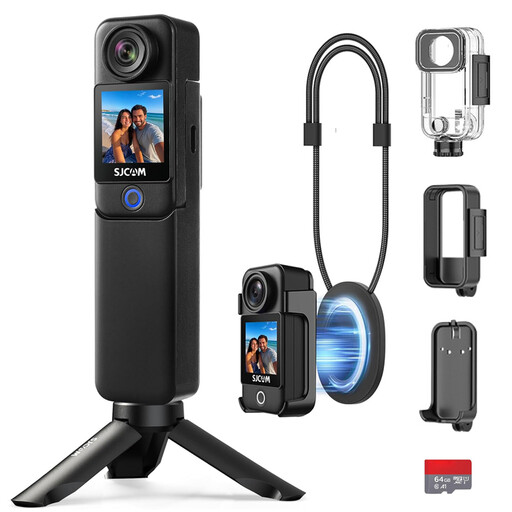
SJCAM C300 4K action camera, black, accessory kit
This action camera is an option if you also want to take photos close to water; the supplied housing is required for the stated waterproofing.
The product name mentions 6-axis stabilisation and an accessory kit.
View at Joybuy
 No image available
Songdian digital camera, 8× optical zoom, white
This digital camera is offered with 8× optical zoom for those who want to frame a subject differently from a fixed position.
The product name also mentions 5K.
View at Joybuy
 No image available
Songdian 5K digital camera, 10× optical zoom, black
This camera offers a zoom option for those who want to frame a subject differently from a fixed position.
The product name mentions 10× optical zoom and front and rear cameras. The product information states that 56 MP is interpolated.
View at Joybuy
 No image available
Sony ZV-E10 with 16–50 mm zoom lens, black
This kit is for those who want to use a zoom lens to adjust the framing; the product information advises against exposing it to moisture.
According to the product name, the supplied zoom lens has a 16–50 mm range.
View at Joybuy
 No image available
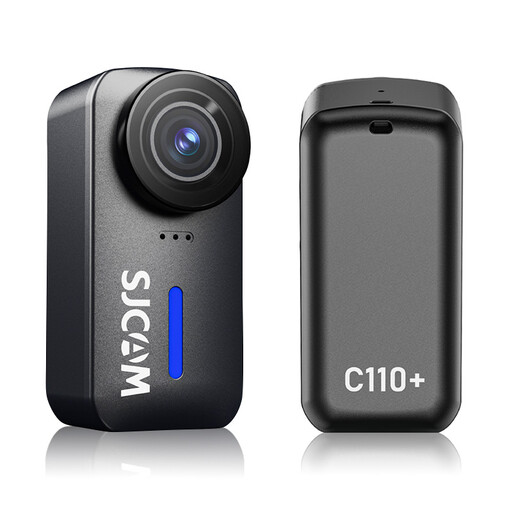
SJCAM C110+ 4K action camera, 170° lens
This action camera is offered with photo support; the stated waterproofing applies when used with the supplied housing.
The product name mentions gyro stabilisation and a 170° lens.
View at Joybuy
Frequently asked questions
How can I stop fine ripples looking smooth in my photos?
Choose a faster shutter speed if you want to freeze the movement; a longer exposure can make water look smooth. Before buying, check whether you can set the shutter speed as you want on the model you’re considering.
Should I use a polarising filter at the pond?
Only if you want to reduce glare and have checked that the filter fits your exact camera. Nikon USA explains that a polarising filter can reduce reflections, but it may also change the reflection you want to capture.
What should I check if I’m using the camera by the water?
Read the model-specific instructions on protection and care. The waterproofing to 15 m specified by OM Digital Solutions applies to the Tough TG-7 and shouldn’t be assumed to apply to another camera.
What are my rights if a camera bought online breaks too soon?
If you’ve used the product normally and it doesn’t do what you could reasonably expect, the seller is responsible for providing a remedy under the legal guarantee, as explained by ACM ConsuWijzer. For online purchases, you’ll generally also have a 14-day cooling-off period from delivery; check the applicable terms and exceptions.
Can I publish a photo of a pond online if park visitors are recognisable?
The Dutch Data Protection Authority describes an exception for photos you keep private or share only with a limited group. That exception doesn’t apply when sharing more widely; in that case, you need a valid legal basis under the GDPR for identifiable people. This isn’t a general statement about every pond photo or situation.


