First, consider what you mainly photograph and how far away your subject is. For birds on the far side of the pond, optical telephoto reach matters; for wider pond scenes, the wide-angle setting and performance in changing light also come into play. A long zoom can mean a larger camera, while portability or explicitly stated water resistance may matter more if you mainly go for walks or take photos close to the water. The Consumers’ Association advises looking beyond megapixels when assessing image quality, and considering the sensor and lens too.
Who is this guide for?
Pond-side bird photographer
You keep your distance from waterbirds and want to capture them clearly without changing lenses. So look for optical telephoto reach and consider how easy the camera is to handle at high zoom. The Consumers’ Association points out that zooming in a long way can make it harder to keep your subject in the frame.
Photographer of ponds and light
You mainly take photos for your camera club, composing scenes with water, trees and reflections. In that case, the wide-angle setting, sensor and controls for changing light may matter more than the longest zoom range. The Consumers’ Association recommends considering the sensor and lens when assessing image quality.
Park photographer on the move
You want a camera that’s easy to carry and lets you switch between wide views and details as you walk. Weigh up the size and weight against the reach of a larger camera. If you often take photos close to the water, also check whether protection is specified for the exact model.
What should you look for in a compact camera for the pond?
First, decide which limitation matters most for your photos: distance, composition and light, portability, or protection by the water’s edge.
| What to consider |
What to look for when buying |
Who will benefit most? |
| Birds and distant details |
Compare the optical telephoto end in mm equivalent and keep digital zoom separate. Try holding the camera steady at a long zoom setting. |
I mainly photograph birds on the far side and want to frame them from the bank. Around 36% of consumers put reach at a distance first. |
| Pond compositions and changing light |
Compare the wide-angle setting, sensor size and lens aperture across the zoom range. Also consider whether the controls suit the way you take photos. |
I want to capture water, trees and reflections together for my camera club, even when the light changes. For around 29% of consumers, pond compositions come first. |
| Portability on a walk around the park |
Compare size and weight on a like-for-like basis, preferably including the battery and memory card. Decide how much telephoto reach you’ll actually need on your walk. |
I want to take a camera with me without it getting in the way throughout my walk. Portability is the top priority for around 21% of consumers. |
| Protection close to water |
Check whether water and dust resistance are specified for the exact model. Weigh the telephoto reach against how far away your subject is. |
If I often take photos close to the bank, I want to know what protection suits the way I use the camera. Around 14% of consumers put protection near water first. |
Common buying mistakes
-
Mistaking a digital zoom figure for optical reach
The digital figure doesn’t tell you how much reach the lens itself offers. At high zoom, it can also be harder to keep a moving bird in the frame.
Compare the optical telephoto end in mm equivalent and try to see how steadily you can aim the camera at that setting.
-
Choosing solely for the longest zoom
A long zoom range can mean a larger camera and other trade-offs around the sensor. A high zoom range alone doesn’t tell you how well a camera performs in low light.
Decide in advance whether distant birds or the pond as a whole are your main subject.
-
Confusing a waterproof camera with one for photographing distant birds
The OM SYSTEM TG-7 is specified as waterproof to 15 m, but has a 25–100 mm equivalent range. That short telephoto reach is a different trade-off from a superzoom for birds on the far side of the pond.
If protection is your priority because getting wet is your main concern, assess separately how much reach you need from the bank.
-
Overlooking the variant name of the Canon SX740 HS
Canon distinguishes the PowerShot SX740 HS Lite Edition from the regular SX740 HS; Canon lists the regular version as discontinued. The battery supplied may differ between variants.
Check the full model name and which battery and charger come with the camera on offer.
Brands worth considering
Panasonic
The LUMIX DC-FZ82D is a larger bridge camera with an extensive zoom range; the DC-TZ99 is a more compact travel zoom.
- Panasonic specifies a 20–1200 mm equivalent range, an OLED viewfinder and optical image stabilisation for the DC-FZ82D. For the DC-TZ99, Panasonic lists 24–720 mm equivalent.
- These range specifications alone say nothing about comparable results in low light or water resistance.
Canon
The PowerShot SX740 HS Lite Edition is a pocket-sized compact with optical telephoto reach for anyone who switches between wide views and distant subjects on a walk.
- Canon specifies 24–960 mm equivalent and approx. 299 g including the battery and memory card for the Lite Edition.
- Check the full variant name and the battery included; the regular SX740 HS and Lite Edition are separate versions.
Sony
The RX100 VII is a small camera with a 1.0-type sensor and electronic viewfinder, suited to wide pond views and subjects within its zoom range.
- Sony specifies 24–200 mm equivalent, F2.8–4.5, an electronic viewfinder and subject tracking for the RX100 VII.
- Its stated telephoto reach is limited for a small bird on the far side of the pond; specifications alone can’t predict whether a moving subject will be captured in focus.
Nikon
The COOLPIX P1100 is a bridge camera for anyone whose first priority is birds or other distant subjects.
- Nikon specifies 125× optical zoom, up to 3000 mm equivalent.
- Nikon distinguishes this optical range from Dynamic Fine Zoom, which goes up to 6000 mm equivalent; that digital figure isn’t an additional optical focal length.
OM SYSTEM
The Tough TG-7 is worth considering when protection and close-up scenes by the water matter more than distant subjects.
- OM SYSTEM specifies waterproofing to 15 m, a macro mode and 25–100 mm equivalent for this model.
- Its short telephoto reach is less suitable if birds on the far side are your main subject.
Cameras at Joybuy
These cameras are aimed at photography on a walk around a park pond. For distant subjects, pay particular attention to the difference between optical and digital zoom.
 No image available
KOMERY G7 5K digital camera, white
The stated 18× optical zoom may be useful if you want to frame birds from the bank; try to keep the camera steady at this setting.
View at Joybuy
 No image available
KOMERY W6 digital camera
The stated 12× optical zoom is useful if you switch between wide views and distant subjects on a walk. The product name also mentions 4K video and Wi-Fi.
View at Joybuy
 No image available
Songdian digital camera with 8× optical zoom, white
The stated 8× optical zoom can help you frame distant subjects. The product name also mentions a dual lens and 5K video.
View at Joybuy
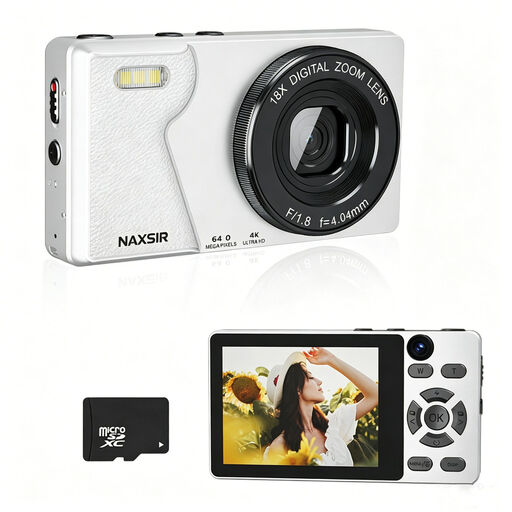 No image available
NAXSIR 4K digital camera with 18× digital zoom
The compact design may suit anyone who wants to take a camera along on a walk. The stated 18× zoom is digital, not optical; the product name also mentions a 32 GB memory card.
View at Joybuy
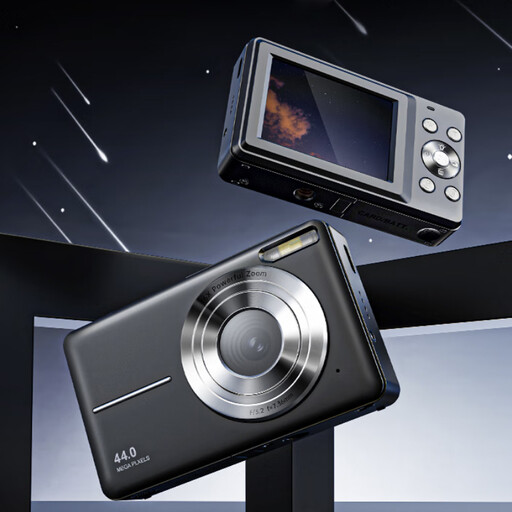 No image available
Songdian 4K pocket camera, 16× digital zoom, black
The pocket-sized design suits anyone who wants a camera that’s easy to take along on a walk. The stated 16× zoom is digital, not optical telephoto reach.
View at Joybuy
Frequently asked questions
How do you choose between optical and digital zoom for birds on the far side?
First, compare the optical telephoto end in mm equivalent. Nikon specifies 3000 mm equivalent optically for the COOLPIX P1100, and up to 6000 mm equivalent with Dynamic Fine Zoom; the second figure doesn’t mean extra optical reach. At high zoom, it’s also harder to keep a moving subject in the frame.
Do you need a tripod for photos of the pond?
Not for every shot, but stable framing becomes harder at extremely long telephoto settings. The Consumers’ Association says a tripod is needed at 80× zoom to keep the subject in the frame. Try the zoom setting you plan to use before buying extra equipment.
What costs and after-sales service should you check after buying?
Check whether the battery, charger and memory card are included with the exact version, and whether a spare battery would be useful for your walk around the park. According to the Dutch government, there is no fixed statutory warranty period in the Netherlands; if a product is faulty, the seller must provide a solution. An additional warranty doesn’t replace this right.
Can your camera club share photos of identifiable park visitors publicly?
Not without assessing the publication separately. According to the Dutch Data Protection Authority, identifiable people in photos count as personal data. The exception for personal or household use doesn’t automatically apply to wider publication; this requires a lawful basis under the GDPR and, in most cases, the consent of the people concerned.
Can you get closer to birds or their habitat to take a photo?
Don’t use extra zoom as a reason to ignore local access rules. The Dutch government describes a duty of care towards nature and notes that provinces help determine what is permitted in nature areas. Check the local rules and any site conditions for the particular park pond you plan to visit.


