Choose based on what you want to capture from where you’ll be shooting: a wide landscape in low light, details on the horizon or a lightweight camera to take on the move. Compare the wide-angle and telephoto ends of the zoom, the aperture at the setting you plan to use, and the image stabilisation. Stabilisation reduces camera shake, but it won’t freeze moving reeds or birds. If the weather is wet, also check the protection offered by the specific model.
Who is this camera for?
Photographer at first light
You want to capture a wide landscape handheld around sunrise, so you’re looking at aperture, stabilisation and exposure controls. Canon Netherlands specifies an f/1.8–2.8 aperture and lens stabilisation for the PowerShot G7 X Mark III.
Photographer on the dike
You’re staying somewhere accessible but also want to capture details further away. Sony Netherlands lists a 24–200 mm equivalent range for the RX100 VII, while Panasonic Netherlands lists 24–360 mm equivalent for the LUMIX TZ300.
Walker travelling light
You want to head out without a tripod or interchangeable lenses, and are choosing between a fixed angle of view, a zoom lens or extra protection in wet weather. Ricoh specifies a fixed angle of view of around 28 mm equivalent for the GR IV; Fujifilm lists a fixed 35 mm-equivalent angle of view for the X100VI.
What should you look for when choosing?
When choosing a compact camera for a polder sunrise, four buying priorities could guide your decision: light at sunrise, reach from a single position, a lightweight setup with a wide field of view, or protection in wet weather.
| What to consider |
What should you check? |
Who is this most important for? |
| Light and sharpness |
Compare the maximum aperture at the focal length you plan to use, the type of stabilisation and the available exposure controls. |
If I’m shooting at first light, I want to know how much flexibility the lens and settings offer. Around 36% of consumers in this situation make light and sharpness their top priority. |
| Reach from a single position |
Check both the wide-angle and telephoto ends in full-frame equivalent, and check the aperture at the telephoto end. |
If I can’t get closer to a subject from a dike or path, zoom range matters more than a fixed composition. Around 29% of consumers prioritise reach from a single position. |
| Wide framing and weight |
Compare the equivalent field of view, the camera’s weight with battery and card, and whether you need optical zoom. |
If I want to travel light and mainly capture a wide view of the polder, I want to know in advance how much of the scene the lens will fit into the frame. A wide, lightweight setup is the top priority for around 21% of consumers. |
| Protection in wet weather |
Check the water resistance and conditions of use for the exact model; don’t assume a camera is protected just because it’s a compact camera. |
If I’m shooting in the rain or near splashing water, I want to know how well my camera is protected before I set off. Around 14% of consumers in this situation prioritise that protection. |
Common pitfalls
-
Looking only at the biggest zoom figure
The wide-angle setting matters for a wide landscape too. According to Sony Netherlands, the maximum aperture of the Sony RX100 VII ranges from f/2.8 at the wide-angle end to f/4.5 at the telephoto end.
Compare the full optical zoom range and the aperture at the zoom setting you plan to use around sunrise.
-
Confusing stabilisation with freezing motion
Stabilisation helps counter camera shake, but it won’t stop moving reeds or a bird from appearing blurred.
For moving subjects, pay attention to shutter speed too, and check your shots for sharpness.
-
Assuming every outdoor camera is waterproof
OM SYSTEM specifies that the Tough TG-7 is waterproof to 15 m. This specification applies to that model only and shouldn’t be assumed for other cameras.
If you want to shoot in the rain, check the protection and conditions of use for the exact model.
-
Checking your shooting location just before you set off
Access before sunrise can vary between nature reserves. Staatsbosbeheer says most of its sites are open from sunrise to sunset and advises visitors to check the access signs for the rules that apply.
Check the site manager, opening times and signs in advance. Choose a zoom range to suit the places where you’re allowed to take photographs.
Brands and models to compare
These models illustrate different options, from a short zoom to a fixed angle of view. The specifications listed apply to the models in question and don’t, in themselves, tell you whether they’re available to buy.
Canon
The PowerShot G7 X Mark III is worth considering if you’re looking for a compact zoom with a relatively wide maximum aperture.
- Canon Netherlands specifies a 24–100 mm equivalent range, f/1.8–2.8 aperture, lens stabilisation and a weight of around 304 g including battery and card.
- Its telephoto end doesn’t reach as far as that of the Sony RX100 VII and Panasonic LUMIX TZ300 considered here. This is a comparison of specifications, not a performance test.
Sony
The RX100 VII is an option if you want to frame both the landscape and distant details with a single compact zoom.
- Sony Netherlands lists a 1.0-type sensor, optical stabilisation and a 24–200 mm equivalent range.
- According to Sony, the maximum aperture ranges from f/2.8 at the wide-angle end to f/4.5 at the telephoto end. So assess the lens’s light-gathering ability at the zoom setting you need.
Panasonic
The LUMIX TZ300 is a compact option if a wide optical zoom range is important to you.
- Panasonic Netherlands lists a 1.0-type sensor, a 24–360 mm equivalent range and stabilisation for stills on this model.
- If you mainly want to shoot in low light, check how the maximum aperture changes at the zoom setting you plan to use.
Ricoh
The GR IV suits photographers who prefer a fixed, relatively wide angle of view to optical zoom.
- Ricoh specifies an APS-C sensor, around 28 mm equivalent, f/2.8 and five-axis sensor-shift stabilisation.
- The fixed lens won’t bring distant subjects closer optically. Check that its angle of view suits your shooting location.
Fujifilm
The X100VI is worth considering if you’re deliberately choosing a fixed 35 mm-equivalent angle of view.
- Fujifilm specifies an APS-C sensor, an f/2 lens and five-axis sensor-shift stabilisation.
- From the same position, its fixed 35 mm angle of view is narrower than the 24 mm wide-angle setting on the zoom models mentioned.
OM SYSTEM
The Tough TG-7 is an alternative if protection matters when you’re out walking in wet weather.
- OM SYSTEM specifies waterproofing to 15 m, a 25–100 mm equivalent range, sensor-shift stabilisation and RAW shooting.
- This protection specification applies to this model only. Ruggedness alone doesn’t determine how a camera performs at sunrise.
Joybuy products
This selection from Joybuy includes portable pocket and digital cameras for handheld use. Product titles and listed features vary, so check that the photographic controls and angle of view suit your polder shots.
 No image available
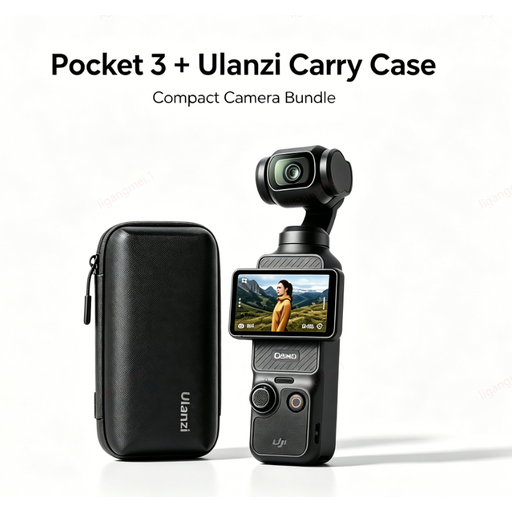
DJI Pocket 3 camera with Ulanzi storage case
A portable handheld camera with a storage case, ideal if you want to take a compact setup with you.
The product information lists stabilisation for handheld shooting; check that the controls and photo features suit the way you plan to use it.
View at Joybuy
 No image available
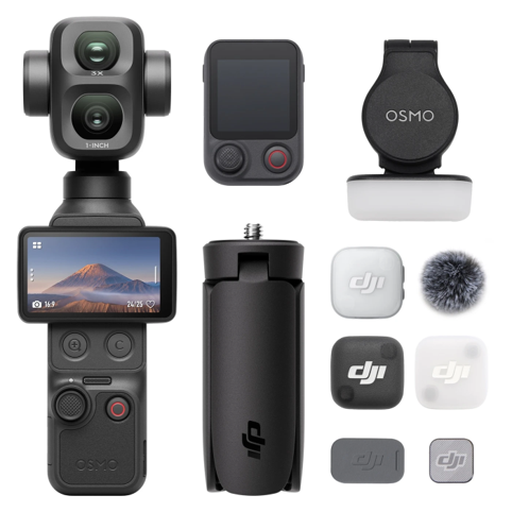
DJI Osmo Pocket 4P Vlog Combo, black
A pocket camera with listed stabilisation, for anyone looking for a portable camera setup.
The product information lists a 1-inch CMOS sensor, a 20 mm f/2 wide-angle lens and 3-axis stabilisation. Check that the angle of view suits the composition you want.
View at Joybuy
 No image available
DJI Osmo Pocket 4 Standard Combo
This pocket camera is a portable option. Before buying, check that its listed features suit photography as well as video.
The product title lists a 1-inch CMOS sensor, 3-axis stabilisation, 2× zoom, 107 GB of built-in storage and a 2-inch rotatable screen. The product information also mentions 4K/240 fps slow motion.
View at Joybuy
 No image available
KOMERY G7-A digital camera, pink
A digital camera for anyone looking for a portable option for photography. Check the controls and angle of view for your landscape shots.
The product information lists 18× zoom, 4K video and 80 MP photos. These stated features don’t, in themselves, tell you how the camera performs in low light.
View at Joybuy
 No image available
KOMERY G7 5K digital camera, white
A portable point-and-shoot camera for anyone who wants a zoom lens. Check in advance that the range and controls suit your shooting location.
The product information lists 18× optical zoom and an 80 MP camera. Check that the angle of view and the camera’s capabilities suit the morning light available.
View at Joybuy
Frequently asked questions
Does stabilisation help when you’re shooting at sunrise without a tripod?
Yes, stabilisation helps reduce camera shake when you’re shooting handheld. Shutter speed still matters for moving reeds, water or birds, because stabilisation won’t freeze the subject. Try to hold the camera steadily and check your photo for sharpness.
How can you get a compact camera ready for an early shoot?
Choose your composition in advance and practise using the exposure and stabilisation controls, so you don’t have to work your way through the menus as the light changes. Check the battery and memory card before you set off; the required settings vary by model.
Can you take photographs anywhere in a nature reserve before sunrise?
No, access varies depending on the site and its manager. Staatsbosbeheer says most of its sites are open from sunrise to sunset and advises visitors to check the access signs for any different rules. Before setting off in the dark, check the rules set by the manager of your chosen location.
Are you automatically entitled to exactly two years’ legal guarantee on a camera in the Netherlands?
No. According to the Dutch government, the Netherlands has no fixed statutory guarantee period. You’re entitled to a product that works properly for the length of time you can reasonably expect it to. A manufacturer’s or seller’s guarantee is in addition to this. If there’s a fault, contact the seller.
Can you always return a camera bought online within 14 days?
Not always. In many cases, buying from a business remotely gives you a 14-day cooling-off period, but there are exceptions. Before ordering, check who the seller is and what information they provide about the cooling-off period. According to the Dutch government, an online purchase from a private individual doesn’t fall under the same definition of distance selling.


