
Photographer of wide-open sunrises
You want to frame the sky, horizon and an interesting foreground together, and choose your position carefully.


Start by choosing the field of view you need from the accessible spot where you can stand, then consider how you want to control exposure as the light comes up. A fixed wide-angle lens means composing from the right position, while a short zoom gives you more choice over your framing and a travel zoom brings distant details closer. A high zoom range alone says nothing about low-light photography.
You want to frame the sky, horizon and an interesting foreground together, and choose your position carefully.
You start when there is still little light and want to control exposure and focus as the sun rises.
You stay on an accessible path but also want to capture a distant windmill or reed bed on its own.
Start with the field of view from the spot where you’re allowed to stand, then consider exposure control and file format. More zoom is not, on its own, the answer to low light.
| What to consider | What to check before buying | Who should pay particular attention? |
|---|---|---|
| Framing a wide landscape | Compare the shortest focal length in 35mm equivalent and consider whether you can get the framing you want from an accessible spot. | I want to capture the sky, horizon and foreground together from the path; around 36% of consumers prioritise this wide framing. |
| Exposure and focus | Check the exposure modes, the maximum aperture at the zoom setting you want to use, and whether you can keep the camera steady. | If I start before there is enough light, I want to control the exposure without ending up with unnecessarily blurred shots; around 29% of consumers prioritise exposure control. |
| Distant details | Compare the optical zoom and lens specifications at the telephoto end; assess the zoom using the same 35mm-equivalent basis. | I want to frame a windmill or reed bed more tightly from an accessible spot; around 21% of consumers prioritise distant details. |
| Editing and presentation | Check whether the exact model saves RAW files and whether this suits your workflow or any requirements set by your photography club. | If I want to edit my photos afterwards or present them at my club, I want to know in advance which files the camera saves; around 14% of consumers make this their main priority. |
Framing distant details and taking photos in low light are different requirements. A large zoom range does not prove that a camera takes better photos in low light.
Compare optical zoom, sensor and lens speed separately, and consider the focal length you actually want to use.
With a fixed field of view, you can’t optically zoom in on distant subjects. At a location where you can’t move around freely, this may limit your composition.
From an accessible path, check whether a field of view of around 28mm or 35mm equivalent suits what you want to capture. Also check the site manager’s access rules; Natuurmonumenten has its own rules for each of its areas.
File formats vary between specific models and may determine whether you can edit your photos in the way you want.
Before buying, read the specifications for the exact version you’re considering and check any file requirements set by your photography club.
The GR IV is a fixed wide-angle option for anyone who wants to compose a polder landscape using a single chosen field of view.
The PowerShot G7 X Mark III has a shorter zoom, while the SX740 HS Lite Edition is a separate model with a longer stated zoom range.
The RX100 VII is a compact zoom option that sits between a short standard zoom and a travel zoom.
The LUMIX DC-TZ99 is a compact travel zoom for anyone who wants to take different shots from one spot.
The X100VI has a fixed focal length and is an option for anyone who values a viewfinder, RAW and direct controls.
The selection below includes compact cameras for photography on the go, with both zoom models and a model also described as suitable for vlogging. For each model, check whether the stated zoom range is optical and compare the lens specifications for taking photos around sunrise.
 No image available
The product name describes this as a portable camera for photography; check whether the zoom type and field of view suit your chosen spot.
The product name lists 5K, 80 MP and 18x zoom.
 No image available
The product name mentions 12x optical zoom for taking different shots while out walking.
The product name also lists 4K and Wi-Fi.
 No image available
The product name mentions 10x optical zoom, designed for tighter framing without changing your position.
The product name lists 5K and front and rear cameras.
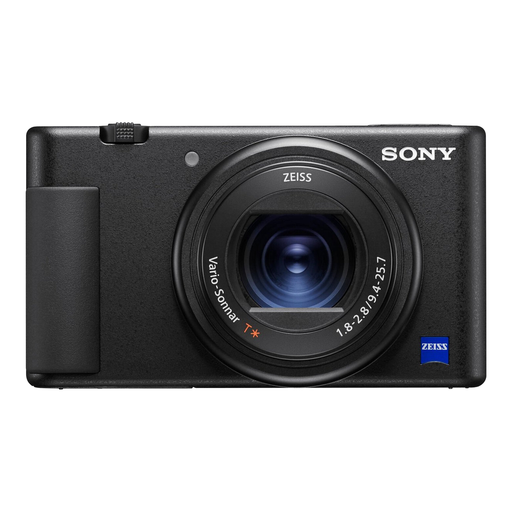 No image available
The product name describes this model as a compact camera for vlogging. Check whether its framing options suit your landscape photography.
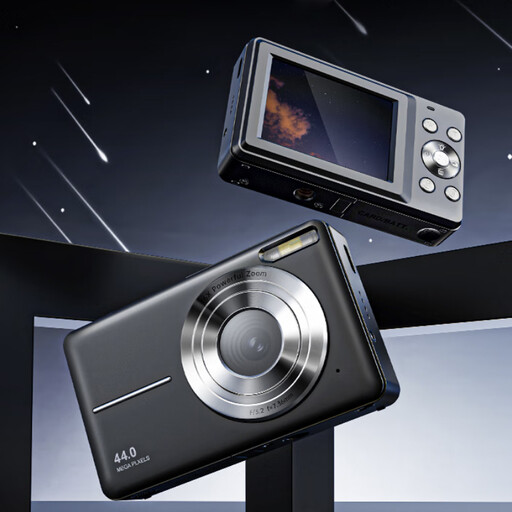 No image available
The product name lists photography and video as possible uses. Before buying, check whether the stated 16x zoom range is optical if you want to frame distant details.
The product name lists 4K, 44 MP and 16x zoom.
Start with the field of view you need from your chosen spot, and also compare the lens speed if you’ll be shooting in low light. Megapixels alone won’t answer these questions.
Check whether you can adjust the exposure and keep the camera steady. A wider aperture may allow you to use a faster shutter speed, but it also changes the depth of field; Canon Netherlands points out that a slower shutter speed can cause blur.
That depends on how you want to edit the images and on any requirements set by your photography club. Check the exact model: Fujifilm lists RAW for the X100VI, while Canon specifies JPEG as the photo file type for the SX740 HS Lite Edition.
This varies by location and site manager. Natuurmonumenten states that its areas are open between sunrise and sunset, although there may be exceptions for individual areas. Check the rules for your exact location and don’t assume you can enter during the pre-dawn twilight.
Before publishing the photos, check the applicable privacy rules. The Dutch Data Protection Authority treats identifiable people in images as personal data; an organisation needs a lawful basis under the GDPR to process and publish them. The authority describes a limited exception for photos kept strictly for private use.