First, choose between a wider view and optical reach: for sky, horizon and foreground, the angle of view matters, while distant birds or windmills call for telephoto reach. Then compare the lens aperture and sensor for low-light photography, how easy the camera is to carry, and, only if you’ll be shooting in rain or cold, the protection offered by the specific model. The Dutch Consumers’ Association (Consumentenbond) identifies sensor size as an important factor alongside megapixels; Canon Netherlands points out that zooming in can also bring out landscape details.
Who is this relevant to?
Walkers who want to capture the morning light
If you want to photograph the sky, horizon and foreground together, you can choose an angle of view to suit the composition you have in mind. The Dutch Consumers’ Association (Consumentenbond) and Canon Netherlands discuss factors that come into play in camera and landscape photography.
Walkers who want to frame distant details
If you want to photograph a windmill, bird or other distant subject from your walking route, optical telephoto reach is important. Sony and Panasonic specify models with a greater stated zoom range.
Walkers who also take photos in changeable weather
If you want to use your camera in wet or cold conditions, it’s worth checking the protection ratings and usage conditions for the exact model. OM Digital Solutions lists these conditions for the Tough TG-7.
What to consider when choosing
Start with the composition you want, then compare the lens and sensor, portability and any weather protection. The Dutch Consumers’ Association (Consumentenbond) emphasises that sensor size is a more important factor in photo quality than megapixel count alone.
| What to consider |
What to look for when buying |
Who is this important to? |
| Wide composition |
Compare the angle of view in 35mm equivalent and the lens aperture at the focal length you want to use. |
If I want to capture the sky, horizon and foreground together, a wide angle of view matters more to me than telephoto zoom. Around 33% of consumers make a wide-open polder landscape their top buying priority. |
| Distant subjects |
Check the optical zoom range in 35mm equivalent and compare the sensor and lens aperture at the telephoto end. |
I want to bring a bird or windmill closer in the frame from my walking route, without walking over to it. Around 27% of consumers prioritise distant details. |
| Portability |
Compare dimensions and weight on the same basis, for example including the battery and memory card; also check that the controls feel comfortable to use. |
If I want to take a camera on a regular morning walk, its size and weight matter a lot to me. Around 20% of consumers put portability first. |
| Wet and cold conditions |
Check the protection offered by the exact model and the conditions for using it. |
I want to be able to take photos in wet or cold weather, so I need to know what conditions my camera can handle. Around 13% of consumers make weather resistance their top priority. |
| Ease of use |
Check whether the automatic and manual settings suit you, and see what’s included in the box. |
If I want to capture a moment quickly without fiddling with lots of settings, I’m mainly looking for a camera that’s easy to use. Around 7% of consumers start with affordability and ease of use. |
Common pitfalls
-
Assuming the highest zoom figure means better sunrise photos
A wide composition may be better suited to the sky, horizon and foreground, while a high zoom factor alone says nothing about image quality. Optical and digital zoom are different features.
Start with the composition you want from your walking route. Then compare the focal length in 35mm equivalent, the lens aperture and the sensor of the specific model.
-
Assuming every compact camera is weather-resistant
A compact size doesn’t tell you what protection a camera offers against water or cold. Using it outside the stated conditions could cause damage.
If you’ll be taking photos in rain or freezing weather, check the specifications and usage conditions for the exact model.
-
Comparing only the camera and not what you need to take photos
You may need to buy a memory card or spare battery separately; what’s included and what’s compatible can vary by model or bundle.
Before buying, check what’s in the box, which memory cards are compatible and what you’ll need for the length of your walk.
Camera brands to consider
The models mentioned differ in angle of view, zoom and protection. The features below apply to the specific models, not to every product from each brand.
RICOH
The GR IV is an option if you want a fixed, wide angle of view for your walk.
- Ricoh specifies an APS-C sensor and approximately 28 mm in 35mm equivalent for this model.
- The fixed lens has no optical zoom, so you can’t use it to bring distant subjects closer optically.
Canon
Canon offers models with different zoom options; the PowerShot G7 X Mark III and SX740 HS Lite Edition are separate product lines.
- Canon specifies 24–100 mm equivalent and f/1,8–2,8 for the G7 X Mark III.
- According to Canon, the SX740 HS Lite Edition has 24–960 mm equivalent and a 1/2,3-type sensor. These specifications apply to that model, not to all Canon compact cameras.
Sony
The RX100 VII is worth considering if you want one camera for framing both a wide scene and details in the distance.
- Sony specifies a 1,0-type sensor and 24–200 mm equivalent for the RX100 VII.
- The stated lens aperture ranges from f/2,8 at the wide-angle end to f/4,5 at the telephoto end.
Panasonic
The LUMIX DC-TZ99 is a travel zoom option for capturing distant details from your walking route.
- Panasonic specifies 30× optical zoom for this model.
- It has a stated 1/2,3-inch sensor and f/3,3–6,4 lens aperture. Long telephoto reach is a different priority from a large sensor or a wide lens aperture.
OM SYSTEM
The Tough TG-7 is an option if taking photos in wet or cold conditions is a key requirement.
- OM Digital Solutions states that the TG-7 is waterproof to 15 m and freezeproof to −10 °C, subject to the applicable usage conditions.
- The stated protection alone doesn’t tell you whether it’s suitable for a dark horizon or the angle of view you want.
FUJIFILM
The X100VI is a fixed-angle option for anyone who doesn’t need optical zoom.
- Fujifilm specifies an APS-C sensor, 40,2 effective megapixels and 35 mm equivalent for the X100VI.
- The lens has no optical zoom, so check in advance whether the fixed composition suits your viewpoint.
Joybuy product picks
These Joybuy product picks focus on portable compact cameras for taking photos on a walk.
 No image available
KOMERY G7-A 4K, 80MP UHD, 18X zoom, pink
The product name describes this model as a portable point-and-shoot camera for photography.
The product name lists 4K, 80MP UHD and 18X zoom; it doesn’t specify the type of zoom.
View at Joybuy
 No image available
KOMERY G7 5K, 80MP UHD, 18X zoom, white
The product name describes this as a portable point-and-shoot camera for photography.
The product name lists 5K, 80MP UHD and 18X zoom; it doesn’t specify the type of zoom.
View at Joybuy
 No image available
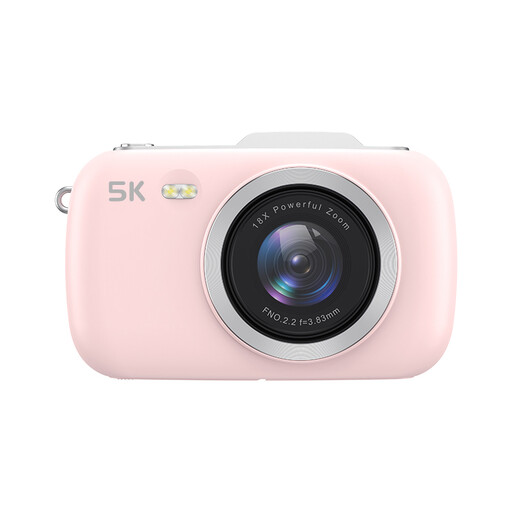
KOMERY G7 5K, 80MP UHD, 18X zoom, no SD card, pink
This product variant is described as a portable point-and-shoot camera for photography.
The product name lists 5K, 80MP UHD and 18X zoom. An SD card is not listed as included with this variant.
View at Joybuy
 No image available
Songdian Pocket Camera 4K 44MP, pink
The product name describes this model as a pocket camera for photography and video.
The product name lists 4K and 44MP. Its stated 16X zoom is digital zoom.
View at Joybuy
Frequently asked questions
Do you need lots of zoom for a wide polder sunrise?
No, not if you want to frame the sky, horizon and foreground together. Zoom becomes more useful when you want to isolate distant details; in that case, compare the angle of view that suits your position.
What should you look for when photographing a bright sky and dark foreground?
Before you set off, check how to adjust the exposure on the exact camera model, then review both the sky and foreground while you’re there. If you want to edit your photos later, also check whether the model supports RAW; Canon lists exposure compensation and AEB among the features of the PowerShot G7 X Mark III.
Can you take any compact camera out in the rain or frost?
No, the term compact camera doesn’t tell you what protection a model offers. Check the specifications and conditions for the exact camera; OM Digital Solutions lists waterproofing to 15 m and freezeproofing to −10 °C among the Tough TG-7’s features.
What are your rights to a legal guarantee and a cooling-off period when buying online in the Netherlands?
ACM ConsuWijzer explains that the legal guarantee doesn’t have a fixed term of exactly two years: what you can expect depends on the product and normal use, and the retailer is your point of contact. For a standard online product purchase, you generally have a statutory cooling-off period of up to 14 days after delivery; check the applicable exceptions and conditions for return costs.
Are you allowed to photograph identifiable passers-by on your walk and share the pictures?
First consider how and with whom you’ll share the photos. According to the Dutch Data Protection Authority (Autoriteit Persoonsgegevens), the exception for personal or household use applies when you keep photos private or share them only with a very small group; if you publish them more widely, you need to take privacy rules into account.


