What should you look for?
First decide whether exposure control or framing the full reflection matters most. Then weigh up zoom range, portability and protection.
| What to consider |
What should you check? |
Who is this important for? |
| Exposure of the sky and foreground |
Check exposure compensation, exposure bracketing and RAW capture. Also see whether you can view a histogram or highlight warning. |
If I want to assess both the bright sky and the dark polder ground properly, I need to be able to check the exposure on the spot. Around 31% of consumers put this first. |
| Fitting the reflection in the frame |
Compare the angle of view in 35mm-equivalent terms at the aspect ratio you use. Check whether you can frame the whole reflection from your usual viewpoint. |
If I want to capture the horizon and its reflection together in one frame, the angle of view needs to suit my viewpoint. Around 25% of consumers give this the highest priority. |
| Taking it on an early walk |
Compare the dimensions and ready-to-shoot weight of the exact model; don’t rely on the word ‘compact’ alone. |
If I’m heading out on foot before sunrise, I want a camera that suits my bag and the weight I’m carrying. Around 19% of consumers put portability first. |
| Wet or cold weather |
Check the water and dust ratings and the usage conditions for the exact model. Don’t assume it’s protected based on the brand name or its outdoor styling. |
If my walk takes me along wet banks or through cold conditions, I want to know what protection the camera actually has. Around 13% of consumers make wet-weather protection their top priority. |
| Photographing distant details |
Compare the optical zoom range, sensor and maximum aperture of the same model. Distinguish between optical and digital zoom. |
If I also want to capture a distant windmill, tree or other detail from my viewpoint, a suitable optical zoom range is more useful than a wide angle of view alone. Around 12% of consumers put zoom range first. |
Joybuy cameras for this situation
These Joybuy product picks are portable digital cameras with zoom. Check the type of zoom listed for each model and any limitations when it comes to moisture.
 No image available
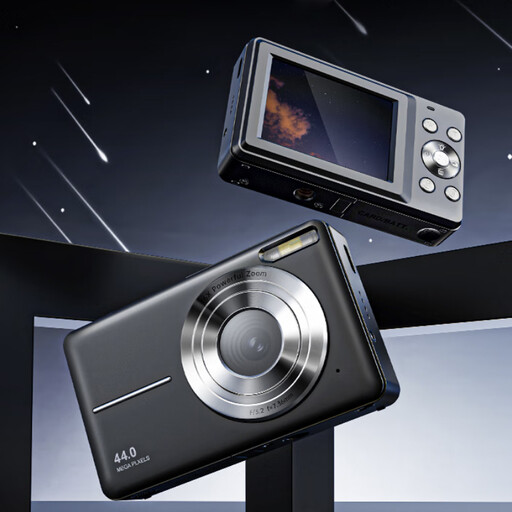
Songdian Pocket Camera 4K 44MP, black
Suitable if you’re looking for a pocket-sized camera with autofocus and zoom.
The listed 16× zoom is digital. The product information also lists 4K and 44 MP.
View at Joybuy
 No image available
KOMERY G7 5K 80MP, white
Suitable if you’re looking for a portable camera with zoom.
The product title lists 5K, 80 MP and 18× zoom. The product information advises keeping the camera away from water and damp environments.
View at Joybuy
 No image available
KOMERY G7-A 4K 80MP, pink
Suitable if you’re looking for a portable camera with zoom.
The product title lists 4K, 80 MP and 18× zoom. The safety information warns against exposing the camera to water and moisture.
View at Joybuy
Frequently asked questions
Should I use a polarising filter to make the reflection stronger?
Not necessarily. A polarising filter can reduce reflections on water, so check the effect on the screen or through the viewfinder if you want to preserve the reflection. Before buying, check whether the filter can be fitted to your exact camera.
How can I check on the spot whether the sky is overexposed?
Check the histogram or highlight warning if your camera has these features. Adjust the exposure compensation if important bright areas are losing detail, and consult your model’s manual for instructions.
Do I need a tripod to get a sharp reflection?
No, a tripod isn’t essential for capturing a reflection. Calm water, camera height and shutter speed also play a part; a tripod can be useful for a longer exposure. Check your shot for motion blur.
What are my rights if a camera I bought online doesn’t work properly?
According to ACM ConsuWijzer, the seller must offer a suitable free solution if a product doesn’t do what you could reasonably expect under normal use. Online consumer purchases also generally come with a 14-day cooling-off period after delivery, subject to legal exceptions. This cooling-off period is separate from the guarantee.
Can I take photos anywhere in a polder or protected nature reserve before sunrise?
That depends on the location and the access rules in force. The Dutch government states that provinces decide what is and isn’t allowed in their nature reserves. Check the current opening times and rules set by the province or site manager for your chosen location; don’t assume access is unrestricted.


