Who is this buying guide for?

Maker working with shiny fabrics

You want to capture the pattern clearly without reflections obscuring the detail, but may also want to show the sheen of embroidery. Both your lighting set-up and camera controls matter; the Canadian Conservation Institute and the Smithsonian Institution Archives describe techniques for photographing reflective surfaces.

Maker taking detailed photos

You want to photograph seams, stitches and fabric texture sharply. Focusing distance varies by model and can also change with the zoom setting, as the model specifications from Canon Nederland, Sony Nederland and Panasonic Nederland show.

Documenting the whole piece

You want to photograph the entire patchwork with colours that look true to life. A suitable angle of view, even lighting and control over white balance can help you choose a camera and set up your shot. Adobe explains that white balance affects how colours appear in a digital photo.

What should you look for when buying?

Zoom for wide shots and close-up work

A good fit if: you want to switch between an overall view and details with one camera, and the distance from your subject varies.

Bear in mind: the closest focusing distance can vary considerably between zoom settings; having zoom does not automatically make a camera suitable for close-ups.

Fixed angle of view

A good fit if: you can work with a fixed angle of view from your available shooting position and manual exposure is important to you.

Bear in mind: without optical zoom, you will need to change your position to get a different framing.

Long zoom range

A good fit if: you also photograph distant subjects and want to switch between different framing options with one lens.

Bear in mind: the minimum focusing distance at the telephoto end can be much greater than at the wide-angle end.

Compact travel zoom

A good fit if: a wide optical zoom range is also a key reason for choosing the camera for other subjects.

Bear in mind: when shooting indoors, also consider the sensor size, aperture and focusing distance at the zoom setting you use.

What to consider What should you look for? Who is this for?
Reflections and sheen Check whether you can adjust the lighting and position light sources beside your work. Try softer or repositioned light; if needed, take separate shots of the pattern and the surface. If I want to capture shiny areas without glare obscuring the pattern, I also want to retain the sheen I’m after. Around 31% of consumers prioritise tackling reflections.
Fabric colours Look for adjustable white balance and assess a test shot under the lighting you plan to use. More zoom is no substitute for controlling the light and white balance. If I need the colours to look true to life, I want to check how the fabric appears under my lighting. Around 25% of consumers prioritise colour accuracy.
Stitches and small details Compare the minimum focusing distance at the zoom setting you plan to use, and check that there is still room for lighting at that distance. If I want to capture seams and small stitches sharply, the camera needs to focus close enough to achieve the framing I want. Around 25% of consumers prioritise detail.
Framing the whole piece Measure your patchwork and the available shooting distance. Check whether the wide-angle setting or fixed angle of view can fit the whole piece in the frame. If I want to show the entire patchwork in one shot, the angle of view needs to suit the space I’m photographing in. Around 19% of consumers prioritise the overall view.

Common buying mistakes

  • Assuming the longest zoom is best for detail

    With compact cameras, the minimum focusing distance can vary considerably between wide-angle and telephoto settings. A greater zoom range therefore does not automatically mean you can photograph small stitches up close.

    Compare the focusing distance at the setting you want to use for detail shots, and check that you can position your lighting there too.

  • Confusing a built-in ND filter with a solution for reflections

    An ND filter reduces the amount of light; a polarising filter serves a different purpose. Neither is a substitute for choosing the right angle of light.

    Start by trying out your lighting set-up. Separately, check whether a polarising filter, if you need one, fits your exact camera model.

  • Removing all the sheen

    Even or softer light can reduce glare, while directed light can bring out sheen and texture. Removing all the sheen could also hide a feature of the fabric that you want to show.

    Decide in advance whether you want to show the pattern, the material’s sheen or both. If needed, take separate shots using different lighting set-ups.

Camera brands to consider

Canon

The PowerShot G7 X Mark III is a compact zoom option if you want to switch between wide shots and close-up work.

  • Canon Nederland lists a 24–100 mm equivalent lens, a 1.0-type sensor and a minimum focusing distance of 5 cm at the wide-angle setting.
  • At the telephoto end, the listed minimum focusing distance is 40 cm, measured from the front of the lens. These specifications are not a test of patchwork photography.

Sony

The RX100 VII is an option if you want a wider optical zoom range as well as a camera for patchwork photography.

  • Sony Nederland lists a 24–200 mm equivalent lens and a 1.0-type sensor.
  • The listed minimum focusing distance ranges from around 8 cm at the wide-angle setting to around 100 cm at the telephoto end. This means the telephoto zoom is not necessarily suitable for close-ups.

Panasonic

The Lumix TZ99 is mainly an option if you want a compact camera with a long travel zoom for patchwork and other subjects.

  • Panasonic Nederland lists 30× optical zoom and a macro mode from 3 cm at the wide-angle setting.
  • The camera has a 1/2,3-inch sensor; at the telephoto end, the listed minimum focusing distance is 200 cm. The macro distance therefore does not apply at every zoom setting.

Ricoh

The GR IIIx is a good fit if you can work with a fixed 40 mm equivalent angle of view.

  • Ricoh Imaging Europe lists an APS-C sensor and manual exposure controls.
  • The lens does not zoom. Check in advance that the entire patchwork will fit in the frame from your available shooting position.

Cameras on Joybuy

The Joybuy selection below includes compact cameras described in their product titles as being for photography or vlogging. For patchwork photos, check that the focusing distance and exposure and white balance controls of the exact model suit the way you work.

DJI Osmo Pocket 4 Standard Combo pocket vlog camera

DJI Osmo Pocket 4 Standard Combo

The product title describes this model as a pocket vlog camera; check whether its features are suitable for still close-up photos of patchwork.

The title lists a 1-inch CMOS sensor, 2× zoom, 107 GB of built-in storage and a rotating 2-inch screen, as well as 4K/240fps video.

Joybuy
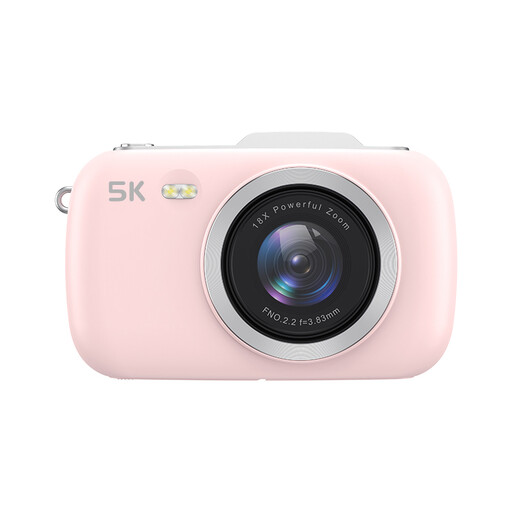
KOMERY G7 5K digital camera, pink, no SD card

KOMERY G7 5K, pink

The product title describes this as a point-and-shoot camera for photography; check the focusing and colour settings for your patchwork shots.

The title lists 80 MP and 18× zoom. No SD card is included.

Joybuy
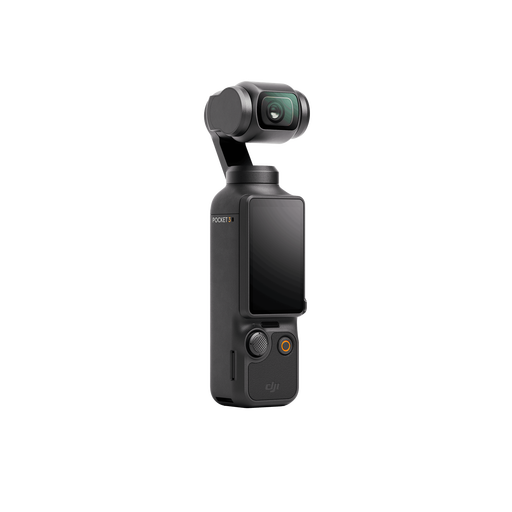
DJI Osmo Pocket 3 Creator Combo

DJI Osmo Pocket 3 Creator Combo

The product title presents this as a vlog camera; before buying, check whether its controls and focusing capabilities are suitable for still photos of fabric details.

The title lists a 1-inch CMOS sensor, 4K/120fps video, 3-axis stabilisation and a microphone in the Creator Combo.

Joybuy

DJI Osmo Pocket 3

DJI Osmo Pocket 3

The title describes this model as a small video camera for photography; check whether its still-image controls suit your patchwork shots.

The title lists a 1-inch CMOS sensor, 4K/120fps video, 3-axis stabilisation, fast focusing and a rotating 2-inch touchscreen.

Joybuy

Songdian Pocket Camera 4K 44MP, pink

Songdian Pocket Camera 4K 44MP, pink

The product title describes this as a pocket camera for photography and video; check the focusing distance and white balance controls for close-ups of stitches and fabric.

The title lists 4K and 16× zoom. These stated features alone do not tell you whether the camera will focus at the distance you need.

Joybuy

Frequently asked questions

How should I light patchwork with both matt and shiny sections?

For an even overall view, start with light coming from both sides at an angle. The Canadian Conservation Institute explains that this kind of set-up can reduce glare, while directed light can bring out sheen and surface texture. If both qualities matter, take separate shots using different lighting set-ups.

Do I need a polarising filter?

No, a polarising filter is not the only option. Check that a filter fits your exact camera model, and also try softer light or a different angle. Don’t automatically reduce the sheen if it is an important part of the work.

What should I take with me for a longer photo session?

Check which battery and memory card you need for the exact model, and what is included with your purchase. The Consumentenbond lists a spare battery and SD card as separate things to consider; don’t assume they are included as standard.

What warranty and cooling-off period apply when buying online in the Netherlands?

When you buy as a consumer, the product must meet what you could reasonably expect; if there is a fault, contact the seller. According to the Rijksoverheid, the Netherlands has no fixed statutory warranty period. For distance purchases from a business, a 14-day cooling-off period applies in many cases; check the terms and exceptions for your specific purchase.

Can I publish photos of patchwork online?

This depends, among other things, on who owns the rights to the work and what is shown in the photo. The Rijksoverheid distinguishes between private use and distributing or publishing someone else’s copyright-protected work; you may need the creator’s permission to do the latter. Privacy rules may also apply if people are recognisable in the image. This is not a blanket ban on photographing your own patchwork.
