
Patchworker with a small worktable
You want to photograph the whole piece from above. The Consumentenbond highlights factors such as size and zoom range; check whether the angle of view is wide enough from the height available to you.


Start by checking how much height you have above your patchwork, then see whether the wide-angle setting captures the whole piece from that position. Next, compare the macro setting for seams and fabric texture. A short focusing distance does not guarantee an overall shot, and even lighting and a suitable white balance are still important for recognisable fabric colours.
You want to photograph the whole piece from above. The Consumentenbond highlights factors such as size and zoom range; check whether the angle of view is wide enough from the height available to you.
You use photos to refer back to colours and patterns. Canon Netherlands explains that ambient light affects colour reproduction, so consistent lighting and a suitable white balance are important.
You mainly photograph stitches and fabric texture. Compare the focusing distance for each setting: Canon and Panasonic list model-specific distances that do not apply to every zoom setting.
First check whether the whole patchwork fits in the frame from where you’ll be taking the photo. Then consider seam details, colour reproduction and how much room the set-up will take.
| What to consider | What should you look for? | Who is this most important for? |
|---|---|---|
| Getting the whole patchwork in frame | Measure the piece and the distance from the lens you can achieve. Check that the edges remain visible from that position. | If I have little height above the table, I want to know in advance whether the whole piece will fit in frame; around 36% of consumers prioritise this overall view. |
| Recognisable fabric colours | Check whether you can adjust the white balance, and take a test shot under the lighting you use. | When I want to compare fabrics, consistent lighting and colours that are easy to recognise are helpful; around 29% of consumers prioritise colour reproduction. |
| Seams and fabric texture | Compare the minimum focusing distance in macro mode and at the zoom settings you want to use. | If I’m capturing stitches or fabric texture close up, I want to know which setting lets the camera focus at that distance; around 21% of consumers prioritise seam detail. |
| Room for your set-up | Decide where the camera, any support and lighting can go before choosing accessories. | If I want to keep using the worktable while taking photos, I consider how much space the complete set-up will take; around 14% of consumers prioritise having limited room for their set-up. |
Telephoto zoom captures a smaller part of the subject. For an overall shot from close up, it’s the framing in the wide-angle setting that matters.
Check that you can capture the whole piece from the position you’ll be taking photos from before choosing based on the maximum zoom factor.
The stated close-focusing distance can vary between settings; at telephoto, the camera may need to be further away.
Check the focusing distance for each setting, and try taking both a close-up of a seam and an overall shot.
The colour of the ambient light affects how fabrics look in a photo. A camera won’t automatically compensate for the lighting conditions.
Take test shots under your usual lighting and check the white balance.
A general compact camera ranking doesn’t specifically assess how well a model captures patchwork on a small table. The Consumentenbond also notes that its accessible compact camera test covers models up to autumn 2025.
Use a ranking at most to find models, then check the specific version and the features that matter for your shooting position.
The RX100 VII is a compact zoom option for anyone who wants to photograph both overall scenes and other everyday subjects.
The SX740 HS Lite Edition has a wide-angle macro setting; the G7 X Mark III is a separate model with a shorter zoom range.
The LUMIX TZ99 combines a wide-angle setting with a separate AF Macro setting, which is useful if you want to compare overall shots and close-up details.
The Tough TG-7 is another option to look into if close-ups of fabric texture matter more to you than capturing the whole piece.
This selection includes models described in their product names as pocket, portable or small cameras for photography or video. Before buying, check that the angle of view and focusing setting suit your piece and shooting distance.
 No image available
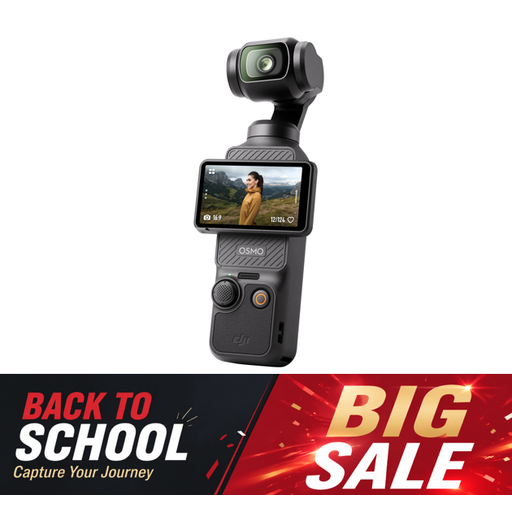
The product name describes this model as a pocket gimbal vlog camera; check whether the framing from your position at the table captures the whole patchwork.
The product name lists a 1″ CMOS sensor, 2× lossless zoom, 107 GB of built-in storage and a 2″ rotatable screen.
Also listed: 4K/240fps and 3-axis stabilisation.
 No image available
The product name describes this as a portable point-and-shoot camera; check whether the angle of view suits the distance you have above the patchwork.
The product name lists 80MP UHD and 18× zoom. These specifications alone don’t tell you whether the whole piece will fit in frame.
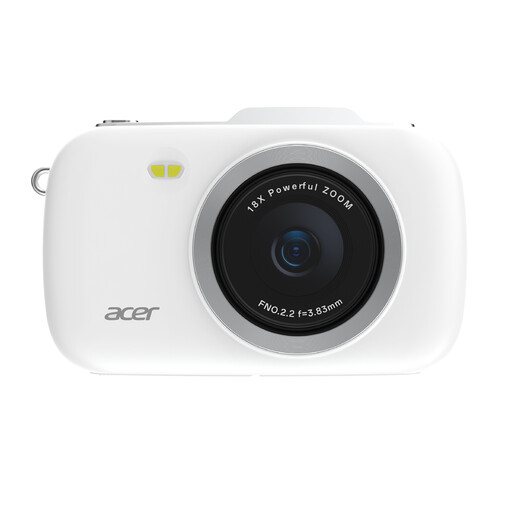 No image available
The product name describes a portable digital camera for photography; check the framing at the distance you can hold the camera above your piece.
The product name lists 80MP UHD and 18× zoom. Check separately whether you can capture the whole patchwork or a seam as you want.
 No image available
The product name describes this model as a small camera for photography and video; consider whether the angle of view and shooting position suit your patchwork.
The product name lists a 1″ CMOS sensor, 4K/120fps, 3-axis stabilisation and a 2″ rotatable touchscreen.
 No image available
The product name describes this model as a pocket camera for photography; check whether the framing from your shooting position suits the size of your piece.
The product name lists 16× digital zoom. A microSD card is required for storage; according to the product information, it is not included.
First check whether the whole patchwork fits in frame from the shooting height available to you. The angle of view, the size of your piece and your set-up all affect the framing; megapixels alone won’t tell you whether it will work.
Start with a simple, as straight as possible, overhead shot. Canon explains that a compact camera is useful for trying out flat-lay photography; then see whether your shooting height means you need extra support or lighting.
Take test shots under the lighting you normally use and check the white balance. Canon Netherlands points out that the colour temperature of ambient light can affect colour reproduction.
Not always: the stated distance can vary depending on the focus and zoom setting. Check the distance for the setting you want to use and take a test shot of a seam. Also watch out for shadows from the camera or lighting falling on the fabric.