What should you look for when choosing?
First decide whether your priority is the whole garden, individual tulips, changing light or a lightweight kit. This will help you assess the lens and camera controls.
| What to consider |
What to look for |
Who should pay particular attention? |
| Exposure in changing daylight |
Check that exposure compensation and the shutter speed, aperture and ISO settings are easy to use. Together, these three settings determine the exposure. |
If I want to adjust the brightness of my shots as the sun comes and goes behind the clouds, I want to be able to change the exposure straight away. Exposure control is the top priority for around 33% of people making this choice. |
| Flower details |
Compare the maximum magnification and minimum focusing distance at the focal length you want to use; also check whether that lens is included in the kit. |
If I want to fill the frame with a single tulip or fine details, I look at the lens, not just the camera body. Flower details are the top priority for around 27% of people making this choice. |
| Capturing the whole garden |
Check the angle of view or equivalent focal length of the supplied lens, and whether it suits the spot where you want to take photos. |
If I mainly want to frame several rows of flowers or a larger part of the garden, the lens range is my first consideration. Garden views are the top priority for around 20% of people making this choice. |
| Equipment for a walk |
Compare the size and weight of the complete camera kit. If you’re considering a compact camera, also check that its fixed lens can focus at the distance you need for flower details. |
If I’d rather not change lenses or carry extra equipment while out walking, the convenience of the complete kit matters a lot. Keeping equipment to a minimum is the top priority for around 20% of people making this choice. |
Joybuy products
The Joybuy options below are pocket and action cameras. Before buying, check that their features for still garden shots, focusing on flowers and changing light suit what you want to photograph.
 No image available
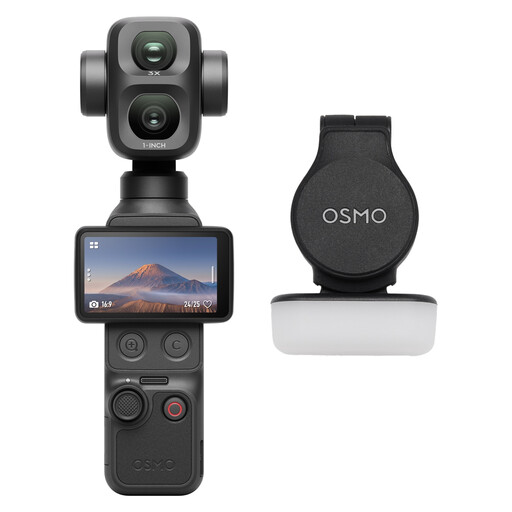
Osmo Pocket 4P Standard Combo, black
The wide-angle lens listed may be useful if you want to create a broader composition.
The description mentions a 20 mm f/2.0 lens and 4K recording; according to the product description, 4K/240 fps is only available in slow-motion mode.
Joybuy
 No image available
DJI Osmo Pocket 3
See whether this pocket camera’s recording features suit the way you want to capture garden views and flower details.
The product description mentions a 1-inch CMOS sensor, mechanical 3-axis stabilisation, a rotating touchscreen and 4K recording at up to 120 fps. The stated weight is 179 g.
Joybuy
 No image available
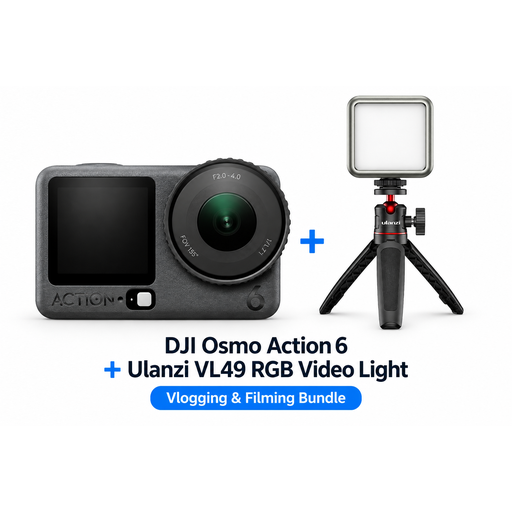
DJI Osmo Action 6 Standard Combo with Ulanzi VL49 RGB LED light
The bundle title mentions a portable action camera with an Ulanzi LED light.
Check whether the controls and focusing capabilities are suitable for still flower photography; the listed product information doesn’t provide details about these features.
Joybuy
 No image available
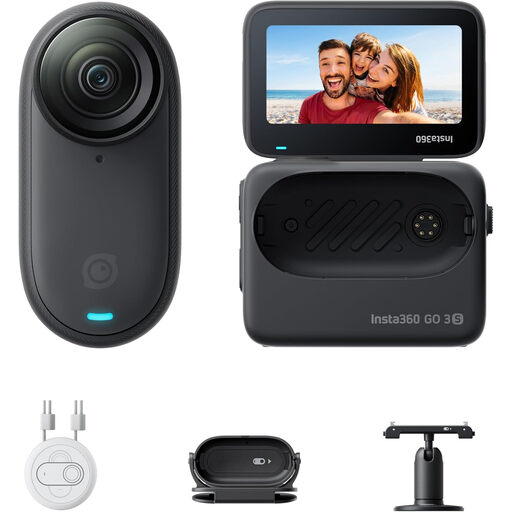
Insta360 GO 3S 128GB
The description mentions a wide-angle lens for those looking for a broad angle of view.
The product information lists a weight of 39 g and 4K recording. Check whether its focusing capabilities are suitable for the flower details you want to capture.
Joybuy
Frequently asked questions
What can you do if pale tulips look too dark or too bright in changing daylight?
Check the shot and adjust the exposure compensation if needed. Canon Netherlands describes this feature as a way to adjust the metering for unusually bright or dark scenes. Also check the shutter speed, aperture and ISO setting you’ve chosen.
Can you automatically fill the frame with small flower details using a kit zoom lens?
No, a lens being a zoom doesn’t automatically mean it can do this. At 45 mm, Canon specifies a maximum magnification of 0.16× with autofocus for the RF-S 18-45mm, compared with 0.5× for the separate RF 35mm F1.8 MACRO IS STM. Compare the lens’s magnification and minimum focusing distance with the close-up you want to take, and check whether that lens is included in the kit.
Who can help if a camera bought in the Netherlands is faulty?
According to the Dutch government, the seller must resolve a problem with a defective product or contact the manufacturer. The Netherlands doesn’t have a fixed statutory guarantee period; what you could reasonably expect from the product and the cause of the fault are taken into account.
Can you publish identifiable visitors to a tulip garden online?
Don’t assume that the personal-use exemption also applies to wider publication. According to the Dutch Data Protection Authority, this exemption applies when images remain private or are shared with only a very limited group. For wider publication, or professional or commercial use, you need to consider the applicable legal basis for processing personal data.


