For repeatable photos of wooden miniatures, start by keeping your camera, subject and lighting setup consistent. Then choose a camera based on the framing you want and the focusing distance at that zoom setting. A camera geared towards close-ups is a good fit when wood grain and joints are the main focus, while manual focus and focus bracketing can be useful if you want to vary your framing. The focusing distance available at the wide-angle setting does not necessarily apply at the telephoto setting.
Who is this choice relevant to?
Maker of a consistent product range
You photograph several wooden miniatures using the same framing and want to be able to repeat the camera position and lighting. Canon Netherlands recommends using a tripod to keep the framing consistent in product photos.
Photographer of wood details
You want to show grain, joints or small finishing details individually. So check whether the camera can focus close enough at the zoom setting you want to use.
One camera for more than one purpose
You want to photograph subjects other than miniatures too. A versatile zoom can come in handy, but the minimum focusing distance varies depending on the zoom setting.
What should you look for when choosing?
Compact camera geared towards close-ups
When to choose it: if grain and small joints are your main subjects; OM SYSTEM describes a microscope mode and focus stacking for the Tough TG-7.
Trade-off: a 1 cm shooting distance does not guarantee that you will have enough room to achieve the lighting you want for your miniature.
Camera with manual controls
When to choose it: if you alternate between photographing whole miniatures and details; Canon lists manual focus, focus bracketing and a zoom lens for the PowerShot G7 X Mark III.
Trade-off: Canon lists a minimum focusing distance of 5 cm at the wide-angle setting and 40 cm at the telephoto setting; focus bracketing is not the same as an automatically merged photo.
Versatile travel zoom
When to choose it: if you want one camera for miniatures and a range of other subjects; Panasonic lists features including RAW, Post Focus and Focus Stacking for the LUMIX DC-TZ99.
Trade-off: Panasonic specifies a minimum focusing distance of 3 cm at the wide-angle setting and 200 cm at the telephoto setting, so the macro limit depends heavily on the zoom setting.
Compact camera with a longer zoom range
When to choose it: if you want to photograph subjects further away as well as tabletop scenes; Sony specifies a 24–200 mm-equivalent zoom for the RX100 VII.
Trade-off: Sony lists a minimum focusing distance of approximately 8 cm at the wide-angle setting and approximately 100 cm at the telephoto setting. A longer telephoto range does not automatically mean better close-ups.
| Concern |
What to look for when buying |
Who is this most relevant to? |
| Repeatable composition |
Check whether you can attach a suitable tripod or holder, and whether you can easily repeat your framing and settings. |
If I photograph a series of miniatures from the same angle, I want to keep the camera, subject and lighting in the same place. Around 36% of consumers prioritise repeatable compositions. |
| Capturing small wood details in focus |
Compare the minimum focusing distance at the zoom setting you actually want to use; check separately whether focus stacking is needed. |
When grain or joints are the main focus, I want to capture those details large enough without overlooking the space needed for my lighting setup. Around 29% of consumers prioritise small wood details. |
| Keeping wood colours consistent |
Check whether the camera has a useful fixed white balance setting and whether it supports the file format you want for editing. |
For a product range, I want to avoid the same type of wood looking different in each photo. Around 21% of consumers value consistent wood colours. |
| Compactness and other uses |
First work out the distance and framing you need for your miniature; then weigh up the zoom range and how you might use the camera away from your tabletop setup. |
If I also want to use the camera for other subjects, I’m looking for a useful zoom range without forgetting the close-up distance I need on my table. Around 14% of consumers want one camera for several subjects. |
Common buying mistakes
-
Assuming the macro distance at the wide-angle setting applies at every zoom setting
For the Canon and Panasonic models mentioned, the minimum focusing distance is greater at the telephoto setting than at the wide-angle setting. So a camera might focus close up at one setting but not at the same distance at another.
Compare the focusing distance with the framing you want for your miniature, using that exact zoom setting.
-
Expecting a camera to create a repeatable setup by itself
Canon Netherlands says a tripod helps keep the framing consistent in product photos. Changing the position of your lighting can also affect how colours appear.
Plan where to place the camera, miniature and lighting together, and check that the holder fits your exact camera.
A tripod or suitable holder takes up space, and you’ll need a dedicated spot for your setup.
-
Assuming focus bracketing produces a finished stacked photo
Canon lists focus bracketing for the PowerShot G7 X Mark III. OM SYSTEM and Panasonic describe focus stacking separately; these terms do not automatically mean that every camera merges the shots in the same way.
Check whether you need the camera to merge the shots, or whether you want to process the individual images yourself.
Selecting or merging individual shots can take extra time to process.
Camera brands to compare
OM SYSTEM
The Tough TG-7 is worth considering if capturing very small details and focus stacking are important to you.
- OM Digital Solutions describes shooting from 1 cm in microscope mode; OM SYSTEM describes focus stacking.
- That short distance does not automatically mean the whole miniature and your lighting setup will fit comfortably in the frame.
Canon
The PowerShot G7 X Mark III combines manual focus and focus bracketing with a zoom lens for different framing options.
- Canon Netherlands specifies a minimum focusing distance of 5 cm at the wide-angle setting and 40 cm at the telephoto setting.
- Canon’s tripod advice is about achieving consistent product photos; it does not prove an advantage over other cameras.
Panasonic
The LUMIX DC-TZ99 combines a travel zoom with manual focusing and focus stacking features.
- Panasonic lists RAW, Post Focus and Focus Stacking.
- The manufacturer specifies a minimum focusing distance of 3 cm at the wide-angle setting and 200 cm at the telephoto setting; the features listed are not an independent image-quality test for miniatures.
Sony
The RX100 VII is a compact option if you want a longer zoom range as well as the ability to take tabletop shots.
- Sony specifies a 1.0-type sensor and a 24–200 mm-equivalent zoom.
- The stated minimum focusing distance ranges from approximately 8 cm at the wide-angle setting to approximately 100 cm at the telephoto setting; its zoom range does not automatically make it a macro camera.
PENTAX
The WG-90 is worth comparing if a digital microscope function and built-in macro lights appeal to you.
- Ricoh Imaging lists shooting from 1 cm and six LED macro lights.
- Whether built-in lighting will give you natural-looking wood colours depends on your setup; also check whether the light is soft enough for your subject.
Products at Joybuy
These camera picks at Joybuy are suited to portable photography. For repeatable miniature photos, check the focusing distance, settings and mounting options for the exact model separately. Also check that the camera actually being offered has a CE marking, especially if it has been imported from outside the EU; the Dutch government explains the applicable requirement for electronic devices in the EU.
 No image available
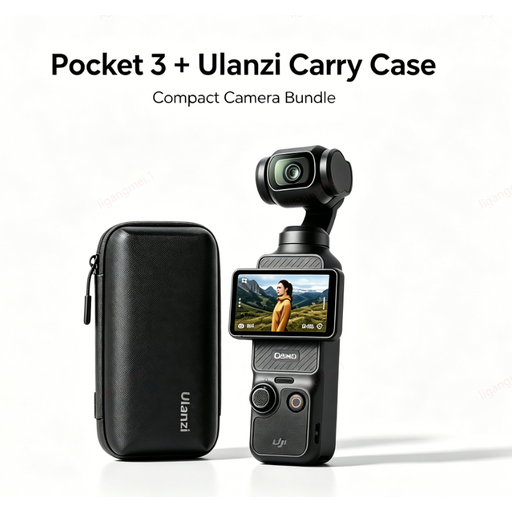
DJI Pocket 3 camera with Ulanzi storage case
A portable camera to consider if keeping your kit compact matters too; for miniatures, check the focusing distance and whether it has the settings you need for consistent compositions.
View at Joybuy
 No image available
KOMERY G7-A 4K, 80 MP UHD, 18× zoom, pink
The product title lists 80 MP UHD and 18× zoom. Also check the focusing distance at the zoom setting you want to use for your miniature, and whether the camera has the settings you need for a consistent series.
View at Joybuy
 No image available
KOMERY G7 5K, 80 MP UHD, 18× zoom, white
The product title lists 5K, 80 MP UHD and 18× zoom. For miniature photos, also compare the focusing distance at the zoom setting you want and the available settings for a repeatable composition.
View at Joybuy
Frequently asked questions
Is the shortest stated focusing distance enough to photograph my whole miniature?
No. This distance tells you where the camera can focus, not what framing will suit your miniature. The limits also vary depending on the zoom setting: Canon lists 5 cm at the wide-angle setting and 40 cm at the telephoto setting for the PowerShot G7 X Mark III; Panasonic lists 3 cm at the wide-angle setting and 200 cm at the telephoto setting for the LUMIX DC-TZ99.
How can you make a series of photos more consistent?
Keep the camera, miniature and lighting in the same positions. Canon Netherlands recommends using a tripod to keep the framing consistent in product photos; choosing a white balance deliberately can help if the colour of the light affects how the wood looks. Check in advance that the holder fits your exact camera.
Should you use focus stacking straight away?
No, not if the details you need are already in focus in a single shot. If your miniature is stationary, you could consider focus stacking when you want to combine several focal planes; OM SYSTEM describes this feature for the TG-7, and Panasonic lists Focus Stacking for the TZ99. A stable setup is still important.
What are your warranty and cancellation rights when buying as a consumer in the Netherlands?
With normal use, a product must meet what you could reasonably expect; ACM ConsuWijzer states that the seller must put things right at no cost if a product develops a fault too soon. For an online purchase, you generally have up to 14 days after delivery to change your mind, subject to legal exceptions. A manufacturer’s warranty does not replace your statutory rights.
What safety requirement applies to a camera sold in the Netherlands?
The Dutch government states that electronic devices sold in the EU must have a CE marking. Check this for the exact model and seller, especially if it has been imported from outside the EU; the language of a webshop does not, by itself, tell you where the seller is based.


