For small repair details, the focusing distance at the zoom setting you want to use is important. For a photo of the whole lamp, the field of view and the distance available between you and the subject matter most. Reflections also call for control over the lighting and camera angle: a macro mode or a high zoom level won’t remove glare by itself. A tripod can help you keep the framing consistent between shots.
Who is this guide for?
Photographing shiny lamp parts
You want to control glare on metal, glass or lacquer, so start by considering your lighting setup and camera angle. Nikon explains that a polarising filter can reduce unwanted reflections, although the results depend on the situation.
Documenting repair details
You want to show small connections and finishes clearly. Compare the focusing distance at the zoom setting you intend to use, and allow for the space you’ll need to position your lighting. Canon Netherlands, Panasonic Netherlands and OM Digital Solutions describe relevant focusing and focus features for specific models.
Taking both overview and detail shots
You want to capture both the whole lamp and the repair. A suitable field of view and stable, repeatable framing are important; Canon Europe recommends using a tripod for consistent product photos.
What should you look for when buying?
Consider reflections, focusing distance and framing separately: a camera feature that helps with one issue won’t automatically solve another.
| What to consider |
What should you check? |
Who is this important for? |
| Controlling reflections |
See what lighting setups are possible and check whether a filter fits the exact model. Nikon notes that a polarising filter can reduce some unwanted reflections. |
If shine hides the finish or repair from view, I want to be able to adjust my lighting and camera angle first. Reflection control is the top priority for around 33% of consumers. |
| Showing small repair details clearly |
Compare the focusing distance at the zoom setting you want to use; it can vary between settings. Also consider how much space you’ll have for lighting. |
When I want to capture a connection or repaired surface clearly, I look at both the working distance and the framing. Around 27% of consumers make repair details their top priority. |
| Capturing materials and lighting |
Check whether the model offers manual exposure settings and whether you can keep your setup stable. Canon Europe recommends using a tripod for consistent framing. |
If I want to assess a lamp’s finish across a series of photos, I need to be able to repeat the exposure and framing. Consistent lighting is the top priority for around 20% of consumers. |
| Framing the whole lamp |
Check the wide-angle setting and test whether you can fit the base, arm and shade into the frame from the available distance. A fixed focal length does not offer optical zoom. |
When I want to photograph the entire lamp on a small workbench, the available space determines the field of view. Around 20% of consumers make full framing their top priority. |
Common pitfalls
-
Assuming macro mode will prevent glare
Focusing at close range and controlling reflections are two different things. Macro mode won’t automatically remove shine from metal, glass or lacquer.
Adjust your lighting setup and camera angle first, then compare focusing distances. Allow extra time to reposition the lights.
-
Comparing only the shortest stated focusing distance
The minimum distance may apply only at the wide-angle setting, and won’t tell you how much room you’ll have for lighting at your preferred framing.
Check the focusing distance at the zoom setting you intend to use, and consider whether you can light the lamp properly from that distance.
-
Choosing a travel zoom because more zoom automatically means better lamp detail
For macro, Panasonic gives the LUMIX DC-TZ99 a focusing distance of 3 cm at wide angle and 200 cm at telephoto. So the telephoto range alone won’t tell you whether you can focus close to a detail.
Choose based on your shooting distance and desired framing; assess extra telephoto reach separately for other subjects.
-
Treating the manufacturer’s warranty and your statutory rights as the same thing
According to ACM ConsuWijzer, your statutory rights don’t automatically end when a stated two-year warranty period expires if a product breaks down too soon.
Keep your proof of purchase and assess any fault in line with the Dutch rules on statutory guarantees.
Brands to compare
Canon
The PowerShot G7 X Mark III is worth comparing for both detail and overview shots; the SX740 HS Lite Edition is designed for a different zoom range.
- Canon Netherlands lists a 24–100 mm equivalent zoom range for the G7 X Mark III and focusing from 5 cm at the wide-angle setting.
- For the G7 X Mark III, Canon lists a minimum focusing distance of 40 cm at the telephoto setting. According to Canon, the SX740 HS Lite Edition has 40× optical zoom and a macro mode that focuses from 1 cm at the wide-angle end; extra zoom alone won’t solve reflections.
Panasonic
The LUMIX DC-TZ99 combines a wide-angle setting with travel zoom and a Focus Stacking feature specified by Panasonic.
- Panasonic Netherlands lists macro focusing from 3 cm at wide angle and Focus Stacking.
- Panasonic lists a focusing distance of 200 cm at the telephoto setting in macro mode. Check which zoom setting will work for your detail and available workspace.
Sony
The RX100 VII is a compact zoom camera for photographing your lamp as well as other subjects.
- Sony Netherlands specifies a 1.0-type sensor, a 24–200 mm equivalent zoom range and focusing from approximately 8 cm at the wide-angle setting.
- These specifications don’t mean reflections will disappear without changes to the lighting.
OM SYSTEM
The Tough TG-7 is worth considering when very small repair details and multiple focus planes are important.
- The official TG-7 manual describes Focus Stacking as combining shots taken with different focus positions.
- The feature won’t remove reflections; shiny parts still need a suitable lighting setup.
Fujifilm
The X100VI suits photographers who deliberately work with a single fixed field of view and can adjust their camera setup.
- Fujifilm specifies a fixed lens with a 35 mm equivalent focal length and a focusing range from approximately 10 cm.
- The fixed focal length offers no optical zoom for switching between an overview and a detail shot.
PENTAX
The WG-90 is an alternative to consider if you need to take very close-up detail shots.
- Ricoh Imaging Europe lists a digital microscope function from 1 cm and built-in macro lights.
- At very short distances, it can be harder to position the light around reflective parts. The European product page is aimed at business customers.
Compact cameras at Joybuy
This selection features compact digital cameras for photography. For photos of your repaired lamp, check the focusing distance specifically and make sure there’s enough room to position the lighting properly.
 Image unavailable
KOMERY G7-A 4K, 80MP, 18× zoom, pink
The title describes a camera for photography; for repair details, check the focusing distance and space for lighting separately.
The product information lists 80MP and 18× zoom.
View at Joybuy
 Image unavailable
KOMERY G7 5K, 80MP, white
The product description mentions zoom for framing; for small lamp details, also check the focusing distance at the setting you want to use.
The product description lists 18× optical zoom and 80MP.
View at Joybuy
 Image unavailable
Songdian 4K pocket camera, 44MP, pink
The product description mentions autofocus; also check whether the camera can focus at the distance you need for a small repair detail.
The title lists 16× digital zoom.
View at Joybuy
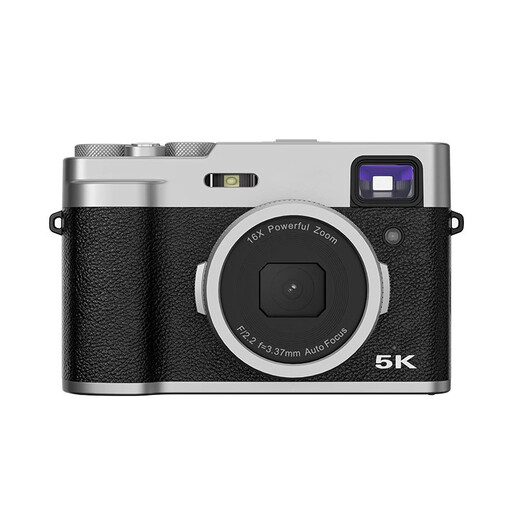 Image unavailable
Songdian retro camera, 48MP, black
The product information describes the LCD screen and optical viewfinder as aids for framing; check the focusing distance for close-ups.
The title and product information list autofocus, a 2.8-inch LCD screen and an optical viewfinder.
View at Joybuy
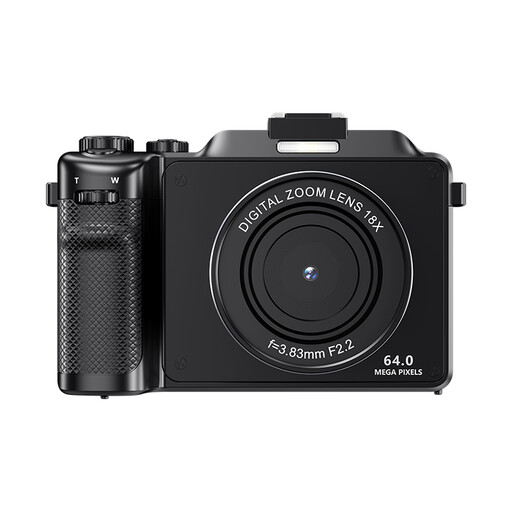 Image unavailable
KOMERY X9 4K, 64MP, black
The product information mentions autofocus; check whether the focusing distance suits the repair details you want to photograph.
The camera has 18× digital zoom. The product description warns that digital zoom reduces image quality.
View at Joybuy
Frequently asked questions
Does a polarising filter always help with reflections on a lamp?
No. Nikon explains that a polarising filter can reduce unwanted reflections and sometimes remove them, but this isn’t guaranteed for every surface or lighting angle. Also check whether the filter fits your chosen camera.
How can you make a series of photos of the same repair comparable?
Keep the lamp and camera setup steady, using a tripod if needed. Canon Europe recommends a tripod to keep the framing consistent between product photos.
Is the shortest macro focusing distance enough to choose a camera?
No. The focusing distance can vary between zoom settings: Canon Netherlands lists 5 cm at wide angle and 40 cm at telephoto for the PowerShot G7 X Mark III, while Panasonic Netherlands gives 3 cm at wide angle and 200 cm at telephoto in macro mode for the LUMIX DC-TZ99. Also consider the space available for lighting and your preferred framing.
Do you have a cooling-off period for a camera bought online in the Netherlands?
For a standard online consumer purchase, ACM ConsuWijzer says you’ll generally have a statutory cooling-off period of up to 14 days after delivery. Check the terms of your specific purchase; some statutory exceptions also apply.
Does the statutory guarantee on a camera in the Netherlands automatically end after two years?
No. ACM ConsuWijzer explains that your statutory guarantee doesn’t automatically end after two years; what you can reasonably expect from the product also matters. A manufacturer’s or seller’s warranty doesn’t replace your statutory rights.


