
Capturing repair details
You want to photograph small parts and the repair result clearly. So check the focusing distance at the zoom setting you actually plan to use.


Start by considering the distance between the camera and the lamp. Check whether the whole lamp fits in the frame and whether you can capture repair details sharply from that position. Then look for adjustable focus and exposure. Extra zoom is most useful if you need different crops from the same position. A tripod can help you keep the framing consistent between shots, but it doesn’t replace these checks.
You want to photograph small parts and the repair result clearly. So check the focusing distance at the zoom setting you actually plan to use.
You want to frame the whole lamp in the same way each time. A stable set-up and suitable framing are important considerations.
You also want to take a photo with the lamp switched on, and be able to judge for yourself whether the lamp and the rest of the image are properly exposed.
Best for: when the lamp and the details you want to capture fit within the zoom range, and you want to be able to adjust the focus yourself.
Bear in mind: the minimum focusing distance doesn’t apply at every zoom setting, and the zoom range is smaller than on travel zoom cameras.
Best for: when you want to choose different crops from a single position and the wide-angle setting is suitable for your close-ups.
Bear in mind: a short macro focusing distance at the wide-angle end doesn’t mean the camera can also focus close up at telephoto zoom.
Best for: when you want both a wide shot and a tighter crop from the same position, and the focusing distances suit how far away you’ll be working.
Bear in mind: the focusing distance may be greater at telephoto zoom, so check it for the crop you want.
Best for: when one angle of view is enough and you can position the camera at a suitable distance from the lamp.
Bear in mind: to get a different crop, you’ll need to move the camera or crop the photo afterwards.
| What to consider | What should you check? | Who is this important for? |
|---|---|---|
| Focusing on details | Check the focusing distance for the zoom setting you want and the planned distance from the lamp. | If I want to capture small repair parts from my usual position, I check whether the camera can focus on them in the crop I want. Around 36% of consumers say sharp detail is their top priority. |
| Consistent framing | Check whether the whole lamp fits in the frame from your fixed position and whether the camera can be mounted on your tripod. | I want to take before-and-after photos with the lamp in the same position in the frame each time. Around 29% of consumers prioritise consistent framing. |
| Adjusting exposure | Check whether the camera offers exposure settings you can adjust yourself, and assess a test shot in your set-up. | If I photograph the lamp while it’s switched on, I want to judge for myself whether the light and surroundings come out well. Around 21% of consumers say control over exposure is their top priority. |
| Choosing features to suit your needs | First compare the crops and controls you need; then see which accessories are required for your camera and set-up. | I’m looking for a camera to photograph the lamp, not extra zoom or features for their own sake. Around 14% of consumers say straightforward versatility is their top priority. |
A tripod can help you keep the composition consistent between product photos; Canon recommends this in its product photography tips. Also check whether the camera you choose can capture both the whole lamp and the details you want from your shooting position.
The stated focusing distances can vary considerably between wide-angle and telephoto. A camera that can focus close up won’t necessarily give you the detail crop you want at a different zoom setting.
Note the distance between the camera and the lamp, then compare it with the focusing specifications for the zoom setting you plan to use.
Extra telephoto reach won’t automatically help if, from your fixed position, you mainly want to photograph the whole lamp and nearby parts.
First check the angle of view, focusing distance and adjustment options you need. Only then consider extra zoom as a benefit.
ACM ConsuWijzer explains that statutory warranty in the Netherlands has no fixed time limit: what you can reasonably expect from a product is taken into account. The seller is responsible for ensuring the product is fit for purpose.
Keep your proof of purchase and discuss any fault with the seller. Don’t automatically assume that the stated manufacturer’s warranty period marks the end of your statutory rights.
Canon offers models with both shorter zoom ranges and greater reach; your choice will also depend on the crop and focusing distance you need.
According to Sony, the DSC-RX100M7 combines a type 1.0 sensor with a 24–200 mm equivalent zoom, giving you different crops from one position.
According to Panasonic, the LUMIX DC-TZ99 combines travel zoom, wide-angle macro and focus stacking for anyone who wants to try taking both wide shots and close-ups.
According to Ricoh, the GR IIIx has a fixed focal length and manual exposure, making it a suitable option if you can choose an angle of view that works for your set-up.
The Joybuy selection below includes digital and vlog cameras. Compare their listed features with your needs for consistent framing, close-ups and controls you can use from a single shooting position.
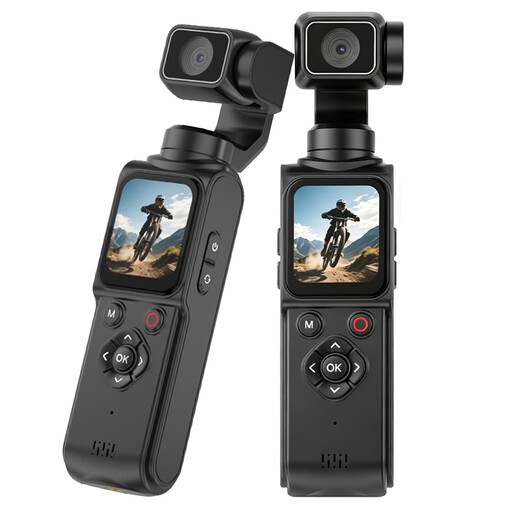 No image available
The product title mentions a tripod; check whether the included set-up is suitable for the consistent framing you want.
The title lists 64 MP, Wi-Fi, a 330° rotating lens, a 1.72-inch touchscreen and a tripod.
The stated 18× zoom is digital.
 No image available
The product title describes this digital camera as portable; check whether its controls and focusing options suit your fixed shooting position.
The title lists 80 MP, 4K video and 18× zoom.
 No image available
Check whether the controls and focusing options suit photographing the lamp from a fixed position.
The title lists 80 MP, 5K video and 18× zoom.
Not always. Compare your actual working distance and the amount of the frame you want the subject to fill with the specification for the zoom setting you’ll use. Canon lists 5 cm at wide angle and 40 cm at telephoto for the PowerShot G7 X Mark III. For the Panasonic LUMIX DC-TZ99, Panasonic lists 3 cm at wide angle and 200 cm at telephoto.
Position the camera securely, set your frame and leave the set-up in place between shots. Canon recommends using a tripod for a consistent composition and mentions a remote control as a way to avoid camera shake. Check which controls your camera model supports.
Check what’s included in the box and consider how you plan to shoot before deciding whether you need any accessories. The Consumentenbond highlights an extra battery and SD card as points to consider when buying, but they aren’t essential for every model or every user.
If a product is faulty, you can hold the seller responsible under statutory warranty, according to ACM ConsuWijzer. The applicable period depends on what you can reasonably expect from the product. Online consumer purchases generally come with a statutory 14-day cooling-off period, starting from the day after delivery. Check which exceptions and return conditions apply to your purchase.