
Photographer of stitches and details
Wants to capture small stitches and the texture of the yarn filling the frame. So check the focusing distance at your chosen zoom setting, as well as how much room you have for lighting.


Start with the shots you need: both the whole scarf and a sharp close-up of the knitting, taken from the distance available on your table. A short focusing distance can help with small stitches, but also check which zoom setting it applies to and how much room is left for lighting. The OM SYSTEM Tough TG-7, Canon PowerShot G7 X Mark III and Sony DSC-RX100M7 are technical points of comparison, not confirmed Joybuy offers.
Wants to capture small stitches and the texture of the yarn filling the frame. So check the focusing distance at your chosen zoom setting, as well as how much room you have for lighting.
Takes both overview and close-up photos and wants consistent framing and a consistent background from a fixed position.
Wants different yarn colours to look true to life and consistent under the lighting they use.
When photographing knitted scarves, close focusing, framing the whole scarf, colour reproduction and a repeatable set-up each play a part.
| What to consider | What should you check? | Who is this important for? |
|---|---|---|
| Capturing fine stitches sharply | Check the minimum focusing distance at your preferred zoom setting, and try framing the shot from the working distance available to you. | If I want to fill the frame with small stitches, the camera needs to focus at my working distance. Around 31% of consumers put detail first. |
| Framing the whole scarf | Measure the space between the camera and the scarf, and check whether you can take both an overview and the close-up you want. | If I want to show the shape and full length of the scarf, I need to be able to position the camera properly in my tabletop set-up. Around 25% of consumers prioritise showing the whole item. |
| Reproducing yarn colours | Check whether you can adjust the white balance, and assess test shots under the lighting you use. | If I’m comparing different yarn colours, I want to see how the images look under my own lighting. Around 25% of consumers put colour reproduction first. |
| Taking repeatable photos | Check whether you can read the screen from your tabletop set-up and whether the camera can stand steadily there. | If I’m photographing several scarves, I want to be able to repeat the framing and background easily. Around 19% of consumers value a simple, consistent approach most. |
A short focusing distance doesn’t always apply at every zoom setting. Canon Europe lists 5 cm at wide angle and 40 cm at telephoto for the PowerShot G7 X Mark III; Sony Netherlands lists approximately 8 cm at wide angle and 100 cm at telephoto for the DSC-RX100M7. These are stated distances, not results measured against each other for textile photography.
A fixed camera position and controlled lighting can help you take repeatable product photos. Canon Netherlands describes a tripod as a way to achieve consistent composition. Adjustable white balance can be useful when you’re shooting under the same light source; Canon Netherlands discusses white balance and RAW editing as ways to assess and adjust colour during post-processing.
The stated minimum distance for the Canon PowerShot G7 X Mark III and Sony DSC-RX100M7 differs between wide angle and telephoto. So the shortest distance at wide angle doesn’t automatically tell you how close you can shoot when zoomed in.
Compare the distance and framing at the exact zoom setting you’ll use to capture the stitches.
Lighting and a stable position both help you take repeatable product photos. Canon Netherlands describes a tripod as a way to achieve consistent composition.
You may need to arrange items for your set-up as well as the camera, such as a separate light source, background or support.
First, test the light and support you already have. Then work out what else you need for your tabletop set-up.
A model page for a version sold elsewhere doesn’t automatically confirm which version or accessories are included with a specific offer in the Netherlands.
When comparing an offer, check the full model code and the items included.
The Tough TG-7 is a point of comparison if you want to photograph small textile details up close.
The PowerShot G7 X Mark III is a point of comparison if you want to try taking both overview shots and close-ups with a single built-in zoom lens.
The DSC-RX100M7 is a point of comparison if you also want to use the same compact camera for subjects at greater distances.
The DMC-LX15 is another point of comparison for close-up photography and focus stacking features.
This selection includes compact cameras and vlog cameras. Compare each model’s focusing and framing with the distance and lighting in your scarf set-up.
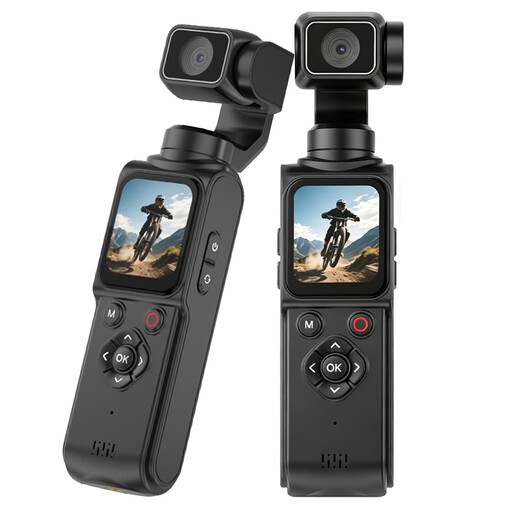 No image available
Before choosing this model for scarf photos, compare its focusing and framing with your working distance.
The product name lists 4K and 64 MP.
 No image available
Check that the focusing and framing suit the distance at which you’ll photograph the scarf.
The product name lists 4K, 44 MP, 16× zoom and the colour pink.
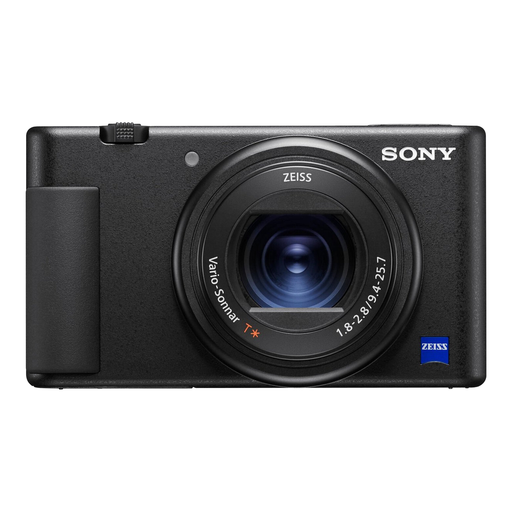 No image available
Check that the focusing and framing work for both the overall shot and the close-up you want of your scarf.
The product name describes the Sony ZV-1 as a compact camera and vlog camera.
No. Consider the distance alongside the zoom setting and the framing you want. Canon Europe lists 5 cm at wide angle and 40 cm at telephoto for the PowerShot G7 X Mark III; Sony Netherlands lists approximately 8 cm and 100 cm respectively for the DSC-RX100M7. Try the framing with your own knitting.
Use a fixed camera position and background, and check the exposure in the same place each time. Canon Netherlands describes a tripod as a way to achieve consistent product framing. If the light changes, you may need to check the white balance again.
Not necessarily. Shopify Netherlands suggests a suitable smartphone as a possible starting point, and also highlights lighting, stability and post-processing. Choose a separate camera if its framing, focusing options or controls are better suited to your set-up.
No. According to the Dutch government, there’s no fixed legal guarantee period in the Netherlands. You’re entitled to a product that remains fit for purpose for as long as you could reasonably expect. If there’s a fault, the seller is your point of contact, and a manufacturer’s guarantee doesn’t replace this right. This applies to purchases made by consumers.