What should you look for when buying?
Start with the largest scarf, the available distance between the camera and your subject, and the fixed position of your photo table. This will help you decide which field of view and additional features you really need.
| What to consider |
What to look for when buying |
Who is this important for? |
| Consistent framing |
Measure your largest scarf and the available distance between it and the camera. Compare these with the field of view or zoom range of the exact model. Check how you can position the camera securely. |
I want roughly the same framing for every scarf. Around 29% of consumers prioritise consistent framing. |
| Consistent colour |
Check whether you can adjust the white balance, and take a test shot under the lighting you use for your photo table. |
I want yarn colours to remain recognisable under my usual lighting. Around 29% of consumers prioritise colour reproduction. |
| Stitches and texture |
Compare the focusing distance at your preferred zoom setting. If the camera has a macro mode, check the field of view and any conditions that apply. |
I want to show small stitches clearly, not just photograph the whole scarf. Around 24% of consumers prioritise clearly visible knitting details. |
| A simple setup |
Check which file type suits your workflow and what equipment you need for your complete photo table setup. |
I want a simple setup and features I’ll actually use. Around 18% of consumers prioritise simplicity and the cost of the complete setup. |
Cameras at Joybuy
These cameras at Joybuy are a starting point if you want to adjust the framing for scarf photos or shoot from a fixed position. Check whether the features listed for each model suit your camera-to-subject distance and workflow.
 No image available
Sony ZV-1
The zoom and tilting screen may suit a fixed setup where you want to take shots with different framing.
Sony lists 2,7× optical zoom, equivalent to 24–70 mm in 35 mm equivalent. The stated AF distance is around 5 cm at wide angle and around 30 cm at telephoto.
View at Joybuy
 No image available
KOMERY G7 5K digital camera
This model may be worth considering if you want to adjust the framing from a fixed camera position.
The product title lists 18× zoom. Check that the field of view covers the whole scarf from your camera position.
View at Joybuy
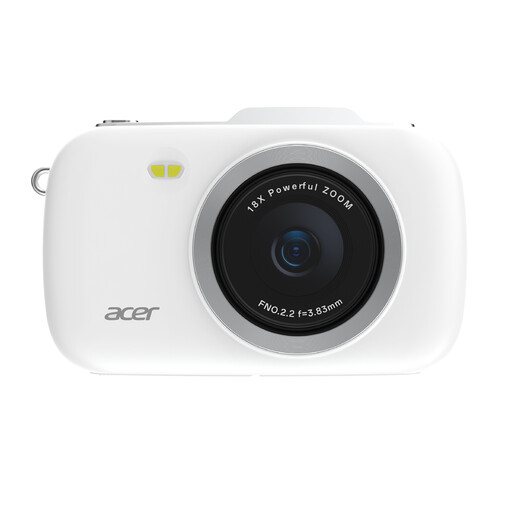 No image available
KOMERY G7-A 4K digital camera
This model may be worth considering if you want to adjust the framing from a fixed camera position.
The product title lists 18× zoom. Check that the field of view covers the whole scarf from your camera position.
View at Joybuy
Frequently asked questions
How can you keep the framing consistent when photographing several scarves?
Mark the positions of the scarf and camera support, then check the framing with your largest scarf before settling on the setup. A tripod helps keep the frame steady while you adjust the scarf or lighting, but make sure the camera will fit in your space. MPB recommends this approach for product photography.
Why does the same yarn colour sometimes look different in photos?
The colour temperature of the lighting affects how colours appear in a photo. Adobe recommends matching the white balance to the light source. Keep the lighting as consistent as possible and assess the results with a test shot of your yarn.
Do you need a camera with a macro mode for scarf photos?
Not necessarily for full-length shots. Macro mode is mainly useful if you want to show individual stitches. Check the focusing distance at the zoom setting you plan to use: on the KODAK PIXPRO FZ55, the stated 5 cm macro distance applies at the wide-angle setting, while Sony lists different distances for wide angle and telephoto on the ZV-1.
What returns and warranty rights apply to an online purchase in the Netherlands?
According to the Dutch government, when you buy from a business at a distance, you generally have a 14-day cooling-off period, with some exceptions. If a product doesn’t meet the terms of the agreement, statutory conformity rights also apply. Business.gov.nl, the Dutch government’s business portal, states that the statutory guarantee takes precedence over any additional commercial guarantee. Check who the seller is and which terms apply to your purchase.
Can you use someone else’s photos in your product listings?
According to the Dutch government, you need the creator’s permission to use someone else’s copyright-protected photos publicly. A copy for personal use can’t simply be distributed or made public; taking your own scarf photos doesn’t automatically rule out other possible rights relating to material shown in the image.


