Start with the size of the smallest detail you want to photograph, then consider the working distance you need to position light around the jewellery. A short minimum focusing distance can help with close-ups, but it doesn’t guarantee that the entire piece will be in focus. Also check the focusing methods, lighting controls and output resolution available in the shooting mode you plan to use.
Who is this choice for?
Jewellery maker working with fine details
If you want to capture engravings, textures or settings clearly, the best approach is to check how your own jewellery focuses within a close-up frame. OM SYSTEM Netherlands and RICOH IMAGING describe close-up features for their respective camera models.
Seller with a small photography table
For consistent overview and detail shots, the camera is only part of the equation: you’ll also need space for lighting and a stable camera position. Panasonic Netherlands and Shopify Netherlands outline points to consider for focus stacking and product photography.
Maker looking to control shine and colour
When photographing reflective metal or coloured stones, it’s important to see how the lighting and setup work with your own materials. Your Product Photographer and Shopify Netherlands cover lighting control for jewellery photography.
What should you look for?
Start with the smallest detail you want to photograph. Then decide whether you also need extra depth of field or more control over the lighting.
| What to consider |
What to look for |
Who is this important for? |
| Capturing small details |
Assess a test shot of your smallest engraving or setting at the zoom setting you plan to use. |
If I want to fill the frame with a fine engraving or setting, I want to assess the framing at my actual shooting distance. Around 36% of consumers prioritise capturing small surface details. |
| Keeping the whole piece of jewellery in focus |
Check whether focus stacking is available, how it works and what output resolution the selected mode offers. |
If I want a stationary piece of jewellery to be sharp from front to back, I also consider the process and the need for a stable setup. Around 29% of consumers prioritise this depth of field. |
| Reflections and colour |
Take test shots with your own materials and assess the intended lighting and available settings. |
With polished metal or stones where colour accuracy matters, I want to see how the lighting renders the finish and colour. Around 21% of consumers prioritise control over light and colour. |
| A repeatable setup |
Measure the available table space and test both an overview and a detail shot, leaving room for lighting. |
If I regularly photograph new pieces, I want a setup I can use again without having to move everything each time. Around 14% of consumers prioritise this practical repeatability. |
Common pitfalls
-
Assuming a 1 cm focusing distance means the whole piece will be in focus
A short focusing distance doesn’t tell you how much depth will be sharp in a single photo. When you shoot very close up, depth of field may be limited.
Test separately whether the smallest detail appears clearly and whether the whole piece is sharp enough.
Combining multiple shots can take extra time to photograph and edit.
-
Expecting the wide-angle macro distance to apply at telephoto too
The minimum focusing distance can vary depending on the zoom setting. Panasonic lists macro focusing from 3 cm at wide-angle and 200 cm at telephoto for the DC-TZ99. Sony lists approximately 8 cm at wide-angle and approximately 100 cm at telephoto for the RX100 VII, measured from the front of the lens.
Assess the distance at the zoom setting you’ll actually use to frame the jewellery.
-
Assuming a ring light or camera kit provides a complete lighting setup
A ring light won’t automatically give you the look you want for shiny metal or stones. The contents of a camera sold on its own may also differ from those of a kit.
Look at test shots of your own materials and check which accessories are included with the specific version.
-
Assuming the consumer cooling-off period applies to a business purchase
According to Ondernemersplein and the Dutch Government, the statutory cooling-off period generally applies to online purchases made by consumers, but not to business purchases made by businesses.
Before placing a business order, check the seller’s applicable terms and conditions.
For a business purchase, you can’t assume you’ll be able to use the statutory consumer cooling-off period to return an unsuitable camera.
Brands to consider
OM SYSTEM
According to OM SYSTEM, the Tough TG-7 is designed for close-up shots using Microscope mode.
- OM SYSTEM lists focusing from 1 cm in Microscope mode, a 12-megapixel sensor and RAW shooting.
- The LG-1 light guide is listed with the micro adventure kit. Check what’s included in the offer, as this accessory isn’t automatically supplied with every TG-7.
Panasonic
According to Panasonic, the LUMIX DC-TZ99 combines macro focusing with built-in focus stacking.
- Panasonic lists macro focusing from 3 cm at wide-angle, Focus Stacking and a 20.3-megapixel sensor.
- The stated minimum focusing distance at telephoto is 200 cm. Panasonic separately lists an 8-megapixel-equivalent output for 4K PHOTO; don’t confuse this with the sensor resolution.
PENTAX
According to Ricoh Imaging, the PENTAX WG-8 combines a close-up mode with a built-in ring light.
- Ricoh Imaging lists 1cm macro at the middle zoom position and a ring light.
- A ring light won’t automatically show reflective metal or stones the way you want. Assess the result with your own materials and setup.
Sony
The RX100 VII is a compact camera with a fixed zoom lens, suitable for jewellery and other subjects.
- Sony lists a focusing distance of approximately 8 cm at wide-angle and approximately 100 cm at telephoto, measured from the front of the lens.
- Check that the jewellery appears large enough in the frame at the zoom setting that suits your working distance.
Canon
According to Canon, the PowerShot G7 X Mark III has a 1.0-type sensor and a built-in zoom lens.
- Canon lists 20.1 megapixels and 4.2× zoom.
- These specifications alone don’t tell you how large a small engraving will appear in your close-up frame. Assess how much of the frame your intended subject fills.
Compact cameras at Joybuy
These compact cameras are options for photography. Before choosing, check that the focusing distance and framing are suitable for fine jewellery details.
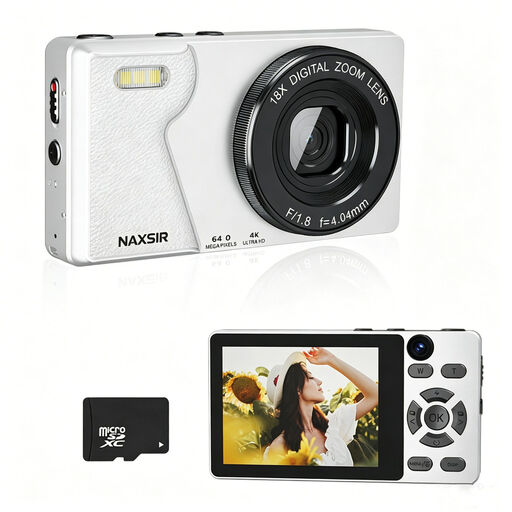 Image unavailable
NAXSIR Digital Camera 4K Ultra HD
Check that the camera can focus at the distance you need for a close-up of your jewellery.
The product name lists 64 MP photo resolution, 18× digital zoom, autofocus and an included 32 GB memory card.
View at Joybuy
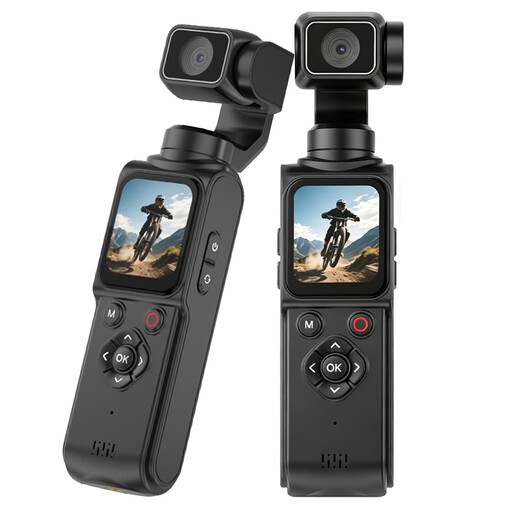 Image unavailable
KINSI Mini Vlog Camera 4K
Check whether the camera can frame your jewellery at the desired distance and make it appear large enough.
The product name lists 64 MP, a 330° rotating lens, a 1.72-inch touchscreen and a tripod.
View at Joybuy
 Image unavailable
KOMERY G7 5K digital camera, white
Check with a test shot that the camera shows the fine finish of your jewellery large enough in the frame.
The product name lists 80 MP, 18× zoom and the colour white.
View at Joybuy
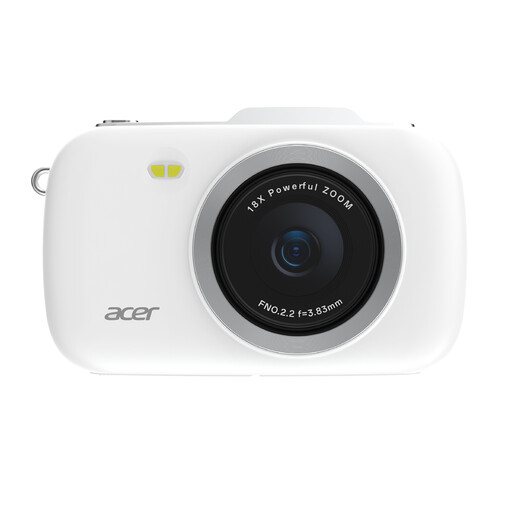 Image unavailable
KOMERY G7-A 4K digital camera, white
Assess the close-up framing at the distance you plan to photograph your jewellery from.
The product name lists 80 MP, 18× zoom and the colour white.
View at Joybuy
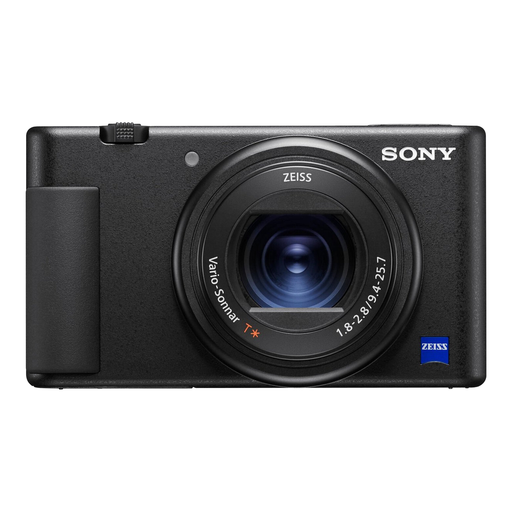 Image unavailable
Sony ZV-1 compact camera
Check that the camera captures the smallest detail large enough in the frame at the zoom setting you plan to use.
View at Joybuy
Frequently asked questions
Is the minimum focusing distance enough to keep my whole piece of jewellery in focus?
No. That distance doesn’t tell you how much depth will be sharp in a single photo. Canon Netherlands describes focus stacking as one possible approach when a single macro shot doesn’t provide enough depth of field. Check whether the method suits your stationary subject and workflow.
Can focus stacking help keep a stationary piece of jewellery sharp from front to back?
It can be a suitable approach if the camera supports the feature and the jewellery stays still during the shots. Panasonic lists Focus Stacking for the DC-TZ99 and recommends using a tripod for this technique. Also check the output resolution of the selected mode.
How can I assess lighting for shiny jewellery?
Take test shots with your own materials and see how the chosen lighting setup renders reflections and colour. A built-in ring light won’t automatically suit every surface, so compare the results with the setup you plan to use.
What do I need for a repeatable photography setup?
Plan a stable camera position and leave enough space for the background and lighting. Panasonic recommends a tripod for its Post Focus and Focus Stacking techniques. Also check which accessories are included with the specific camera version.
Does the statutory 14-day cooling-off period also apply to a business purchase?
No. According to Ondernemersplein and the Dutch Government, the statutory cooling-off period for online purchases doesn’t apply to a business purchase made by a business. Check the seller’s applicable terms before ordering.


