
Maker of finely detailed pieces
You want to show engravings, settings or small joins, and are looking for a close-up mode that works well on a compact camera with a fixed lens.


Choose a compact camera based on the smallest details you want to photograph and the focusing distance at the zoom setting you actually use. With shiny metal and gemstones, controllable lighting, colour and a stable setup are just as important. A short minimum focusing distance alone won’t guarantee a great portfolio photo.
You want to show engravings, settings or small joins, and are looking for a close-up mode that works well on a compact camera with a fixed lens.
You photograph metal or gemstones and want to assess and adjust reflections and colour reproduction with a suitable lighting setup.
You’re taking more overview and detail shots and want to keep framing and backgrounds consistent from one photo to the next.
Start with the level of detail you want, then check whether the camera leaves enough room for your lighting setup at the distance you need. Compare focusing features and options for repeatable shots in the context of how you photograph jewellery.
| What to consider | What should you look for? | Who will find this most important? |
|---|---|---|
| Small details | Compare the minimum focusing distance at the zoom setting you want to use. If possible, take a test shot of a detail of a similar size. | If I’m photographing engravings or settings, I want small details to be clear without the lighting getting in the way. Around 33% of consumers consider this their top buying priority. |
| Reflections and colour | Assess test shots of your own materials and check whether you can adjust the lighting and white balance. Shopify discusses reflections in jewellery photography, while Canon explains that artificial light can cause a colour cast. | When photographing shiny metal or gemstones, I want to assess distracting reflections and inaccurate colours. Around 27% of consumers give this aspect the highest priority. |
| Sharpness across textured surfaces | Check whether the camera takes a series of shots with different focus points or combines the images too. Panasonic describes Focus Stacking for the LUMIX DC-TZ99. | If a piece of jewellery has texture, I want to assess how sharpness is captured at different depths. Around 20% of consumers put sharpness first. |
| Repeatable shots | Check whether you can position the camera securely and reproduce overview and detail shots in your photography space. Canon recommends a stable setup to help keep framing and backgrounds consistent. | When I’m creating a series for my portfolio, I want to be able to photograph overview and detail shots in a consistent way. Around 13% of consumers make a repeatable process their top priority. |
| Room for your setup | Check that the camera, lighting and background will fit in your available workspace. Before you start, try setting up the piece of jewellery you want to photograph. | If I want to keep my photo setup simple and uncluttered, I consider the space and extra equipment my process requires. Around 7% of consumers put practical setup considerations first. |
The minimum focusing distance can change when you zoom in. For example, Canon lists 5 cm at the wide-angle end and 40 cm at the telephoto end for the PowerShot G7 X Mark III; Sony lists around 8 cm at the wide-angle end and 100 cm at the telephoto end for the RX100 VII.
Compare the distance and framing you want at the same zoom setting you plan to use for your detail shots.
Shiny jewellery can reflect the camera, lights and surroundings. A built-in lighting feature doesn’t show how the light will look on your metal or gemstones.
Take test shots with your own materials and adjust the lighting, background and camera position first.
A suitable lighting setup may require extra preparation time or additional equipment.
Canon lists focus bracketing for the PowerShot G7 X Mark III, while Panasonic describes Focus Stacking for the LUMIX DC-TZ99. These features aren’t necessarily the same.
Check the process and output of the exact model before planning a series of shots of textured jewellery.
Selecting or combining shots may take extra processing time.
According to ACM ConsuWijzer, consumer protection does not automatically apply when you buy mainly or exclusively for business purposes.
Before paying, check in what capacity you’re buying, who the seller is and which terms apply to the purchase.
The TG-7 is worth considering if photographing small details is your main priority in a compact camera.
The PowerShot G7 X Mark III is designed to switch between overview and detail shots, with manual focus and focus bracketing.
The LUMIX DC-TZ99 may suit a workflow where you want to work with several focus planes.
The WG-90 is another compact camera to consider for digital microscope photography.
The RX100 VII is designed for anyone who also wants to use the same compact camera for subjects at a greater distance.
Consider these cameras as possible options, but check whether each model’s focusing and framing work for the small details in your jewellery.
 No image available
Check whether the focusing distance and framing work for the small details you want to photograph on your jewellery.
Listed features: 4K Ultra HD, 64 MP photo resolution, 18x digital zoom, autofocus and a 32 GB memory card.
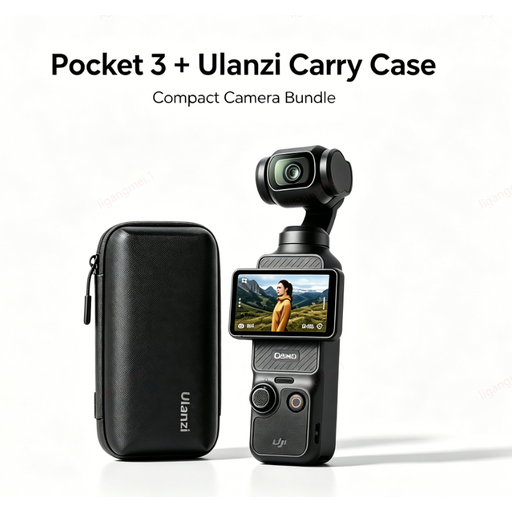 No image available
First, assess whether this camera is suitable for the close-up framing and fixed photography setup you want to use for your jewellery.
The product listing describes a DJI Pocket 3 camera with a Ulanzi Custom Storage Carry Case.
No. Also check the zoom setting, the framing you want and how much room will be left for lighting. For example, Canon lists different minimum focusing distances at the wide-angle and telephoto ends for the PowerShot G7 X Mark III.
Use repeatable positions for the camera and background, and assess the lighting and white balance under similar shooting conditions. A stable setup can help you maintain consistent framing, but it doesn’t guarantee identical results on its own.
No, this cooling-off period doesn’t automatically apply to every purchase. According to the Dutch government, consumers generally have 14 days to change their mind when an applicable purchase is made online. This consumer protection doesn’t automatically apply if you buy mainly or exclusively for business purposes. Check in what capacity you’re buying and the terms of the purchase.
According to ACM ConsuWijzer, the seller is responsible for the statutory guarantee and must offer an appropriate free remedy if a product is faulty. For a mainly business purchase, check separately which terms apply.
Not simply because you own the piece of jewellery shown in the photo. According to the Dutch government, you may only use someone else’s copyright-protected photos publicly with the creator’s permission.