What should you look for when choosing?
For consumers photographing handmade jewellery under artificial light, the choice mainly depends on the detail you want to capture, colour reproduction and how you work.
| What to consider |
What to look for |
Who should pay particular attention? |
| Small details |
Compare the focusing distance at each zoom setting with the crop you want. Canon Netherlands lists a distance of 1 cm from the front of the lens for the SX740 HS Lite Edition, in Macro mode at wide angle only. |
If I want stones, clasps or engravings to fill the frame, focusing at close range is my top priority. Around 36% of consumers prioritise filling the frame with small details. |
| Colour and reflections |
Check whether you can adjust the white balance and whether the exact model supports RAW capture if you want to edit your photos afterwards. Move or soften the light, and assess reflections separately. |
When photographing shiny metal under my lamps, I want to be able to assess both the colour and the reflections. Around 29% of consumers give controlled colour and reflections top priority. |
| Sharpness across the whole piece of jewellery |
Check whether manual focus or focus bracketing is available and whether a tripod will work with your setup. Canon lists these features for the G7 X Mark III. |
If a piece of jewellery has depth, I don’t want to get only the centre in focus. Around 21% of consumers prioritise sharpness from front to back. |
| A repeatable workflow |
Consider whether the controls, stable positioning and file options suit your regular setup. RAW files need processing, while JPEGs may be ready to use straight away. |
When I photograph several products in a row, I want to be able to repeat my settings and framing easily. Around 14% of consumers give a quick, repeatable workflow top priority. |
Compact cameras at Joybuy
These Joybuy products are described in their titles as cameras for photography, video or vlogging. For jewellery photos, check for yourself whether the close-up capability, focusing and colour reproduction suit your needs under your own artificial lighting.
 No image available
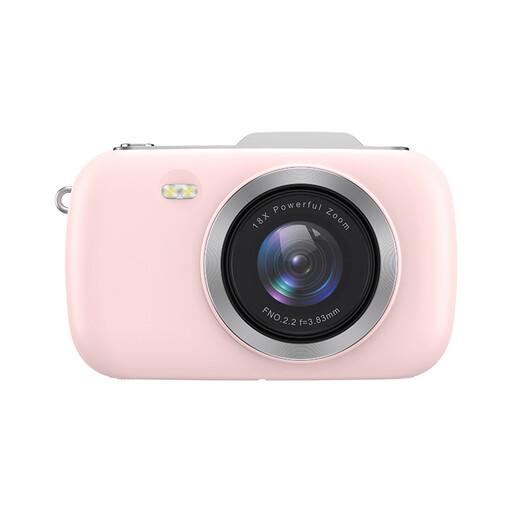
KOMERY G7-A 4K, pink
Before choosing this model for jewellery photography, check that its focusing distance and the crop you want are suitable for small pieces.
The product title lists 80MP UHD and 18X zoom; the camera is also described as being for photography and vlogging.
View at Joybuy
 No image available
Songdian 4K 44MP pocket camera, pink
Compare the close-up capability and focusing distance with the jewellery you want to photograph. The product title alone doesn’t tell you how the camera performs under your lamps.
The product title lists 16X digital zoom and photography and video capabilities.
View at Joybuy
 No image available
Sony ZV-1 compact camera
Check whether the focusing distance and crop are suitable for the size of your jewellery and your regular lighting setup.
The product information lists 2.7× optical zoom and photo capture in JPEG and RAW.
View at Joybuy
Frequently asked questions
Is the minimum focusing distance enough to tell whether a ring will fill the frame?
No. Check which zoom setting the distance applies to and where it is measured from, then try the crop you want. For example, Canon lists 1 cm from the front of the lens for the SX740 HS Lite Edition, in Macro mode at wide angle only.
How should you get started using your existing lamps?
Start with a small object against a plain background and keep the camera steady. Move the lamp to assess colour and reflections separately. Adjust the white balance for your light source, and check whether RAW is available if you want to make corrections afterwards.
Is focus bracketing the same as taking one fully sharp photo?
No. Canon lists focus bracketing as a feature of the G7 X Mark III, but producing a final photo with greater depth of field may require several shots and further processing. First, check whether a single shot gives you enough sharpness for your piece of jewellery.
What cooling-off period and warranty apply when you buy online in the Netherlands?
According to the Dutch government, consumers buying remotely from a business often have 14 days to change their mind. The Dutch government also states that there is no fixed statutory warranty period in the Netherlands; statutory rights cover products that meet reasonable expectations. If you’re buying as a business, don’t assume the same consumer rights apply.


