Who is this for?

Photographing a skyline and its reflection

You want enough room in the frame for buildings, water and their reflection, all from one vantage point. Pay attention to the angle of view and camera height; maximum zoom isn’t automatically the top priority for this composition.

Photographing during the blue hour

You’re taking photos as the harbour lights come on and want to assess bright points of light without losing sight of the rest of the scene. Compare the aperture and exposure controls, and check for blown highlights.

Capturing distant harbour details

You can’t get closer to a ship or building and want to capture details from an accessible spot. For you, optical zoom range may matter more than one wide-angle shot of the whole scene.

What should you look for when choosing?

What to consider What to look for when buying Who should prioritise this?
Framing the skyline and its reflection Compare the wide-angle setting in 35 mm equivalent and assess the composition from your intended vantage point. I want to keep the buildings, water and their reflection in the frame together; around 36% of consumers give this composition top priority.
Controlling reflections and highlights Check the exposure controls and whether any filter you’re considering fits the exact camera model. If the reflection is the subject, I don’t want to filter it out by mistake; around 29% of consumers prioritise preserving the desired reflection and controlling bright highlights.
Taking photos as the light fades Compare the sensor type, the maximum aperture at the zoom setting you’ll use and the available exposure controls. As the sky gets darker, I want to expose the harbour lights and the rest of the scene carefully; around 21% of consumers make low-light photography their main priority when choosing.
Capturing distant details Compare the optical range in 35 mm equivalent and check whether the stated zoom is optical or digital. From a fixed spot, I want to frame ships or buildings on the opposite bank more closely; around 14% of consumers prioritise optical range for distant details.

Pitfalls to avoid when buying

  • Buying a polarising filter to enhance a reflection

    A polarising filter can actually reduce reflections on water. If the reflection is part of your photo, this could give you an unwanted result.

    First decide whether you want to reduce glare or preserve the reflection. Also check whether the exact camera model has a suitable filter mount.

    A compatible filter or the required adapter may mean an extra purchase.

  • Comparing only the highest zoom multiplier

    A high zoom multiplier doesn’t tell you, on its own, about the wide-angle setting or low-light performance. For a skyline reflected in water, the angle of view you’ll use, aperture and sensor matter too.

    Compare the range in 35 mm equivalent, the sensor type and the maximum aperture at the zoom setting you actually plan to use.

  • Confusing an ND filter with a polarising filter

    An ND filter reduces the amount of light; a polarising filter can reduce reflections on water. They do different things.

    Check which filter functions the exact camera offers and whether you can attach a compatible separate filter.

  • Planning a shot from an inaccessible commercial site

    Your chosen spot affects both your composition and whether you can access it. The Port of Rotterdam Authority states that commercial sites are not accessible without permission.

    Choose an accessible vantage point in advance and, if necessary, ask the site manager for permission. Check the local rules separately for other harbours.

Brands to compare

Canon

Canon offers models with a range of options, from a short zoom for a wide scene to a longer range.

  • Canon specifies a 1.0-type sensor, an f/1.8–2.8 aperture, exposure compensation and a built-in ND filter for the PowerShot G7 X Mark III.
  • According to Canon, the PowerShot SX740 HS Lite Edition has a 1/2.3-type sensor. A 40× optical zoom doesn’t in itself mean better low-light performance.

Sony

The Sony RX100 VII combines a 24–200 mm equivalent zoom range with a 1.0-type sensor and an electronic viewfinder.

  • Sony specifies a maximum aperture of f/2.8 at the wide-angle end.
  • At the telephoto end, Sony specifies f/4.5. The extra zoom and viewfinder don’t remove the need to control exposure.

Panasonic

The LUMIX TZ models focus on optical zoom range, with different ranges and sensor specifications across the variants.

  • Panasonic lists 30× optical zoom and a 24–720 mm equivalent range for the TZ99; for the TZ300, it lists 15× zoom, a 24–360 mm equivalent range and a 1.0-type sensor.
  • Check the exact model and variant: a longer zoom range doesn’t automatically mean better low-light photos.

Fujifilm

The X100VI is designed for those who deliberately choose one fixed angle of view rather than zooming in optically.

  • Fujifilm lists a fixed 23 mm lens, 40.2 megapixels and in-body stabilisation.
  • With a fixed focal length, you can’t zoom in optically on a distant ship. Check from your vantage point whether you can fit both the water and the skyline in the frame.

Ricoh

The GR IIIx is a compact option for those who prefer a deliberately tighter composition.

  • Ricoh lists a 40 mm equivalent angle of view and an APS-C sensor for the GR IIIx.
  • Ricoh gives the GR III an angle of view of around 28 mm equivalent, compared with 40 mm for the GR IIIx. The GR IIIx has no optical zoom; check whether you can frame the entire skyline and the water from your vantage point.

Compact cameras at Joybuy

These compact cameras offer a range of listed features for photography and framing. Compare the type of zoom and the specifications that suit your preferred composition for each model.
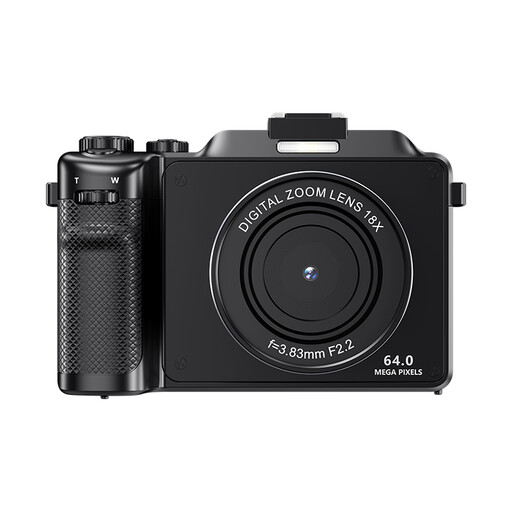
Komery X9 4K 64MP autofocus camera with 18× digital zoom

Komery X9 4K 64MP Autofocus

The stated digital zoom can help you frame a distant subject, but the product description warns that it may reduce image quality.

The product name lists 4K, 64MP and 18× digital zoom.

View at Joybuy

Komery W6 camera with 12× optical zoom

Komery W6 12× Optical Zoom

The stated optical zoom is useful if you want to frame distant subjects from one spot.

The product information lists 12× optical zoom.

View at Joybuy

Songdian 4K 44MP pocket camera in pink

Songdian Pocket Camera 4K 44MP, pink

This model is described as a pocket camera for photos and video; check whether the stated type of zoom suits the distance you want to shoot from.

The product name lists 4K, 44MP and 16× zoom.

View at Joybuy

Sony ZV-1 compact camera

Sony ZV-1

The stated zoom range can support different compositions; compare the wide-angle and telephoto ends with the framing you want for the harbour.

The product information lists a 24–70 mm lens range, 2.7× optical zoom, a 1-inch sensor and f/1.8–2.8.

View at Joybuy

Frequently asked questions

Will a polarising filter make the reflection stronger?

Not necessarily: a polarising filter can actually reduce reflections on water. If the reflection is the subject, compare the scene with and without the filter, and check in advance that the exact camera model supports a suitable filter mount.

How can you stop bright harbour lights from losing detail?

After taking the photo, check the histogram or any available highlight warning and adjust the exposure if needed. Canon warns that an exposure that is too long can cause details in the brightest areas to disappear; the controls available vary by model.

Do you need a tripod or an extra filter?

Not necessarily: a stable setup can be useful if you deliberately use a longer shutter speed. An ND filter reduces light, while a polarising filter affects reflections. Before buying a separate filter, check that it fits the exact camera and bear in mind the rules for your chosen photography location.

Can you take photos from any quay in a harbour?

That depends on the location. For the Port of Rotterdam, the Port of Rotterdam Authority advises you to stay on public roads; commercial sites are not accessible without permission. This guidance doesn’t automatically apply to every Dutch harbour, so check the local rules.

How does the statutory guarantee work when you buy a compact camera in the Netherlands?

The statutory guarantee means the seller is responsible if a product, under normal use, doesn’t do what you could reasonably expect. The Netherlands Authority for Consumers and Markets states that there is no fixed two-year guarantee period in the Netherlands; any manufacturer’s warranty is separate.
