
Quick panorama photographer
You want to capture a wide harbour view from an accessible quay without changing lenses. Automatic controls and a suitable field of view matter more to you than maximum telephoto zoom.


Start with a field of view that captures the entire skyline from where you’ll be standing, and choose controls that let you take photos without changing lenses. A compact zoom camera gives you more flexibility to frame distant details afterwards. In low light, the sensor, aperture and stabilisation may all be worth considering, while a fixed lens limits your composition. Manufacturers’ specifications can help you compare models, but they are not a comparative performance test for this particular situation.
You want to capture a wide harbour view from an accessible quay without changing lenses. Automatic controls and a suitable field of view matter more to you than maximum telephoto zoom.
You’ll be staying in an accessible spot and want to frame individual ships or buildings further away, as well as the wider view. A greater optical zoom range could be important.
You take photos as the harbour lights come on and compare the sensor, aperture and stabilisation, without assuming that any one specification guarantees a sharp night-time image.
Choose this option if: you want to frame both the skyline and a ship or building further away from one accessible spot. Sony lists a 24–200 mm equivalent range for the RX100 VII, while Panasonic lists 24–720 mm equivalent for the TZ99.
Trade-off: extra telephoto reach isn’t automatically useful for a wide panorama or in low light; compare the field of view, aperture and portability too.
Choose this option if: you mainly photograph a wide skyline in changing light and are less likely to isolate distant details. Canon lists a 1.0-type sensor, a 24–100 mm equivalent range and f/1.8–2.8 for the PowerShot G7 X Mark III.
Trade-off: its stated maximum focal length is shorter than that of the travel zoom models mentioned here. Specifications alone don’t determine which model will take the best photo in your low-light conditions.
Choose this option if: you’re happy to work with a single field of view and can change your position. Ricoh lists an equivalent focal length of around 28 mm for the GR IV; Fujifilm lists a fixed 23mm lens for the X100VI.
Trade-off: you can’t optically zoom in on a distant quay. Don’t compare Fujifilm’s 23 mm directly with Ricoh’s 28 mm equivalent: these figures use different measurement conventions.
| Consideration | What to look for | Which consumers? |
|---|---|---|
| Getting started quickly | Check whether there’s an automatic mode and whether the key controls are easy to reach. An autofocus figure isn’t the same as start-up time. | I want to be able to start taking photos straight away from the quay, without spending ages looking for settings; around 29% of consumers want to get started quickly. |
| Fitting the whole skyline in the frame | Compare the widest field of view on the same 35mm-equivalent basis, and assess it from where you intend to stand. | If I want to capture the entire skyline from one spot, the wide-angle starting point is crucial; around 29% of consumers prioritise this type of framing. |
| Taking photos at dusk | Compare the sensor, maximum aperture at the zoom setting you’ll use, and stabilisation. Keep manufacturers’ claims separate from independent measurements. | I take photos as the light fades and want to consider the sensor, aperture and stabilisation; around 24% of consumers prioritise low-light photography. |
| Framing distant details | Compare the optical telephoto focal length in 35mm equivalent. Don’t confuse optical zoom with digital or combined magnification. | If I want to isolate a ship further away from the same accessible spot, optical reach matters; around 18% of consumers prioritise distant details. |
For the whole skyline, the lens’s wide-angle starting point matters; telephoto reach is most useful when you want to frame distant details on their own.
Compare both ends of the optical zoom range on a 35mm-equivalent basis, and take your position into account.
Canon lists both 40× optical zoom and 80× ZoomPlus for the SX740 HS Lite Edition. These figures don’t describe the same type of magnification.
When comparing lens ranges between models, use the stated optical zoom figure.
Canon lists a battery and battery charger in the box for the SX740 HS Lite Edition, but doesn’t state that it supports USB charging.
Check how the exact version charges and what’s included in the box before you head out.
With this version, the supplied battery charger could mean extra luggage if you want to charge the battery while you’re out and about.
The RX100 VII is a compact zoom option for switching between a wide view and more distant details with a single lens.
The G7 X Mark III offers a wide-angle starting point and an aperture worth comparing; the SX740 HS Lite Edition is a separate, zoom-focused option.
The LUMIX TZ99 is a travel zoom option for anyone who wants to frame both a wide skyline and distant details with one small camera.
The GR IV is a fixed-field-of-view option for anyone who wants to plan a composition around a single view in advance.
The X100VI is a fixed-lens option for anyone who plans their composition around a single field of view.
This selection features cameras described as being for photography in their product titles. Check whether each model’s design, controls and stated features suit the way you take photos.
 No image available
The product title describes this as a pocket gimbal camera for photography; check whether its size and controls suit your skyline shots.
The title lists a 1-inch CMOS sensor, 4K/240fps, 3-axis stabilisation, 2× lossless zoom, 107GB of built-in storage and a 2-inch rotating screen.
 No image available
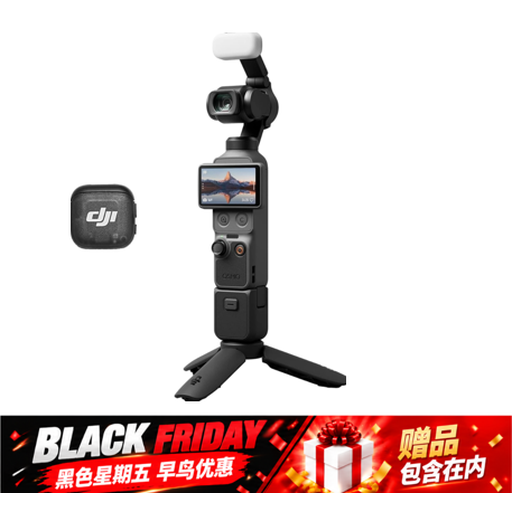
The product title describes a pocket gimbal camera for photography; compare the stated features with the controls and use you have in mind.
The title lists a 1-inch CMOS sensor, 4K/240fps, 3-axis stabilisation, 2× lossless zoom, 14-stop dynamic range, 107GB of built-in storage and a handle with a 1/4-inch thread.
 No image available
The product title describes a camera for photography; check what field of view and controls this version offers for the spot you’ll be taking photos from.
The title lists 5K, 80MP, 18× zoom and the colour white.
 No image available
The product title mentions photography and video; check whether the stated features suit the type of harbour photos you want to take.
The title lists 12× optical zoom, 4K and Wi-Fi.
 No image available
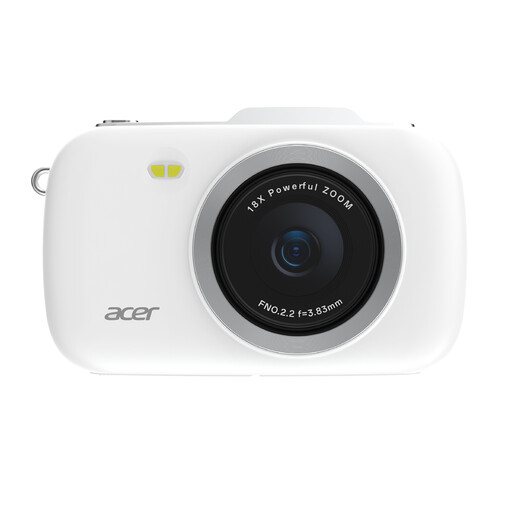
The product title describes a camera for photography; before buying, check whether the controls and field of view suit where you’ll be taking photos.
The title lists 4K, 80MP, 18× zoom and the colour white.
Start with automatic mode and check in advance that the lens’s widest setting gives you the framing you want. The Dutch Consumers’ Association explains that you can take a photo quickly in automatic mode; this isn’t a measurement of any particular model’s start-up time.
Check what’s included with the exact version before buying, and charge the battery in advance. Canon lists a battery and battery charger in the box for the Dutch SX740 HS Lite Edition, but it doesn’t support USB charging; don’t assume the same applies to other models.
According to ACM ConsuWijzer, online purchases often come with a 14-day cooling-off period from delivery, although exceptions apply. You also have a statutory guarantee: if a product breaks during normal use sooner than you could reasonably expect, the seller must offer an appropriate solution.
It depends on the location and what is recognisable in the image. The Port of Rotterdam Authority advises people to stay on public roads in its harbour area; access to business premises requires permission. This guidance doesn’t automatically apply to every Dutch harbour. According to the Dutch Data Protection Authority, photos you keep for private use are exempt from the GDPR, but this doesn’t automatically apply when you publish photos featuring recognisable people to a wide audience.