
Waterfront photographer
You want to fit the skyline, water and buildings into a single frame from an accessible quay. The available shooting distance and angle of view will help determine which camera is right for you.


Start with the angle of view from your usual vantage point: a fixed wide-angle lens is ideal for a broad view, while optical zoom helps you frame ships and buildings more closely. If you often take photos at dusk, compare the sensor, aperture and options for keeping the camera steady too. A greater zoom range alone says little about the quality of the final image.
You want to fit the skyline, water and buildings into a single frame from an accessible quay. The available shooting distance and angle of view will help determine which camera is right for you.
You photograph the harbour as the light fades and want to consider the sensor, lens and stability, rather than automatically opting for the longest zoom.
You stay at a publicly accessible viewpoint and want to bring individual ships, cranes or buildings closer using optical zoom.
First decide which shot matters most from your usual vantage point. Then compare the angle of view, optical range, and the combination of sensor and lens for evening photos.
| What to consider | What to look for when buying | Who is this most important for? |
|---|---|---|
| Fitting the whole skyline in the frame | Compare the 35mm-equivalent angle of view in the photo mode you use. The Ricoh GR IV has a fixed 28 mm-equivalent angle of view; Panasonic lists 24 mm-equivalent at the wide-angle end for the TZ99 in 4:3 photo mode. | If I want to capture the water and buildings together from a single quay, a wide angle of view is my top priority. Around 33% of consumers focus primarily on a broad view of the harbour. |
| Photos at dusk | Compare the sensor size and maximum aperture at the focal length you use. Also check whether you can set the camera down securely; stabilisation won’t keep moving ships still. | When I take photos as the light fades, I want to assess the sensor and lens together rather than focus on zoom alone. Around 25% of consumers give evening light top priority. |
| Distant details | Check the optical range and the aspect ratio it applies to. Panasonic lists 24–720 mm-equivalent for the TZ99 in 4:3 photo mode; this range does not necessarily apply to other modes. | If I can’t get closer to ships or cranes from my viewpoint, I want to frame them more closely using optical zoom. Around 25% of consumers put distant harbour details first. |
| A complete, compact kit | Compare dimensions and weight on the same basis, and check which items you’ll need for your use. With a built-in lens, you don’t need to carry separate interchangeable lenses. | When I want to carry as little separate camera equipment as possible, the convenience of a compact kit matters most. Around 17% of consumers make portability their top priority. |
More pixels don’t automatically mean better photos. The sensor, lens and image processing all play a part, especially when you’re taking photos in low light.
Compare the sensor and lens with the type of harbour photo you want to take, rather than just comparing pixel counts.
Digital zoom is not the same as optical zoom. What’s more, the quoted equivalent range may vary by aspect ratio or shooting mode.
Compare the optical focal lengths in the same photo mode and check which aspect ratio the quoted figures apply to.
A small size alone says nothing about protection from rain, splashes, dust or knocks.
Check the protection rating of the exact model before taking it out in the rain or near splashing water.
According to Sony, the RX100 VII combines a 1.0-type sensor with a 24–200 mm-equivalent zoom for a range of compositions from a single viewpoint.
The GR IV offers a fixed 28 mm-equivalent angle of view and an APS-C sensor.
The PowerShot G7 X Mark III and SX740 HS Lite Edition offer different combinations of zoom and sensor.
The LUMIX TZ99 is a travel zoom camera with a wide range for both broad views and distant details.
The X100VI is designed for photography with a single, pre-set 35 mm-equivalent angle of view.
These Joybuy products include portable digital cameras and a compact vlogging camera. When choosing, check whether you mainly want to take still photos or shoot video too, and whether the quoted zoom is optical or digital.
 No image available
The product title describes a portable camera for photography with 18× zoom. Check whether the quoted zoom range suits the details you want to frame from your viewpoint.
The title lists 5K and 80MP; these are product claims, not independent performance measurements.
 No image available
The quoted 12× optical zoom may be useful if you want to frame distant subjects from a single viewpoint.
The product title lists 12× optical zoom, 4K, Wi-Fi and 64MP.
 No image available
The product title describes this as a vlogging camera; check whether it meets your needs for still photos of the skyline.
The title lists a 1-inch CMOS sensor, 4K video up to 120 fps, 3-axis stabilisation and a 2-inch rotating touchscreen.
 No image available
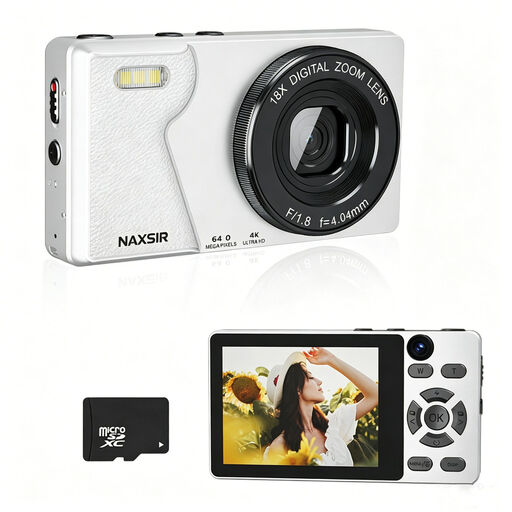
The product title lists 18× digital zoom; don’t mistake this for optical magnification when capturing distant harbour details.
The title lists 4K, 64MP and a 32 GB memory card.
 No image available
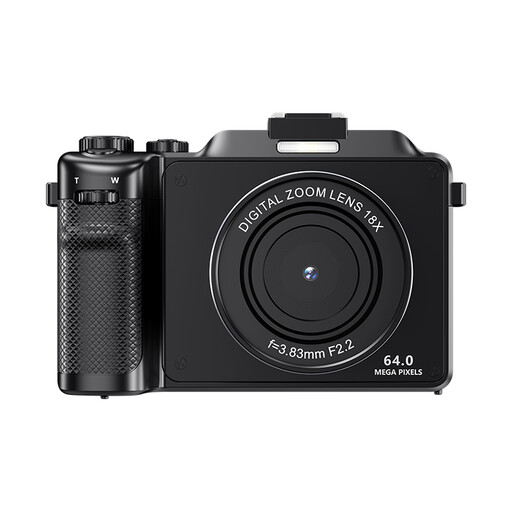
The product title lists 18× digital zoom, not optical zoom; bear this in mind if you want to frame distant details.
The title lists autofocus and a flash. The product description states that the camera is not waterproof.
No. Panasonic lists 24–720 mm-equivalent for the TZ99 with 4:3 photos; the equivalent ranges change with other aspect ratios and video modes. Check which mode you’ll use to photograph the skyline.
Compare the sensor and aperture at the focal length you’ll actually use, and find a steady place to set the camera down if needed. Stabilisation is no guarantee that moving ships will remain sharp during a longer exposure.
Check what’s included with the camera and what else you’ll need for your use. According to the Dutch government, in many cases you have a 14-day cooling-off period when buying online from a business. There is no fixed statutory warranty period in the Netherlands; if a product is faulty, contact the seller.
There is no single rule that applies to every harbour or location. For the Port of Rotterdam, the Port of Rotterdam Authority advises staying on public roads; business premises are not accessible without permission, and permission is required to take photos of or on business premises. Check the rules at your location. The Dutch Data Protection Authority points out that identifiable people are personal data and that wider publication may raise privacy concerns.